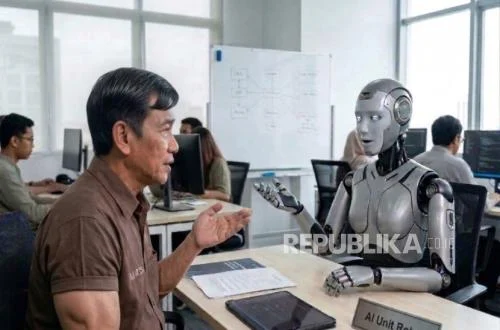
The rapid acceleration of artificial intelligence (AI) has ignited a profound discourse within global society, centering on a singular, existential question: is AI destined to replace human beings in the workforce? As these technologies permeate nearly every facet of modern industry, from automated manufacturing to algorithmic financial trading, the specter of widespread job displacement has moved from the realm of science fiction to the forefront of economic policy debates. However, a closer examination of current technological trends and labor market shifts suggests that the narrative is far more nuanced than a simple replacement of biological workers with silicon-based systems. Instead, the world is witnessing a fundamental transformation in how work is defined, executed, and valued, shifting the focus from human-versus-machine to a paradigm of human-AI collaboration.
Understanding the AI Architecture in the Modern Professional Landscape
Artificial intelligence, at its core, is a branch of computer science dedicated to creating systems capable of performing tasks that traditionally require human intelligence. This includes learning from vast datasets, recognizing complex patterns, and making autonomous decisions based on probabilistic logic. In recent years, the transition from "Narrow AI"—designed for specific tasks—to more sophisticated generative models has accelerated its adoption across diverse sectors, including healthcare, logistics, and the creative industries.
In the contemporary workplace, AI’s primary role is the optimization of efficiency. It excels in managing repetitive, high-volume tasks that are prone to human fatigue or error. For instance, in the realm of customer service, AI-driven chatbots handle thousands of routine inquiries simultaneously, allowing human agents to focus on complex, emotionally charged escalations. In the financial sector, AI algorithms analyze millions of transactions in real-time to detect fraudulent patterns that would be invisible to the human eye. By reducing the margin of error and increasing the speed of operations, AI acts as a catalyst for productivity rather than a mere substitute for labor.
The Historical Context: From Industrial Mechanization to Algorithmic Automation
To understand the current anxiety surrounding AI, one must look at the history of technological disruption. The Industrial Revolution of the 18th and 19th centuries saw the displacement of artisanal weavers by power looms, a move that sparked the Luddite protests. Similarly, the introduction of mainframe computers in the 1960s and the personal computer in the 1980s led to fears that clerical and administrative roles would vanish entirely.
In each of these historical cycles, while specific tasks were automated, the total demand for human labor did not collapse. Instead, technology created entirely new categories of employment that were previously unimaginable. The "AI Revolution" follows this trajectory but at a significantly higher velocity. Unlike previous waves of automation that primarily affected manual labor, AI is now impacting cognitive tasks, creating a unique pressure on the white-collar workforce.
Supporting Data: Job Displacement versus Job Creation
Recent data from international economic organizations provides a clearer picture of this transition. According to the World Economic Forum’s (WEF) "Future of Jobs Report," it is estimated that while AI may displace approximately 85 million jobs globally by 2025, it is simultaneously expected to create 97 million new roles. These new positions are largely centered on the "human-machine frontier," requiring individuals who can manage, interpret, and refine AI outputs.
Furthermore, a study by the McKinsey Global Institute suggests that by 2030, at least 30% of the activities in 60% of all occupations could be automated. This does not imply that 30% of jobs will disappear, but rather that the nature of those jobs will change. The data indicates that the most significant impact will be felt in middle-management and administrative roles, while demand for high-level technical skills and "soft skills"—such as emotional intelligence and ethical reasoning—will see a sharp increase.
The Sectoral Shift: How Industries are Adapting
The influence of AI is not uniform across all industries. In the healthcare sector, AI is being used as a diagnostic co-pilot. Radiologists, for example, use AI to flag potential anomalies in X-rays and MRIs with higher precision than ever before. However, the final diagnosis and the subsequent patient care plan remain firmly in the hands of human practitioners, as AI lacks the ability to understand a patient’s holistic life context or provide empathetic support.
In the creative and media industries, the rise of Large Language Models (LLMs) has sparked concerns regarding the future of writing and design. While AI can generate drafts or create digital art based on prompts, it lacks the lived experience and cultural nuance required for truly groundbreaking creative work. In these fields, AI is increasingly viewed as a sophisticated "mood-boarding" or drafting tool that allows human creators to bypass the "blank page" stage and move directly to high-level editing and conceptualization.
Official Responses and the Educational Pivot
Governmental bodies and educational institutions are increasingly recognizing that the answer to AI-driven displacement is not protectionism, but proactive education. The consensus among policymakers is that the labor force must be "upskilled" and "reskilled" to remain relevant.
In Indonesia, this shift is being spearheaded by forward-thinking institutions such as the University of Cyber Indonesia, popularly known as Cyber University. Recognized as "The First Fintech University in Indonesia," Cyber University has aligned its curriculum with the realities of the digital economy. By focusing on Program Studies in Information Technology, Data Science, Software Development, and Information Systems, the institution is directly addressing the skill gaps identified in global labor reports.
"The goal is not just to teach students how to code, but how to think alongside technology," an institutional spokesperson noted regarding their AI-integrated curriculum. By fostering an environment where students engage with AI as a collaborative tool, Cyber University is preparing a generation of professionals who are adaptively resilient. Their focus on practical industry collaboration ensures that graduates are not just theoretically aware of AI but are proficient in its application within the fast-paced fintech and digital sectors.
The Human Edge: Why AI Cannot Fully Replace the Workforce
Despite its computational prowess, AI possesses fundamental limitations that preserve the necessity of human involvement. These limitations are primarily found in three areas:
- Complex Decision-Making and Ethics: AI operates on historical data and mathematical probability. It cannot navigate "gray areas" where ethical considerations, cultural sensitivities, or moral values are paramount. In legal and executive leadership roles, the ability to make decisions based on value systems rather than just data optimization is a uniquely human trait.
- Emotional Intelligence and Empathy: Roles that require deep interpersonal connection—such as social work, mental health counseling, and high-level negotiations—rely on empathy. AI can simulate conversation, but it cannot "feel" or genuinely relate to the human experience.
- True Innovation and "Out-of-the-Box" Thinking: AI is excellent at interpolating within known data parameters, but it struggles with extrapolation—the ability to conceive of something entirely new that has no precedent in its training data.
Chronology of AI Integration in the Professional Sphere
The integration of AI into the workforce has followed a distinct timeline over the past decade:
- 2010-2015: The era of Big Data and Predictive Analytics. Companies began using AI to predict consumer behavior and optimize supply chains.
- 2016-2020: The rise of Specialized Automation. Chatbots and Robotic Process Automation (RPA) became standard in finance and customer service.
- 2021-Present: The Generative AI Explosion. Tools like ChatGPT and Midjourney brought AI into the hands of the general public, shifting the focus from backend optimization to frontend content creation and strategic assistance.
Broader Implications and Analysis
The long-term implication of the AI transition is a move toward a "Gig Economy 2.0" or a "Skill-Based Economy." As routine tasks become commoditized by AI, the premium on specialized human expertise will increase. This could lead to a widening economic gap between those who are tech-literate and those who are not, making the role of educational institutions like Cyber University even more critical to national economic stability.
Furthermore, there is an emerging "human-in-the-loop" requirement in regulatory frameworks. Many jurisdictions are considering laws that require human oversight for any AI-generated decision that significantly affects a person’s life, such as loan approvals or medical diagnoses. This legal trend ensures that while AI may do the "heavy lifting" of data processing, the ultimate responsibility and accountability remain a human domain.
Conclusion: Embracing the Augmented Workforce
In summary, the narrative that AI will render humans obsolete in the professional world is an oversimplification that ignores the history of innovation and the unique complexities of human intelligence. While it is undeniable that certain roles will undergo significant shifts and some repetitive tasks will be fully automated, the overarching trend is one of augmentation rather than replacement.
The future belongs to the "augmented professional"—individuals who leverage AI to eliminate the mundane, thereby freeing themselves to engage in higher-level strategic, creative, and empathetic work. For the workforce of tomorrow, the priority must be continuous learning and the cultivation of skills that machines cannot replicate. Institutions like Cyber University are playing a pivotal role in this transition, ensuring that as technology evolves, the human capacity to direct and innovate with that technology evolves alongside it. The challenge is not to compete with AI, but to master it, turning a potential threat into the most powerful tool for human progress in the 21st century.