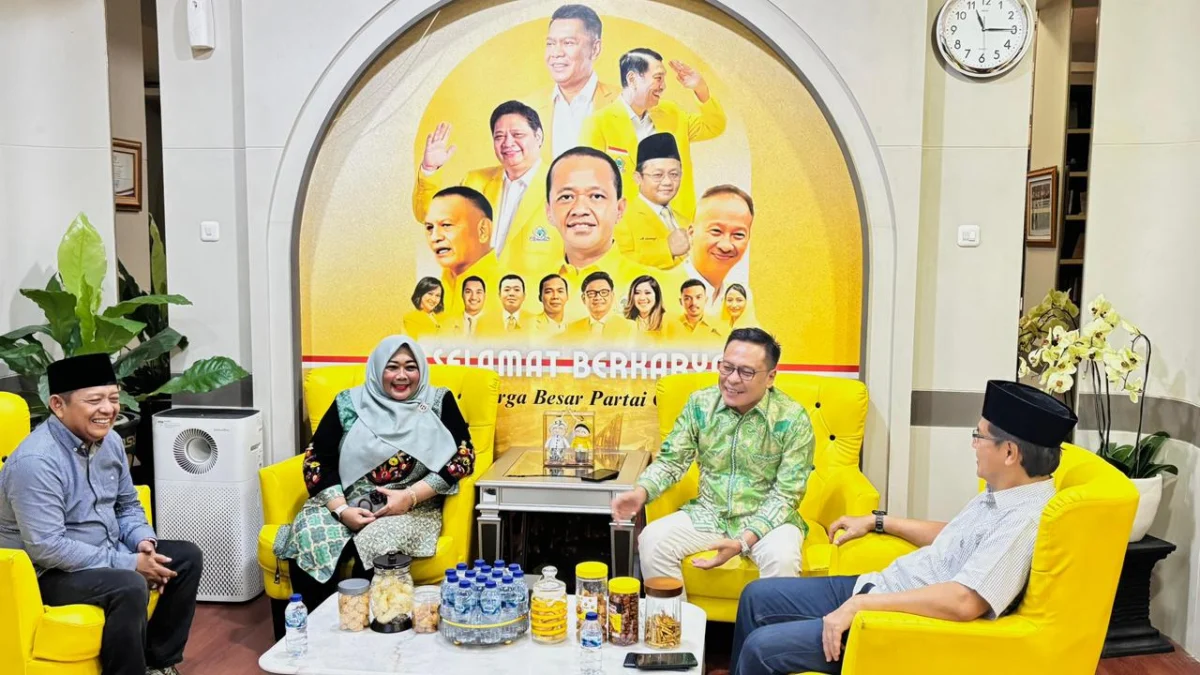
Surabaya, Indonesia – A significant push for enhanced youth empowerment initiatives in Surabaya is gaining momentum, with calls for robust collaboration between various religious institutions and the city government. Arif Fathoni, the Deputy Chairman of the Surabaya City Regional Representative Council (DPRD), has championed this collaborative approach, emphasizing its crucial role in ensuring that youth development programs, particularly those targeting Generation Z, effectively reach and benefit a broad spectrum of the city’s young population.
The initiative, spearheaded by the Surabaya City Government, aims to foster a more inclusive and impactful approach to youth development. Fathoni articulated his vision during a recent meeting with officials from the Indonesian Mosque Council (DMI) Surabaya chapter. "We recently received a silaturahmi (friendly visit) from the management of DMI Surabaya. We had extensive discussions regarding future collaboration in efforts to prosper places of worship in the City of Surabaya," Fathoni stated on Wednesday, April 15, 2026. This engagement underscores a proactive effort to integrate religious communities into the fabric of civic programs.
Fathoni’s conviction stems from the belief that religious communities are pivotal in ensuring that government programs, including a specific youth empowerment initiative reportedly valued at Rp 5 million per participant, can achieve wider community penetration. He stressed that these programs should not be exclusive to any single group. Instead, they must be accessible to all young people, irrespective of their religious affiliation or the place of worship they identify with, encompassing mosques, churches, viharas, pura, and klenteng.
"The Rp 5 million program must be accessible to all inter-faith youth. Of course, this will involve collaboration with the village heads (lurah) in each respective area to ensure guidance is distributed evenly and reaches its intended targets," Fathoni asserted. This statement highlights a commitment to equitable distribution and targeted delivery, crucial for the success of any large-scale public program. The Rp 5 million figure, while not explicitly detailed in its allocation or purpose in the initial report, is understood to be a financial component designed to support youth entrepreneurial ventures, skill development, or educational pursuits. The exact scope and utilization of these funds are expected to be further clarified through the collaborative framework being established.
The underlying principle of this advocacy is to move beyond mere administrative implementation and foster genuine character development. By synergizing efforts between the DPRD, the City Government, and all religious institutions, the aspiration is for these programs to cultivate a generation of Surabaya youth who are not only productive and competitive but also possess strong character and a deep sense of inclusivity. "We hope that the collaboration that eventually materializes will have a tangible impact so that the young generation in Surabaya can be productive, have competitiveness, and possess character," Fathoni concluded.
Background and Context: The Surabaya Youth Empowerment Landscape
Surabaya, as the second-largest metropolitan city in Indonesia, faces the perpetual challenge of nurturing its large and dynamic youth population. With a significant demographic of individuals belonging to Generation Z, the city government has recognized the imperative to invest in their future. This demographic, characterized by their digital nativity and unique perspectives, requires tailored approaches to education, employment, and civic engagement.
The initiative to provide Rp 5 million to youth participants can be seen as a direct response to the economic and social aspirations of this generation. Such financial support, when coupled with structured guidance and mentorship, has the potential to catalyze entrepreneurial endeavors, facilitate access to vocational training, or support further education. However, the effectiveness of such a program hinges critically on its reach and inclusivity. Without broad engagement, there is a risk of exacerbating existing socio-economic disparities or leaving segments of the youth population underserved.
The recent engagement with the DMI Surabaya chapter is part of a broader strategy by the DPRD to foster partnerships that extend beyond traditional government channels. Indonesia’s multi-religious fabric presents both a challenge and an opportunity for public policy. Recognizing the deeply embedded role of religious institutions in community life, Fathoni’s call for inter-faith collaboration acknowledges this reality. These institutions often serve as trusted community hubs, possessing established networks and a profound understanding of local needs and cultural nuances.
Chronology of Advocacy and Engagement
While the specific timeline for the inception of the youth empowerment program is not detailed, Fathoni’s recent statement on April 15, 2026, marks a significant public articulation of his advocacy for inter-faith collaboration. The meeting with the DMI Surabaya chapter, described as a "silaturahmi," is a common practice in Indonesian culture for building and strengthening relationships. This event likely served as a platform to:
- Introduce the City Government’s Youth Empowerment Initiative: Fathoni, representing the DPRD, would have briefed DMI officials on the program’s objectives, scope, and the envisioned role of religious organizations.
- Discuss Potential Synergies: The discussions would have focused on how DMI, and by extension other religious bodies, could contribute to the program’s implementation. This could include identifying eligible youth, providing mentorship, offering religious and moral guidance, or facilitating access to resources.
- Address Concerns and Expectations: Both parties would have had the opportunity to voice their expectations, potential challenges, and propose solutions to ensure the program’s success. The emphasis on equitable access across all faiths suggests that inclusivity was a key point of discussion.
- Outline Future Steps: The meeting likely concluded with an agreement on the next steps, which would involve formalizing collaboration agreements, developing detailed implementation plans, and potentially pilot testing aspects of the program.
The follow-up actions, though not explicitly stated, would logically include outreach to other religious organizations such as the Indonesian Christian Communion (PGI), the Indonesian Catholic Bishops’ Conference (KWI) in Surabaya, the Indonesian Buddhist Council (WALUBI), and other relevant inter-faith bodies. The involvement of "lurah" (village heads) further indicates a bottom-up approach, ensuring that the program is grounded in local realities and community structures.
Supporting Data and Potential Impact
To fully appreciate the implications of this initiative, it is beneficial to consider relevant demographic and socio-economic data for Surabaya:
- Youth Demographics: Surabaya has a substantial youth population, with Gen Z (born roughly between 1997 and 2012) comprising a significant portion of its demographic. This generation is entering the workforce and civic life, presenting both opportunities and challenges. Precise figures from the Central Statistics Agency (BPS) for Surabaya would provide context on the exact size of this demographic cohort. For instance, if Surabaya’s population is approximately 3 million, and Gen Z constitutes around 25-30% of the population, this would represent a target group of nearly one million young individuals.
- Economic Opportunities: As a major economic hub, Surabaya offers diverse employment opportunities. However, unemployment rates among youth can be a persistent concern. Data on youth unemployment and underemployment would highlight the need for targeted empowerment programs. Initiatives that foster entrepreneurship and skill development are crucial for absorbing this demographic into the productive economy.
- Education and Skill Gaps: While educational attainment in Surabaya is generally high, there can be a mismatch between the skills acquired through formal education and the demands of the job market. Programs that provide practical skills training and financial support for skill acquisition, like the Rp 5 million initiative, can help bridge this gap.
- Social Cohesion: Surabaya is known for its relative religious harmony, but maintaining and strengthening this requires continuous effort. Youth empowerment programs that are inclusive and foster inter-faith understanding can play a vital role in building a more cohesive and tolerant society.
The potential impact of a well-executed, inter-faith collaborative youth empowerment program is multi-faceted:
- Economic Empowerment: By providing financial resources and guidance, the program can enable young entrepreneurs to start businesses, create jobs, and contribute to local economic growth. This can also help alleviate poverty and reduce dependency.
- Skill Development: Beyond financial aid, the program’s success will depend on its ability to impart valuable skills, whether technical, vocational, or soft skills, that enhance employability and adaptability in a rapidly changing world.
- Character Building: The involvement of religious institutions provides an avenue for instilling moral values, ethical principles, and a sense of civic responsibility among the youth. This can lead to a more engaged and responsible citizenry.
- Social Inclusion and Tolerance: By explicitly targeting youth from all religious backgrounds and fostering collaboration, the program can promote understanding, respect, and empathy between different communities, thereby strengthening social cohesion.
- Reduced Social Issues: Empowered youth are less likely to be drawn into negative social behaviors such as crime, drug abuse, or radicalism.
Official Responses and Broader Implications
The initiative championed by Arif Fathoni reflects a progressive approach by the Surabaya DPRD and, by extension, the city administration. The emphasis on collaboration with religious institutions is not unique to Surabaya but represents a growing trend in public policy in Indonesia, recognizing the significant social capital held by these organizations.
The Indonesian Mosque Council (DMI), as a key partner, is a national organization with a vast network of mosque management bodies across the country. Its involvement signifies a commitment to engaging a significant portion of the Muslim community in youth development. The potential for DMI to mobilize its resources, including its human capital and physical infrastructure (mosques themselves can serve as community centers), is substantial.
The broader implications of this inter-faith collaborative model extend beyond the immediate youth empowerment program:
- Strengthening Civil Society: By actively involving religious organizations in public service delivery, the government strengthens the role of civil society in nation-building. This fosters a sense of shared responsibility and ownership in addressing societal challenges.
- Promoting Religious Harmony: Successful inter-faith collaborations in programmatic efforts can serve as powerful examples of peaceful coexistence and mutual respect. These initiatives can foster positive narratives around religious diversity in Indonesia.
- Innovative Governance: This approach represents an innovative model of governance that leverages the strengths of diverse stakeholders. It moves away from a purely top-down governmental approach to a more participatory and inclusive model.
However, the success of such a program is contingent on several factors:
- Clear Programmatic Framework: The objectives, eligibility criteria, selection processes, and accountability mechanisms for the Rp 5 million initiative must be clearly defined and transparent.
- Effective Coordination: Robust coordination mechanisms between the government, DPRD, religious institutions, and village heads are essential to ensure seamless implementation and avoid duplication or gaps in services.
- Capacity Building: Religious institutions and local community leaders may require capacity building to effectively implement their roles in youth empowerment, including mentorship, financial literacy training, and program management.
- Monitoring and Evaluation: A comprehensive monitoring and evaluation system is crucial to track progress, identify challenges, measure impact, and make necessary adjustments to the program.
The commitment expressed by Arif Fathoni and the initial engagement with DMI Surabaya represent a promising step towards a more inclusive and impactful approach to youth development in one of Indonesia’s most vibrant cities. The success of this initiative will undoubtedly be a testament to the power of collaboration and the collective will to invest in the future generation.