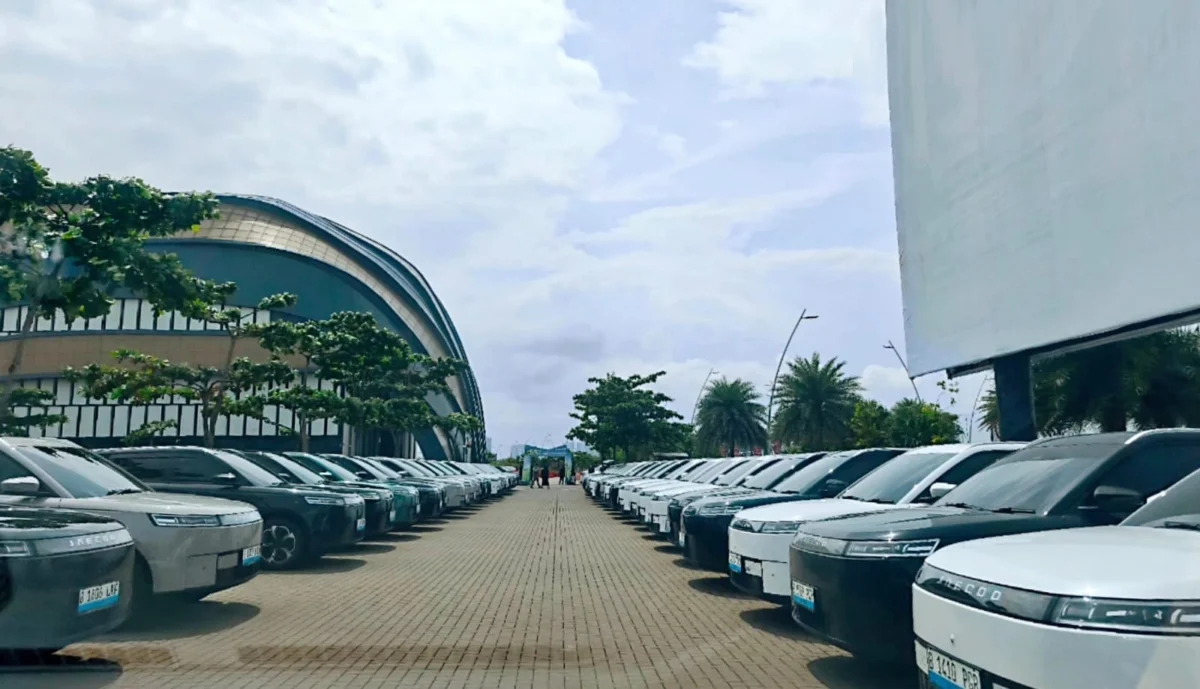
The Indonesian automotive market experienced a seismic shift in March 2026, with electric vehicles (EVs) unexpectedly seizing the top position in sales, a groundbreaking development that dethrones traditional internal combustion engine (ICE) models that have long dominated the landscape. The Jaecoo J5 EV emerged as the undisputed leader, marking a significant turning point in consumer preferences and signaling a robust acceleration in the adoption of eco-friendly transportation solutions within the archipelago.
This dramatic ascent occurred against a backdrop of a substantial market contraction. Data released by the Indonesian Automotive Industry Association (Gaikindo) revealed a stark decline in wholesale vehicle sales for March 2026, plummeting to just 61,271 units. This represents a precipitous drop of 24.6% when compared to the 81,250 units recorded in February 2026, indicating a challenging month for the industry overall.
Despite the prevailing market headwinds, the Jaecoo J5 EV managed to achieve an impressive distribution figure of 2,959 units, propelling it to the pinnacle of the sales charts. This achievement is not merely a statistical anomaly but a powerful testament to the growing consumer appetite for electric mobility. It underscores a burgeoning awareness of environmental concerns and a tangible shift towards more sustainable transportation choices among Indonesian consumers. The success of the J5 EV suggests that manufacturers are successfully addressing key consumer barriers to EV adoption, such as range anxiety, charging infrastructure, and affordability.
While the EV newcomer commanded the top spot, established players from Toyota continued to demonstrate their enduring appeal, occupying the second and third positions. The perennial favorite, the Toyota Avanza, secured the second spot with 2,366 units sold, closely followed by its sibling, the Toyota Veloz, which recorded 2,325 units. These figures highlight the continued strength of the multi-purpose vehicle (MPV) segment, a category that has historically catered to the practical needs of Indonesian families. The consistent performance of these models speaks volumes about their reputation for reliability, fuel efficiency, and value for money, factors that remain paramount for a significant portion of the car-buying public.
Rounding out the top five, the Toyota Rush claimed the fourth position with 2,252 units distributed, further solidifying the dominance of SUVs and MPVs in the domestic market. The Toyota Innova Zenix secured the fifth spot with 2,184 units sold, reinforcing the notion that these larger vehicle segments continue to hold substantial sway. The presence of multiple Toyota models within the top five underscores the brand’s deep-rooted presence and customer loyalty in Indonesia.
The broader decline in overall sales in March 2026 can be attributed to a confluence of factors. Industry analysts point to a general economic slowdown, coupled with potential shifts in consumer spending patterns following a period of robust sales at the beginning of the year. The "euphoria at the start of the year" mentioned in previous reports suggests a post-holiday surge that naturally receded, leaving a more subdued market in its wake. Furthermore, the global automotive industry has been grappling with persistent supply chain disruptions and fluctuating raw material costs, which can impact vehicle availability and pricing, thereby influencing consumer purchasing decisions.
The Rise of Electric Vehicles in Indonesia: A Paradigm Shift
The unprecedented success of the Jaecoo J5 EV signifies more than just a single model’s triumph; it represents a fundamental recalibration of the Indonesian automotive landscape. For years, the market has been dominated by gasoline-powered vehicles, with brands like Toyota, Honda, and Daihatsu consistently leading the sales charts. The dominance of ICE vehicles was fueled by factors such as lower upfront costs, a well-established refueling infrastructure, and a perception of greater practicality for long-distance travel.
However, a confluence of global and local factors has been steadily paving the way for EVs. Globally, a growing emphasis on sustainability, government incentives for EV adoption, and advancements in battery technology have made electric cars increasingly attractive. In Indonesia, the government has been actively promoting the transition to EVs through various policies, including tax incentives and commitments to develop charging infrastructure. This strategic push, combined with increasing consumer environmental consciousness, has created a fertile ground for EV manufacturers.
The Jaecoo J5 EV’s performance is particularly noteworthy given that it is a relatively newer entrant compared to established brands. Its success suggests that the brand has effectively resonated with a segment of the Indonesian market eager for innovative and environmentally friendly alternatives. The vehicle’s design, features, and perhaps its pricing strategy have clearly struck a chord with consumers, allowing it to outsell well-established and trusted models.

Market Dynamics and Consumer Behavior
The data from Gaikindo paints a clear picture: while the overall market contracted, the EV segment demonstrated remarkable resilience and growth. This divergence highlights a segment of the market that is less sensitive to the broader economic downturn or is actively seeking out specific attributes offered by EVs.
Several potential factors could explain this trend:
- Growing Environmental Awareness: As climate change becomes a more pressing global issue, consumers are increasingly factoring environmental impact into their purchasing decisions. EVs, with their zero tailpipe emissions, offer a compelling solution.
- Technological Appeal: Electric vehicles often come equipped with advanced technology, offering a modern and sophisticated driving experience. This appeals to a tech-savvy demographic.
- Lower Running Costs: Despite potentially higher upfront costs, EVs can offer significant savings in terms of fuel and maintenance over their lifespan, a factor that may be increasingly attractive in a fluctuating economic climate.
- Government Incentives: Various government policies, such as tax breaks and subsidies, can make EVs more financially accessible, further driving adoption.
- Expanding Charging Infrastructure: While still developing, the gradual expansion of charging stations across urban and peri-urban areas is helping to alleviate range anxiety, a major hurdle for potential EV buyers.
Toyota’s Enduring Strength and the MPV/SUV Dominance
Despite the EV surge, Toyota’s continued strong performance in the traditional segments is a testament to its brand equity in Indonesia. The Avanza and Veloz have been staples in Indonesian households for years, offering a blend of affordability, practicality, and reliability that resonates deeply with a broad consumer base. The fact that these models continue to command significant sales volumes indicates that the transition to EVs is likely to be a gradual process, with ICE vehicles coexisting with electric alternatives for the foreseeable future.
The strong showing of the Toyota Rush and Innova Zenix further underscores the enduring popularity of SUVs and larger MPVs. These vehicles cater to families, individuals who require more space for cargo, and those who appreciate a higher driving position and a sense of robust capability. The Indonesian market’s preference for these vehicle types is a long-standing trend that is unlikely to dissipate overnight, even with the rise of EVs.
Expert Analysis and Future Outlook
Industry experts view the March 2026 sales data as a pivotal moment for the Indonesian automotive market. "The ascendancy of an electric vehicle to the top of the sales charts is a watershed moment," commented automotive analyst Dr. Anya Sharma. "It signifies that the Indonesian consumer is not only ready for EVs but is actively embracing them. This will undoubtedly spur further investment and innovation in the EV sector from both local and international manufacturers."

The broader market downturn, however, presents a challenge. Manufacturers will need to navigate this period of reduced demand while simultaneously investing in the future of electric mobility. The success of the Jaecoo J5 EV suggests that a well-positioned and appealing EV can thrive even in a challenging market.
The implications for the future are significant:
- Increased EV Competition: The success of the J5 EV is likely to encourage other manufacturers to accelerate their EV offerings in Indonesia. We can anticipate a more diverse and competitive EV market in the coming years.
- Focus on Charging Infrastructure: To sustain and accelerate EV adoption, continued and intensified efforts to expand charging infrastructure will be crucial. Government and private sector collaboration will be key.
- Evolving Consumer Preferences: The shift towards EVs signals a broader evolution in consumer preferences, with an increasing emphasis on sustainability, technology, and potentially lower long-term operating costs.
- Adaptation for Traditional Manufacturers: Established ICE manufacturers will need to continue their transition strategies, balancing their existing portfolios with the development and promotion of their EV offerings.
While the March 2026 sales figures highlight a significant shift, it is important to note that this is just one month’s data. The long-term trajectory of the Indonesian automotive market will depend on a multitude of factors, including economic conditions, government policy consistency, technological advancements, and the continued development of a robust EV ecosystem. Nevertheless, the clear message from March 2026 is that the electric revolution has firmly arrived in Indonesia, and its momentum is undeniable. The era of ICE dominance is being challenged, and the future of mobility in the archipelago is undoubtedly electric.