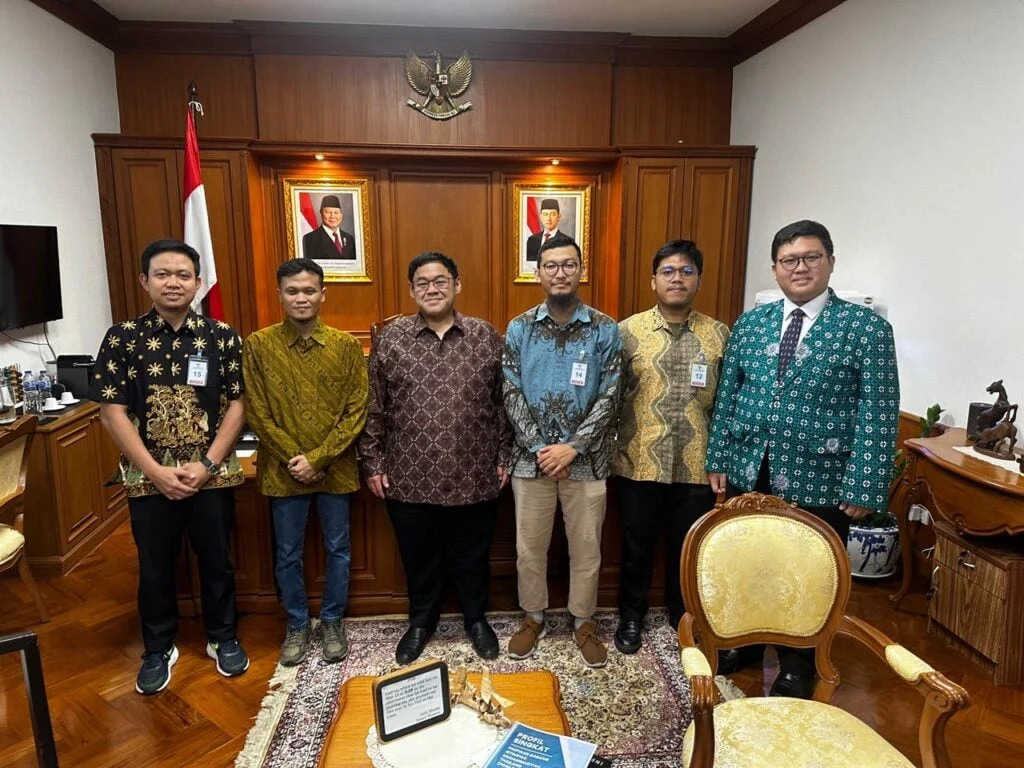
BANGKOK, Thailand – The Special Branch of Muhammadiyah in Thailand (PCIM Thailand) recently held a significant audiensi and silaturahmi (a cordial meeting and strengthening of ties) with His Excellency Hari Prabowo, the Ambassador Extraordinary and Plenipotentiary of the Republic of Indonesia to the Kingdom of Thailand, concurrently accredited to the United Nations Economic and Social Commission for Asia and the Pacific (UNESCAP). The pivotal meeting, which took place on Thursday, April 10, underscores a strategic initiative to fortify institutional synergy between Indonesian diaspora organizations and the diplomatic representation of Indonesia abroad. This engagement is a testament to the Indonesian government’s commitment to leveraging its diaspora as a vital asset in advancing national interests and fostering international goodwill.
A Strategic Dialogue in Bangkok
The meeting between PCIM Thailand and Ambassador Prabowo at the Indonesian Embassy in Bangkok marked a crucial juncture in formalizing and expanding the collaborative framework between the two entities. It was not merely a courtesy call but a direct follow-up to an official letter previously submitted by PCIM Thailand, outlining their organizational profile, strategic programs, and a clear commitment to enhancing the role of the Indonesian diaspora in Thailand. This proactive approach by PCIM Thailand highlights its dedication to functioning as a structured and impactful civil society organization that actively contributes to both the welfare of its members and the broader bilateral relationship between Indonesia and Thailand.
Ambassador Prabowo extended a warm welcome to the PCIM Thailand delegation, expressing strong support for their initiatives. He lauded the diaspora organization’s unwavering commitment to contributing to the nation’s progress, even from afar. Emphasizing the potential for tangible outcomes, Ambassador Prabowo articulated his hope for "concrete and sustainable collaborations in the future, especially in activities that directly engage with local Thai communities." This statement underscores the Embassy’s vision of a diaspora that not only serves its own community but also builds bridges and fosters understanding with the host nation.
Background: The Role of PCIM Thailand and Muhammadiyah’s Global Footprint
PCIM Thailand is a specialized branch of Muhammadiyah, one of Indonesia’s largest and most influential Islamic socio-religious organizations. Established in 1912, Muhammadiyah has a long-standing history of contributing to education, health, and social welfare in Indonesia. Its global footprint is extensive, with numerous special branches (PCIM) established in countries worldwide, including Malaysia, Egypt, Saudi Arabia, the United Kingdom, Australia, and many others. These branches serve as platforms for Indonesian expatriates to maintain their cultural and religious identity, engage in community services, and contribute to their homeland’s development while abroad.
In Thailand, PCIM Thailand plays a vital role in unifying and empowering Indonesian citizens residing in the kingdom. Its activities often revolve around religious services, cultural preservation, educational support for Indonesian students, and humanitarian efforts. The organization acts as a crucial nexus for networking among Indonesians, providing a sense of community and belonging in a foreign land. By formally engaging with the Indonesian Embassy, PCIM Thailand seeks to elevate its operational capacity, align its programs with national diplomatic objectives, and ensure its contributions are recognized and supported at the highest levels of Indonesian representation in Thailand.
The Indonesian Embassy’s Mandate in Thailand and UNESCAP
The Embassy of the Republic of Indonesia in Bangkok serves as the primary diplomatic mission representing Indonesia’s interests in the Kingdom of Thailand. Its multifaceted mandate includes protecting Indonesian citizens, promoting trade and investment, fostering cultural exchange, and strengthening political ties between the two nations. The Ambassador, as the chief diplomat, plays a crucial role in orchestrating these efforts, acting as the primary interlocutor between the Indonesian government and its Thai counterpart.
Ambassador Hari Prabowo’s additional accreditation to UNESCAP (United Nations Economic and Social Commission for Asia and the Pacific) highlights a broader regional and multilateral dimension to his role. UNESCAP, headquartered in Bangkok, is one of the five regional commissions of the United Nations. It promotes socioeconomic development and cooperation among its member states in the Asia-Pacific region. This dual accreditation signifies Indonesia’s commitment to both bilateral relations with Thailand and broader regional development agendas, allowing the Ambassador to leverage both platforms for national interests. Engaging with diaspora organizations like PCIM Thailand also falls within the Embassy’s purview of citizen protection and empowerment, ensuring that Indonesian expatriates are well-integrated and contributing positively to both their host country and their homeland.
A Chronology of Engagement: From Letter to Dialogue
The recent meeting on April 10 was the culmination of a structured process initiated by PCIM Thailand. Understanding the importance of formal channels, the organization meticulously prepared and submitted an official letter to the Indonesian Embassy. This letter served as a formal introduction, outlining PCIM Thailand’s mission, vision, current programs, and its aspirations for deeper collaboration with the Embassy. The Embassy’s positive response and the subsequent scheduling of the audiensi demonstrate a mutual recognition of the strategic value of such partnerships.
The chronological sequence of events, from initial outreach to a high-level diplomatic meeting, underscores the growing maturity of diaspora organizations in engaging with official state apparatus. It reflects a shift from informal gatherings to structured institutional interactions, aiming for more impactful and sustainable collaborative projects. This formal approach ensures that proposed initiatives are aligned with national policies and diplomatic strategies, maximizing their potential for success and relevance.
Pillars of Partnership: Education, Health, and Agroindustry
Andi Subhan Husain, the General Chairman of PCIM Thailand, utilized the audiensi as a critical platform to elaborate on the organization’s profile, strategic programs, and its firm commitment to bolstering the role of the Indonesian diaspora. He specifically highlighted three core sectors as primary areas for reinforced cooperation: Education, Health, and Agroindustry. These sectors were strategically chosen for their potential to enhance access, improve service quality, and empower communities in both Indonesia and Thailand.
-
Education: Collaboration in education could involve facilitating student exchanges, supporting Indonesian students in Thailand, promoting Indonesian language and culture, or even establishing educational initiatives that benefit both Indonesian expatriates and local Thai communities. With Thailand’s growing reputation as an educational hub in Southeast Asia, and Indonesia’s continuous efforts to improve its human capital, synergy in this sector promises mutual benefits. This could range from scholarships for underprivileged Indonesian students in Thailand to joint research programs between universities, or even community-based learning initiatives that bridge cultural gaps.
-
Health: In the health sector, potential collaborations could focus on providing better access to healthcare services for Indonesian citizens in Thailand, particularly those in vulnerable situations. This might include health awareness campaigns, facilitating medical referrals, or exploring opportunities for medical professionals exchange programs. Given the disparities in healthcare access and quality across regions, and the potential for cross-border health initiatives, this area holds significant promise for humanitarian and developmental impact. Initiatives could also include sharing best practices in public health management, particularly relevant in the post-pandemic era.
-
Agroindustry: The agroindustry sector presents unique opportunities for economic cooperation and community empowerment. Thailand is a regional leader in agriculture and food processing, while Indonesia possesses vast agricultural resources. Collaboration could involve sharing expertise in sustainable farming practices, technology transfer for agro-processing, facilitating market access for Indonesian agricultural products in Thailand, or developing joint ventures in food production and distribution. Such partnerships could empower rural communities in both countries, enhance food security, and contribute significantly to bilateral trade volumes, which already represent a substantial portion of the two nations’ economic interaction. Indonesia and Thailand have a robust bilateral trade relationship, with agricultural products and processed foods being significant components. Deepening collaboration in agroindustry can unlock further economic potential, benefiting farmers and businesses alike.
Enhancing People-to-People Diplomacy and Bilateral Relations
Andi Subhan Husain further articulated that this collaborative effort extends beyond mere institutional synergy; it is an integral part of advancing "people-to-people diplomacy." This concept is crucial for building robust, resilient, and inclusive bilateral relations that go beyond government-to-government interactions. By fostering direct engagement and understanding between the citizens of Indonesia and Thailand, such initiatives can create a strong foundation of mutual respect and cooperation. Diaspora organizations like PCIM Thailand are uniquely positioned to act as informal ambassadors, bridging cultural divides and promoting goodwill at the grassroots level.
The strengthening of PCIM Thailand’s position as a strategic partner to the Indonesian state in this context is paramount. It allows the organization to contribute meaningfully to constructing bilateral relations that are not only inclusive but also impactful. When diaspora communities are empowered and strategically engaged, they become invaluable assets in projecting a positive image of their homeland, fostering economic opportunities, and facilitating cultural exchange. This approach acknowledges that diplomacy is not solely the domain of state actors but is enriched by the active participation of civil society and its citizens.
The Broader Implications for Indonesian Diaspora and Regional Cooperation
The implications of this enhanced collaboration are far-reaching. For the Indonesian diaspora in Thailand, it signifies greater recognition, support, and opportunities for engagement. It provides a structured pathway for their contributions to be acknowledged and integrated into national diplomatic objectives. This can lead to improved welfare, better access to services, and a stronger sense of belonging for Indonesian expatriates.
On a broader scale, this partnership serves as a model for how diplomatic missions can effectively engage with their diaspora communities worldwide. It demonstrates the potential for civil society organizations to act as proactive agents in advancing national interests and strengthening bilateral ties. Such structured engagements can lead to more effective implementation of foreign policy objectives, particularly in areas like economic diplomacy, cultural promotion, and citizen protection.
Furthermore, given Ambassador Prabowo’s role with UNESCAP, successful collaborations in education, health, and agroindustry between PCIM Thailand and the Embassy could potentially serve as pilot projects or best practices that could be scaled up or replicated across the Asia-Pacific region. This aligns with UNESCAP’s mandate to promote sustainable development and regional cooperation, highlighting how local initiatives can have broader regional relevance. The success of such a model could inspire other diaspora groups and diplomatic missions to forge similar partnerships, thereby strengthening regional cohesion and addressing common development challenges.
Looking Forward: A Model for Sustainable Diaspora Engagement
PCIM Thailand expressed profound optimism that this synergy marks the genesis of numerous broader, sustainable, and genuinely beneficial collaborative programs for the communities in both Indonesia and Thailand. The commitment from both Ambassador Prabowo and PCIM Thailand’s leadership suggests a long-term vision for this partnership, one that transcends immediate goals and aims for enduring impact.
This strategic alignment between a robust diaspora organization and its nation’s diplomatic representation offers a compelling model for sustainable engagement. It moves beyond traditional forms of interaction to create a dynamic framework for shared responsibility and mutual benefit. As Indonesia continues to assert its presence on the global stage, leveraging its diaspora effectively will be a key component of its foreign policy. The proactive steps taken by PCIM Thailand and the receptive stance of the Indonesian Embassy in Bangkok exemplify a progressive approach to diaspora diplomacy, poised to yield significant dividends for both nations and their respective communities.