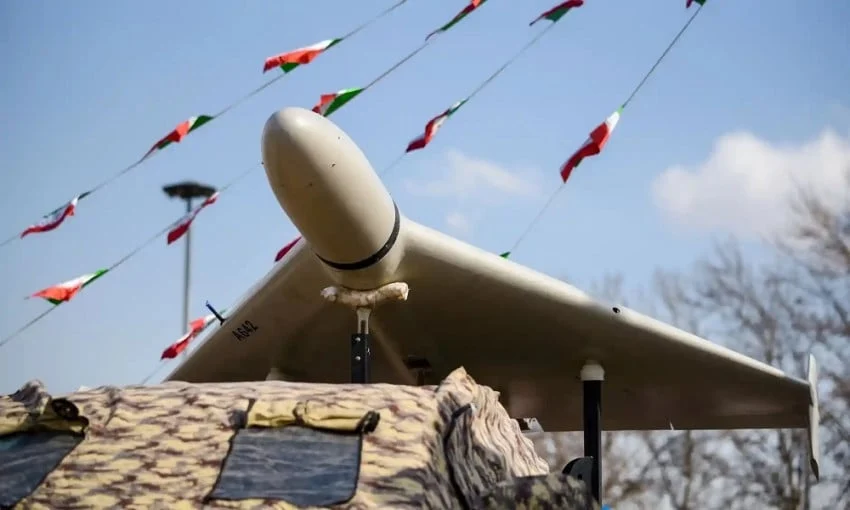
The geopolitical landscape of the Middle East remains fraught with peril as international scrutiny intensifies surrounding a recent drone attack in Kuwait, which security analysts and regional reports increasingly characterize as a sophisticated false-flag operation designed to implicate Iran and draw European powers into a wider military conflict. The incident, which resulted in the deaths of two Italian military contractors stationed at a sensitive defense facility, has triggered a diplomatic firestorm, urgent security assessments, and vehement denials from Tehran. As Western intelligence agencies parse the telemetry and logistical footprints of the strike, fundamental questions linger regarding the true authorship of the attack, the presence of foreign contractors within active regional flashpoints, and the persistent threat of miscalculation cascading into a broader conflagration.
Background Context and Regional Tensions
To fully comprehend the gravity of the Kuwait drone incident, one must examine the deteriorating security architecture of the Persian Gulf over recent years. The region has long served as a primary theater for proxy conflicts, asymmetric warfare, and strategic posturing between the United States, its regional allies—most notably Israel and the Gulf Cooperation Council (GCC) member states—and the Islamic Republic of Iran.
In recent months, hostilities have escalated dramatically following a series of retaliatory strikes and counter-strikes involving American military assets in the region and Iranian defense infrastructure. Notably, tensions spiked earlier in the month when the Armed Forces of the Islamic Republic of Iran officially claimed responsibility for targeting unmanned aerial vehicle (UAV) and missile storage sites belonging to the United States within Kuwait. This Iranian action was framed by Tehran as a direct response to prior American kinetic operations originating from or supported by regional outposts, specifically referencing actions tied to Iran’s strategic Qeshm Island.
Despite Tehran’s open acknowledgment of those specific military actions against U.S. installations, Kuwaiti officials consistently denied that any domestic military facilities had been successfully struck or compromised by Iranian ordnance, even in the face of video evidence released by Iranian state media depicting significant fires at coalition logistical hubs. It is within this volatile matrix of contested narratives, denied strikes, and heightened vigilance that the fatal drone attack occurred, creating an immediate opening for accusations, political posturing, and potential strategic manipulation.
Chronology of the Incident and Immediate Aftermath
The sequence of events leading up to and immediately following the fatal strike highlights the rapid degeneration of diplomatic channels and the instant hardening of military postures.
According to regional security disclosures and preliminary incident reports, the sequence unfolded as follows:
- Early in the month: The Iranian Armed Forces publicly announce and take responsibility for kinetic operations directed against U.S. drone and missile positions located inside Kuwaiti territory, citing retaliatory necessity following provocations near Qeshm Island.
- Mid-month: Kuwaiti authorities officially refute claims of successful strikes on their military infrastructure, maintaining that national security apparatuses remain fully functional and uncompromised, despite circulating visual evidence of localized blazes at coalition-associated sites.
- The Day of the Attack (Thursday): An unidentified drone breaches airspace over a multi-national military installation in Kuwait, detonating upon impact and resulting in the deaths of two Italian military contractors.
- Immediate Post-Attack Phase: Within hours of the strike, diplomatic representatives from both Italy and Kuwait issue formal statements attributing the aggression to Iran, pointing to Tehran’s prior regional posture as presumptive evidence of guilt.
- Subsequent 24-48 Hours: The Iranian Ministry of Foreign Affairs and the General Staff of the Armed Forces issue categorical denials, asserting that Tehran had no operational involvement in the Thursday strike and emphasizing that the Islamic Republic traditionally claims public responsibility for its military undertakings.
The False Flag Hypothesis and Strategic Implications
The central pillar of the emerging narrative surrounding the Kuwait incident is the "false-flag" hypothesis—a clandestine operation executed by actors seeking to deceive international observers regarding the true identity of the perpetrator to manipulate geopolitical outcomes.
According to regional investigative reports, such as those published by Al Mayadeen referencing anonymous security sources, the operational profile of the drone strike aligns suspiciously well with the strategic objectives of external state actors, chief among them Israel, who have long advocated for a more aggressive international posture against Iran’s nuclear and regional ambitions.
Security analysts note that standard Iranian military doctrine under the Islamic Revolutionary Guard Corps (IRGC) generally favors public acknowledgment of cross-border operations as a deterrent measure and an assertion of regional sovereignty. The fact that Tehran has issued swift, absolute, and uncharacteristic denials—coupled with a lack of telemetric evidence directly tying the launch platforms to Iranian territory—has fueled skepticism among intelligence experts. These analysts suggest that the incident bears the hallmark of an engineered provocation designed to manufacture a casus belli, compelling hesitant European nations to abandon their diplomatic neutrality and align with an anti-Iran coalition.
The Italian Factor: Presence and Policy Contradictions
The involvement of Italy in the incident has added a complex diplomatic layer to an already volatile situation. Rome had previously made official, high-level policy declarations explicitly stating that Italy would not participate in any offensive military actions or alliances aimed at engaging Iran in direct warfare.
This stated neutrality has generated intense scrutiny within political and security circles regarding the precise rationale behind the deployment and positioning of the two deceased Italian military contractors at a high-risk installation in Kuwait. Security experts have raised pertinent questions regarding why foreign nationals associated with a non-belligerent European state were embedded within a frontline military alliance facility operating at the epicenter of the Washington-Tehran confrontation.
From an analytical perspective, the presence of casualties from a European Union member state dramatically alters the diplomatic calculus. An attack resulting in European deaths on foreign soil naturally creates intense domestic political pressure within the affected European capital to respond forcefully, thereby threatening the very neutrality that Rome had previously sought to maintain. This dynamic reinforces the suspicion that the target selection may have been calculated to exploit allied vulnerabilities and rupture European diplomatic reservations regarding the Middle Eastern conflict.
Official Responses and Diplomatic Posturing
The diplomatic fallout from the Kuwait drone attack has exposed deep divisions and rapid escalation patterns among the primary stakeholders:
- The Kuwaiti Government: Kuwaiti authorities have reiterated their condemnation of foreign interference and unauthorized military actions within their borders. While initially aligning with immediate assessments blaming external state actors, Kuwait faces the delicate task of balancing its security partnership with the United States against the existential danger of becoming a primary battlefield in a regional war.
- The Italian Government: Rome finds itself navigating a profound diplomatic dilemma. While domestic political factions demand accountability for the fallen contractors, government officials are compelled to weigh the evidentiary basis provided by allies against their stated policy of non-participation in anti-Iran hostilities.
- The Iranian Government: Tehran has maintained an unyielding stance of complete non-involvement. Iranian military spokespersons have publicly warned regional neighbors and international observers against falling into what they describe as a joint U.S.-Israeli trap designed to manufacture artificial pretexts for escalation. Tehran contends that attributing the strike to Iran ignores established patterns of Iranian military transparency and serves solely to sabotage diplomatic de-escalation efforts.
Broader Impact and Future Outlook
The implications of the Kuwait drone incident extend far beyond the immediate loss of life, touching upon the fragility of international law, the vulnerability of coalition outposts, and the ever-present danger of strategic miscalculation.
As intelligence agencies continue to reconstruct the flight paths, guidance systems, and launch vectors of the drone involved, the international community faces a critical juncture. If the false-flag hypothesis is substantiated by credible, independent forensic evidence, it will expose a dangerous escalation in covert warfare tactics, demonstrating a willingness by third-party actors to expend allied lives to engineer geopolitical realignment.
Conversely, if subsequent investigations definitively link the attack to state-sponsored proxies or direct action by Tehran, the region could witness an immediate, irreversible spiral into open warfare, drawing in reluctant European partners and fundamentally altering the security architecture of the Persian Gulf. For now, policymakers in capitals across Europe, the Middle East, and North America are urged to exercise extreme caution, prioritize rigorous forensic verification over reactionary rhetoric, and recognize that the margins for diplomatic error in the Gulf have grown perilously thin.