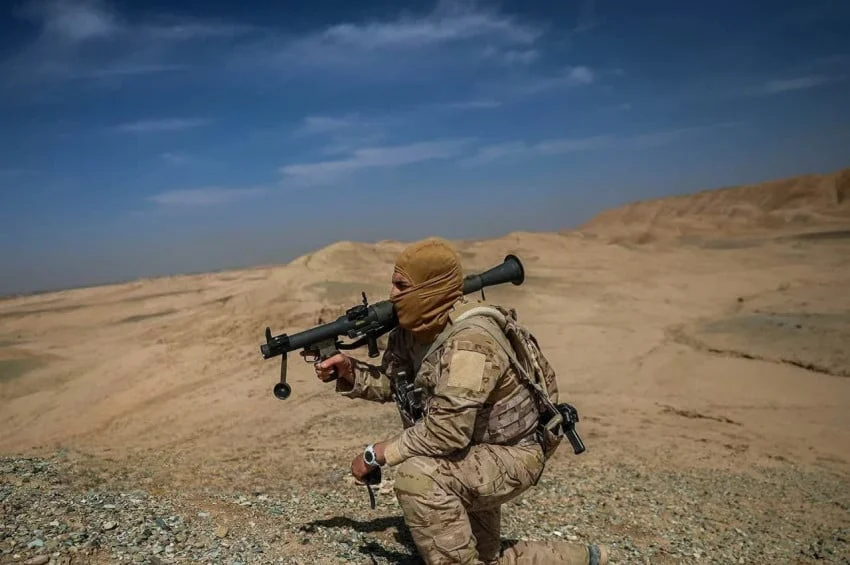
TEHERAN — Senior military leadership within the Islamic Republic of Iran has issued a strongly worded assessment regarding the strategic capabilities of foreign adversaries, asserting that both the United States and Israel are acutely aware of their limitations in any potential ground conflict. Speaking to reporters on a Saturday briefing, Brigadier General Nozar Nemati, Deputy Commander of the Iranian Army, declared that the nation’s borders remain completely secure and that enemy forces lack the operational capacity to challenge Iranian ground forces on home territory.
The remarks come amid heightened geopolitical tensions in the Middle East, characterized by recurring cycles of direct and indirect military engagement involving Iran, regional proxies, Israel, and the United States. According to General Nemati, foreign adversaries have thoroughly evaluated the risks of a land invasion and concluded that such an endeavor would result in catastrophic failure and profound humiliation. This official stance underscores Teheran’s deterrence strategy, which heavily emphasizes domestic defense preparedness, asymmetric capabilities, and regional missile and drone deterrence.
Strategic Posture and Border Defense
Elaborating on the readiness of the Iranian armed forces, General Nemati emphasized that ground units have maintained a state of high alert along the country’s extensive borders. Strategic troop deployments were executed well in advance of escalating hostilities, establishing fortified positions designed to repel any cross-border incursions.
Military analysts note that Iran shares complex and rugged borders with several nations, including Iraq, Turkey, Armenia, Azerbaijan, Turkmenistan, Afghanistan, and Pakistan. Securing these frontiers requires a massive mobilization of personnel, extensive surveillance infrastructure, and rapid-response capabilities. According to the Iranian military command, units from the regular army, alongside the Islamic Revolutionary Guard Corps (IRGC), have coordinated defensive measures to ensure seamless territorial integrity.
General Nemati highlighted that enemy intelligence assessments have undoubtedly factored in these extensive preparations. Consequently, foreign planners have refrained from authorizing ground offensives, recognizing the prohibitive costs associated with urban warfare, mountainous terrain, and entrenched defensive lines inside Iranian territory.
The Evolution of Asymmetric Warfare: Drones and Missiles
A cornerstone of Iran’s modern military doctrine relies on its indigenous defense manufacturing sector, particularly in the fields of unmanned aerial vehicles (UAVs) and precision-guided munitions. In his statements, General Nemati explicitly credited the performance of the army’s missile and drone units, noting their active participation in recent multi-day military engagements.
Over the past decade, Iran has developed a diverse arsenal of loitering munitions, reconnaissance drones, and ballistic missiles. Defense experts have frequently observed that while conventional air superiority is heavily tilted toward the United States and Israel, Iran has successfully cultivated a cost-effective asymmetric deterrent. By utilizing swarming drone tactics and advanced missile systems, Teheran aims to neutralize high-value assets, disrupt regional supply chains, and complicate the operational calculus of opposing military forces.
During recent conflicts—referenced by military officials as the 12-day and 40-day engagements—the integration of drone technology with traditional ground and air defense systems has evolved significantly. The operational success of these units, as highlighted by the deputy commander, reinforces Iran’s official narrative that its armed forces are capable of projecting power and defending critical infrastructure despite sweeping international sanctions and technological embargoes.
Historical Background and Regional Context
The current state of heightened military preparedness is the culmination of decades of strategic rivalry, proxy conflicts, and economic warfare between Iran on one side, and the United States and Israel on the other. The historical trajectory involves several key milestones, starting with the 1979 Islamic Revolution, which fundamentally transformed Iran from a Western-aligned monarchy into an ideological adversary of Washington and Tel Aviv.
In the decades following the revolution, military doctrine in Teheran shifted toward asymmetric deterrence to counter the technological superiority of Western-backed militaries. This included the formation of the Axis of Resistance—a network of state and non-state actors spanning Iraq, Syria, Lebanon, Yemen, and the Palestinian territories.
The introduction of direct military friction in recent years marked a significant departure from the historical shadow war, which was previously fought primarily via cyber warfare, economic sabotage, and proxy clashes. High-profile incidents, including the targeted assassinations of Iranian military scientists and senior commanders, as well as strikes on strategic facilities, have progressively compressed the threshold for direct confrontation.
Chronology of Recent Escalations
The operational readiness described by General Nemati is contextualized by a timeline of escalating tensions:
- Late February: Anticipating a broadening conflict, units of the Iranian regular army and allied forces initiate large-scale strategic deployments along critical border sectors, establishing fortified defensive perimeters and logistical supply lines.
- June: The onset of a high-intensity 12-day military confrontation involving exchanges of missile and drone strikes between Iran and its adversaries. During this phase, domestic UAV units are deployed extensively for reconnaissance and tactical strike missions.
- Subsequent Weeks: Operations extend into a protracted 40-day strategic standoff, testing the endurance and responsiveness of Iran’s integrated air defense, missile command, and ground mobilization networks.
- Present Day: Military leadership maintains heightened defense postures, utilizing public briefings to project strength, deter external incursions, and reassure the domestic populace regarding border security.
Official Responses and Strategic Implications
The public statements made by senior military figures like General Nemati serve multiple strategic purposes. Domestically, they are designed to project stability and capability, reinforcing public confidence in the national defense apparatus. Externally, the rhetoric acts as a psychological deterrent, signaling to Washington and Tel Aviv that any escalation toward a ground invasion would encounter fierce, well-prepared resistance.
International security analysts offer varied interpretations of these developments. While Western defense experts acknowledge the formidable nature of Iran’s mountainous terrain and urban defense networks, many point out that Iran’s conventional forces remain technologically outmatched in terms of modern air superiority, naval power, and advanced electronic warfare systems. Consequently, military strategists in the West have historically favored economic sanctions, cyber operations, targeted kinetic strikes, and maritime containment over costly and unpredictable ground invasions.
Nevertheless, the evolving capability of Iran’s missile and drone programs continues to alter the security architecture of the Middle East. The proliferation of these technologies to regional allies means that any hypothetical conflict would not be confined to Iranian borders, presenting a complex challenge for regional defense planners.
Broader Economic and Geopolitical Fallout
The persistent state of high alert and recurring military flare-ups carry substantial implications for global stability, energy markets, and international diplomacy. Iran occupies a geostrategically vital position adjacent to the Strait of Hormuz, a critical chokepoint through which a significant portion of the world’s petroleum passes. Any major escalation involving ground or maritime warfare threatens global energy supplies and guarantees severe economic reverberations worldwide.
Furthermore, the reliance on indigenous military production highlights the resilience of Iran’s defense industry despite decades of comprehensive international trade restrictions. By demonstrating the tactical utility of its drone and missile inventories, Teheran has also positioned itself as an active player in the global arms market, attracting scrutiny from major global powers regarding defense technology proliferation.
As diplomatic channels remain strained and regional actors navigate the delicate balance between deterrence and all-out war, statements from military commanders indicate that Iran intends to maintain its fortified defensive posture for the foreseeable future. The explicit warning that ground incursions will result in defeat remains a central pillar of the nation’s deterrent doctrine, setting the tone for ongoing strategic calculations across the Middle East.