The push to reopen the investigation into the infamous KM 50 tragedy, which resulted in the deaths of six members of the Front Pembela Islam (FPI) in December 2020, has gained significant political momentum. Mardani Ali Sera, a prominent member of Commission II of the House of Representatives (DPR RI), has formally expressed his support for a renewed inquiry, citing new developments and persistent public demands for transparency regarding the accountability of those involved in the incident.
The discourse surrounding the KM 50 case has been reinvigorated by explosive allegations involving the upper echelons of the Indonesian National Police. The recent, albeit controversial, narrative suggesting that former National Police Chief General Listyo Sigit Prabowo may have been implicated in the surveillance of President Prabowo Subianto has prompted lawmakers to reconsider the judicial outcomes of the 2020 incident. Mardani’s recent statements during an interview on iNews TV underscore a growing sentiment within the legislative body that the previous legal proceedings may have failed to identify the true intellectual authors behind the deaths.
The KM 50 Chronology: A December Night of Violence
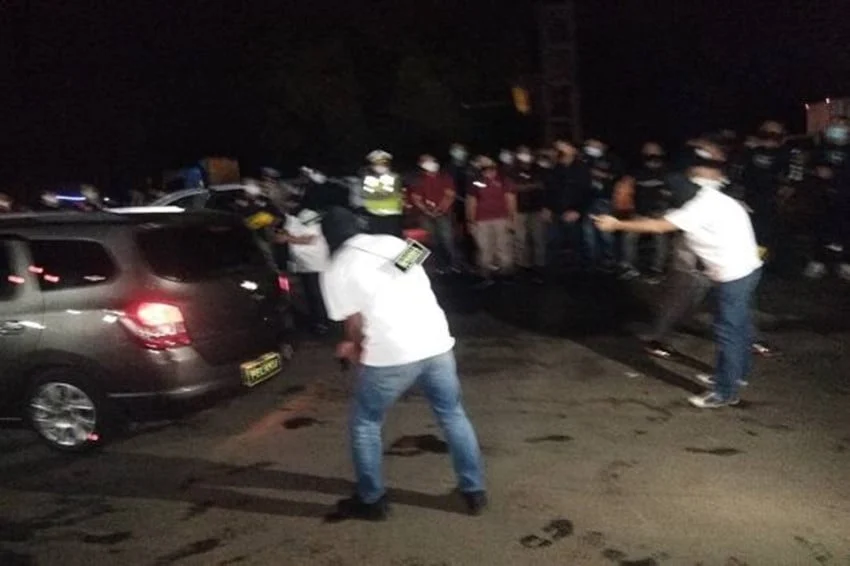
To understand the current clamor for a new investigation, one must revisit the events of December 7, 2020. The incident occurred on the Jakarta-Cikampek Toll Road near kilometer 50. According to the official police narrative provided at the time, members of the Jakarta Metropolitan Police were conducting a surveillance operation related to a criminal investigation involving Rizieq Shihab, the then-leader of FPI.
The police claimed that their vehicles were intercepted and attacked by members of FPI, leading to an exchange of gunfire. This initial account stated that the officers acted in self-defense, resulting in the deaths of six FPI members. However, the event immediately sparked widespread public skepticism. Human rights organizations, including the National Commission on Human Rights (Komnas HAM), conducted independent investigations.
While Komnas HAM concluded that the deaths of two of the victims were a result of a shootout, they determined that the deaths of the other four individuals occurred while they were under police custody, leading the commission to characterize the event as a human rights violation. Despite these findings, subsequent legal trials saw the acquittal of the police officers involved, a decision that left many families of the victims and civil society groups feeling that justice had been denied.
The Shift in Political Landscape
The renewed interest in the KM 50 tragedy is not occurring in a vacuum. It follows a shift in the Indonesian political landscape, where the current administration under President Prabowo Subianto is under pressure to address historical grievances and uphold the rule of law.
Mardani Ali Sera’s assertion that the case must be reopened is rooted in the belief that the judicial process in 2021 was incomplete. "It is entirely reasonable for the public to demand accountability for the six lives lost," Mardani stated. He emphasized that while the court may have followed procedural requirements, the failure to reach the "intellectual actors" behind the operation remains a major point of contention.
The involvement of Commission III of the DPR, which oversees law, human rights, and security, is critical. Mardani noted that internal discussions have already commenced within the commission. The parliamentary support suggests that the legislature is prepared to use its oversight powers to compel a review of the evidence, potentially looking into new testimony or forensic data that was either overlooked or excluded during the initial trial phase.
Allegations of Surveillance and Institutional Crisis
The mention of General Listyo Sigit Prabowo in the context of high-level surveillance has added a layer of complexity to the KM 50 discourse. For years, critics of the state’s security apparatus have alleged that the KM 50 incident was part of a larger, systemic effort to neutralize political opposition. The revelation—or accusation—that surveillance technologies may have been used against top political figures, including the current President, suggests that the security services may have operated with a degree of autonomy that undermined the democratic order.
This allegation has forced the police institution into a defensive position. Legal experts argue that if it is proven that the command structure of the police was involved in extra-legal surveillance, it strengthens the argument that the KM 50 tragedy was not merely an isolated incident of "self-defense" on a toll road, but rather a coordinated operation that requires a comprehensive investigation into the chain of command.
Official Responses and Institutional Readiness
The call to reopen the case has drawn varied responses from stakeholders. While the police have maintained that the case has been legally settled through the courts, several high-ranking officials have publicly signaled a willingness to face scrutiny. For instance, recent statements from figures like Dudung Abdurachman, who has expressed readiness to resign if found involved, reflect the gravity with which these accusations are being treated.
However, the legal path to reopening a closed case is fraught with challenges. Under Indonesian law, a case can generally only be reopened if there is "new evidence" (novum) that was not previously presented in court. Legal analysts suggest that the "new developments" mentioned by Mardani and other lawmakers must meet the threshold of judicial significance to override the principle of ne bis in idem—the legal doctrine that prevents an individual from being tried twice for the same offense.
The Role of Oversight and Civil Society
The role of the DPR in this matter serves as a bridge between public outcry and formal legal action. By keeping the KM 50 case on the agenda of Commission III, lawmakers are ensuring that the executive branch, specifically the National Police and the Attorney General’s Office, remains accountable.
Civil society organizations, such as KontraS and the Indonesian Legal Aid Foundation (YLBHI), have long advocated for a formal inquiry commission. They argue that the KM 50 incident is a test case for Indonesia’s commitment to human rights. The argument is that if the state cannot provide a transparent accounting of deaths involving law enforcement, it diminishes public trust in the entire legal system.
Broader Implications for National Security
The potential reopening of the KM 50 case carries significant implications for the future of the Indonesian National Police. A successful re-investigation could lead to:
- Institutional Reform: Pressure to restructure the oversight mechanisms of the police, ensuring that internal investigations are no longer handled solely by the institution itself.
- Legal Precedent: A shift in how the courts handle cases involving the use of lethal force by law enforcement, potentially establishing stricter criteria for "self-defense" claims.
- Political Stability: While a re-investigation might be politically sensitive, it could serve as a "cleansing" process for the new administration, allowing it to distance itself from the controversial security policies of the previous era.
Analysis: The Challenges Ahead
The road to justice for the victims of the KM 50 tragedy remains steep. Even with parliamentary support, the technical hurdles are immense. Evidence has likely degraded over the last four years, and the political will to prosecute senior officers—should evidence lead to them—remains an unknown variable.
Furthermore, the intersection of the KM 50 case with contemporary political rivalries risks politicizing the pursuit of justice. If the investigation is perceived as a tool to settle scores rather than a genuine effort to uphold human rights, it may lose the support of the very public it seeks to serve.
Nevertheless, the statement from Mardani Ali Sera serves as a clear indicator that the KM 50 tragedy has not been consigned to history. The convergence of new allegations regarding institutional misconduct and the persistent demand for truth suggests that the state will eventually be forced to provide a more definitive accounting of the events that transpired on that fateful night in December.
Conclusion
The case of the six FPI members killed in the KM 50 tragedy continues to haunt the Indonesian political conscience. As members of the DPR, including Mardani Ali Sera, push for a renewed inquiry, the focus shifts to whether the state can overcome institutional inertia to deliver justice. Whether this leads to a formal reopening of the case or remains a subject of intense parliamentary debate, the persistence of the issue highlights a fundamental truth about modern democracy: that historical grievances, if left unaddressed, will inevitably resurface to challenge the legitimacy of those in power. The coming months will be critical in determining whether the legislative push will manifest into a concrete legal process or remain a symbolic gesture in the ongoing struggle for accountability in Indonesia.