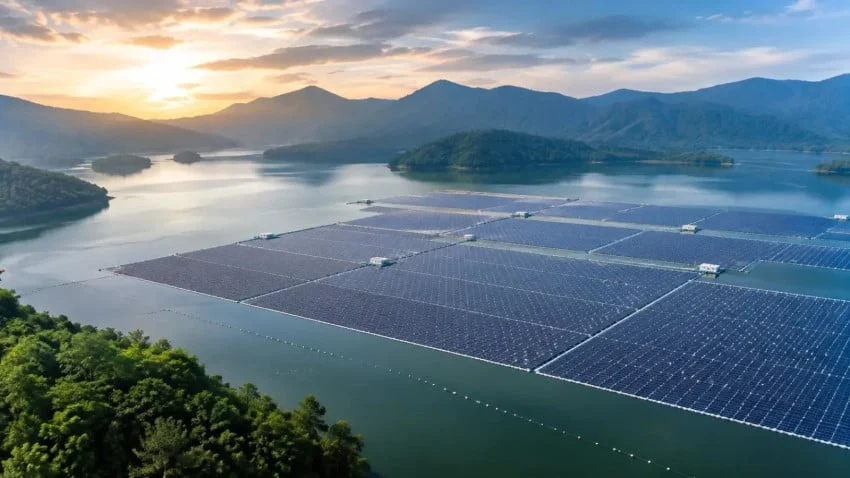
The Indonesian government faces the daunting yet transformative task of securing approximately USD71.3 billion—equivalent to roughly IDR1,140 trillion—to catalyze the development of 100 gigawatt peak (GWp) of solar photovoltaic (PV) capacity. This ambitious roadmap, unveiled as a cornerstone of the nation’s energy transition strategy, aims to shift the domestic power generation landscape away from coal-dependency toward renewable alternatives within a condensed three-year timeframe. However, as the deadline looms, financial analysts and industry stakeholders emphasize that the availability of capital is contingent upon a robust, transparent, and predictable regulatory framework.
The urgency of this initiative was underscored during a recent dialogue in Jakarta titled "Abundant Solar Energy: How to Accelerate PLTS Development?" held on November 26, 2026. The forum served as a focal point for experts to dissect the friction points currently hindering the flow of international and domestic capital into the solar sector.
The Financial Imperative and Risk Mitigation
At the heart of the investment challenge lies the structure of long-term project financing. Adhi Sulistyo Wibowo, a member of the Supervisory Board at Standard Chartered Indonesia, articulated a consensus among global financiers: the viability of a 100 GWp program rests on the "bankability" of individual projects.
"The longer the contract term, the longer the funding tenor, and the higher the level of certainty expected by financiers," Wibowo explained. In the context of large-scale renewable infrastructure, lenders look for stability in Power Purchase Agreements (PPAs). These contracts represent the primary revenue stream for developers; if the terms governing tariffs, risk-sharing between the developer and the state-owned utility PT PLN, and exit clauses remain ambiguous, the cost of capital inevitably rises, or investment stalls entirely.
Investors are particularly interested in projects that incorporate Battery Energy Storage Systems (BESS), given the intermittent nature of solar power. However, the integration of storage technologies adds layers of technical and financial complexity that require specialized regulatory guidance, which is currently in its nascent stages in Indonesia.
Chronology of the 100 GWp Roadmap
The path toward the 100 GWp goal has been marked by a series of high-level policy signals and symbolic milestones:
- August 25, 2026: Minister of Energy and Mineral Resources (ESDM) Bahlil Lahadalia officially inaugurated the program, marking the occasion with a groundbreaking ceremony for a solar project in Gilimanuk, Bali. This event served as the formal launch of the government’s aggressive solar strategy.
- Late 2026 (KTT ASEAN-Jepang): President Prabowo Subianto leveraged international forums, specifically the ASEAN-Japan Summit, to showcase Indonesia’s commitment to sustainable energy, highlighting the 100 GWp PLTS target alongside the national B50 biodiesel program as central pillars of the country’s climate mitigation portfolio.
- November 26, 2026: The industry dialogue in Jakarta highlighted the growing tension between the government’s ambitious targets and the market’s demand for improved policy consistency.
The Role of Independent Power Producers (IPP) and Danantara
The government’s strategy relies heavily on the Independent Power Producer (IPP) model, inviting private sector entities to take the lead in project development. This approach is intended to alleviate the fiscal burden on the state budget. Minister Bahlil has indicated that if the market fails to provide sufficiently competitive investment offers, the government is prepared to leverage Danantara—a state-managed investment vehicle—to fill the funding gap.
This "safety net" approach aims to reassure the market that the 100 GWp goal is non-negotiable. However, reliance on state-backed entities creates a potential crowding-out effect if not managed carefully. Private developers argue that they require a level playing field, where per-kilowatt-hour tariffs are not suppressed to levels that render projects unsustainable, and where bureaucratic hurdles in land acquisition and local permitting are streamlined.
Infrastructure and Grid Connectivity Challenges
Beyond financial structures, the physical integration of 100 GWp into the national grid presents a massive engineering challenge. Indonesia’s archipelagic geography means that the grid is fragmented into various regional systems. A solar surge of this magnitude requires significant investment in transmission lines and smart-grid technology to handle fluctuations in power supply.
Coordination between the Ministry of ESDM and PT PLN is viewed as the "make-or-break" factor. If the transmission network is not upgraded in tandem with the installation of solar panels, Indonesia risks facing curtailment issues—where generated power cannot be delivered to consumers—which would render the underlying investments worthless. Industry observers stress that a "National Grid Master Plan" must be synchronized with the 100 GWp rollout to ensure that the infrastructure keeps pace with capacity additions.
Broader Economic and Environmental Implications
The transition to 100 GWp of solar energy is not merely an environmental endeavor; it is an economic necessity for Indonesia’s competitiveness. As global markets implement carbon border adjustment mechanisms (such as the EU’s CBAM), Indonesian exports will increasingly be evaluated based on the carbon intensity of their production. Decarbonizing the energy grid is therefore vital to preserving the competitiveness of Indonesia’s manufacturing and industrial sectors.
Furthermore, the scale of the investment—USD71.3 billion—represents a significant stimulus for the domestic supply chain. If the government mandates local content requirements (TKDN) effectively, the program could foster the growth of a domestic solar panel manufacturing industry, creating thousands of jobs and fostering technological transfer.
However, the economic success of this transition hinges on policy continuity. Investors are wary of "regulatory creep" or sudden changes in fiscal policy following political cycles. For the 100 GWp program to reach fruition within the three-year target, the government must provide "grandfathering" clauses for PPAs and establish a transparent dispute resolution mechanism that operates independently of political shifts.
Analysis: Balancing Ambition with Execution
The Indonesian government’s target of 100 GWp in three years is unprecedented in the region. To achieve this, the following steps are deemed essential by analysts:
- Standardization of PPAs: Implementing a standardized, international-grade PPA template that clearly defines force majeure, change-in-law, and termination payments. This would significantly reduce the "risk premium" currently factored into project bids.
- Streamlining Permitting: Establishing a "one-stop-shop" for solar licensing that consolidates land, environmental, and construction permits. Currently, the multi-layered process involves various ministries and regional governments, often leading to years of delay.
- Transmission-First Strategy: Prioritizing the development of high-voltage direct current (HVDC) lines to connect resource-rich islands (like those with high solar irradiance) to high-demand industrial hubs.
- Incentivizing Storage: Providing clear fiscal incentives, such as tax holidays or import duty exemptions for lithium-ion battery technology, to encourage developers to include BESS in their project designs.
As the Indonesian government moves forward, the dialogue between the public and private sectors must transition from high-level aspirational planning to granular, contract-level operational strategy. While the abundance of solar radiation in Indonesia provides the raw material for this transition, the "sunlight" of investor capital will only materialize if the climate for investment is kept free from the clouds of regulatory uncertainty.
The next twelve months will be critical. Should the government succeed in finalizing a few flagship projects that demonstrate a clear, low-risk path to profitability, it will likely trigger a "snowball effect," attracting the necessary international institutional capital to meet the 100 GWp goal. Failure to address the systemic concerns raised by financiers, however, risks leaving the 100 GWp target as an unrealized ambition, ultimately delaying Indonesia’s necessary exit from its heavy reliance on fossil fuels.
The government’s willingness to engage in open dialogues, such as the recent event in Jakarta, is a positive indicator that policymakers are cognizant of these challenges. Yet, the transition from consultation to implementation remains the ultimate test of the current administration’s commitment to a greener, more sustainable economic future.