In a strategic move to fortify Indonesia’s vulnerable coastal infrastructure, PT Semen Indonesia (Persero) Tbk (SIG) has initiated a comprehensive revitalization project in Pulau Pari, located within the Kepulauan Seribu (Thousand Islands) archipelago. The initiative centers on the deployment of 2,000 units of BRINlock, an advanced precast concrete breakwater system designed to mitigate the accelerating threats of coastal erosion and rising sea levels. This infrastructure project serves as a critical intervention for the region, balancing the urgent need for environmental protection with the long-term sustainability of the island’s tourism-dependent economy.
The Growing Threat of Coastal Abrasion
Pulau Pari has long been recognized as a jewel of the Thousand Islands, attracting thousands of domestic and international tourists annually for its pristine beaches and thriving marine biodiversity. However, like many low-lying coastal areas in the Indonesian archipelago, the island is increasingly susceptible to the adverse effects of climate change. Rising sea levels and unpredictable weather patterns have intensified wave energy, leading to significant shoreline recession.
Abrasion poses a dual threat: it not only diminishes the physical landmass of the island but also destabilizes the delicate mangrove ecosystems that serve as natural buffers against storm surges. Without effective structural interventions, the island’s tourism infrastructure—which provides the primary livelihood for local residents—risks permanent degradation. The implementation of the BRINlock system is designed to act as a primary line of defense, absorbing and dissipating wave energy before it reaches the vulnerable shoreline.
Understanding BRINlock: An Engineering Innovation
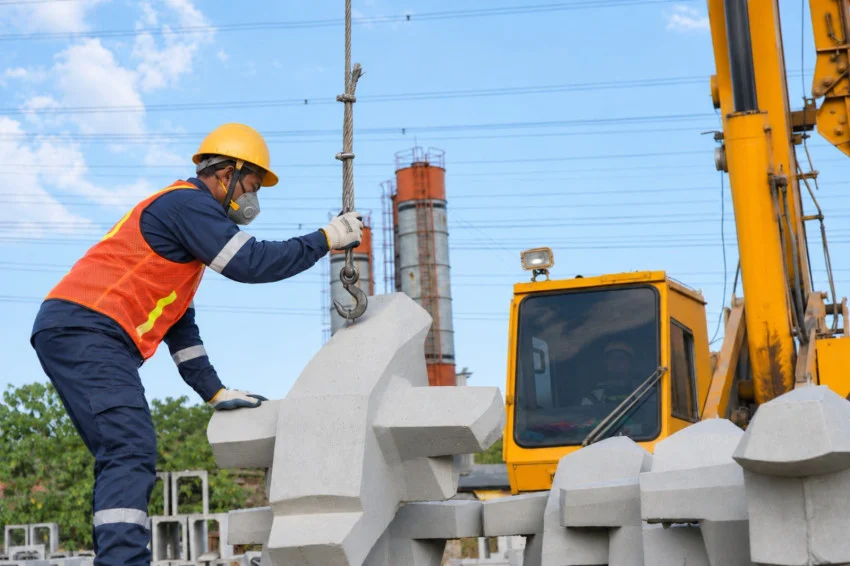
The BRINlock system represents a collaborative achievement in civil engineering, stemming from a strategic partnership between the National Research and Innovation Agency (BRIN) and SIG. Unlike conventional rock armor or tetrapod structures, the BRINlock unit is engineered with a specific geometry that maximizes interlocking capabilities. This design creates a stable, porous barrier that allows for water flow while effectively breaking the force of incoming waves.
Beyond its mechanical design, the material composition of BRINlock is a testament to the evolution of "green construction" in Indonesia. These units are fabricated using DuPro+ SBC, a specialty cement developed by SIG that significantly reduces the carbon footprint of the manufacturing process. By utilizing materials that produce 28% lower carbon emissions compared to ordinary Portland cement, the project aligns with national commitments to reduce industrial greenhouse gas emissions. Furthermore, the concrete is chemically formulated to withstand the harsh, corrosive environment of the open sea, characterized by high concentrations of sulfates and chlorides, ensuring a longer structural lifespan with minimal maintenance.
Project Chronology and Execution
The revitalization project has been executed with systematic precision to ensure minimal disruption to the island’s ecosystem. The supply and installation phase is being handled by PT Varia Usaha Beton (VUB), a subsidiary of SIG that specializes in high-performance precast solutions.
The project timeline has progressed as follows:
- August 2026: Commencement of logistics and initial deployment of the BRINlock units along the identified critical zones of the Pulau Pari shoreline.
- August – October 2026: Rapid deployment phase, during which VUB successfully delivered and installed 1,083 units of the total 2,000-unit requirement.
- Late 2026: The ongoing installation phase continues to focus on the 400-meter stretch of the most affected coastline, with a scheduled completion date aimed at reinforcing the island before the peak of the monsoon season.
The efficient mobilization of these resources demonstrates the capacity of SIG to integrate industrial manufacturing with localized, site-specific civil engineering requirements.

Strategic Implications for Environmental Sustainability
The revitalization of Pulau Pari is not merely a construction endeavor; it is a case study in integrated coastal zone management. Corporate Secretary of SIG, Vita Mahreyni, emphasized that the application of BRINlock is a direct response to the urgent challenges posed by environmental volatility. "The technology is designed to address the challenges of climate change, specifically the rise in sea levels that threatens the integrity of our coastal areas," Mahreyni stated.
By stabilizing the shoreline, the project provides a stable environment for the natural regeneration of mangrove forests. Mangroves are critical to the carbon-sequestration goals of Indonesia, as they act as efficient "blue carbon" sinks. By shielding these forests from direct wave impact, the BRINlock units effectively provide a secondary environmental benefit that extends beyond simple concrete protection.
Economic and Social Impact
For the local community of Pulau Pari, the revitalization project is vital for economic continuity. The Thousand Islands region relies heavily on tourism, and the loss of beach frontage due to erosion directly impacts the aesthetic and recreational value of the destination. By preventing further land loss, the intervention protects the assets of local businesses, guesthouses, and service providers who form the backbone of the island’s economy.
Furthermore, the involvement of a state-owned enterprise (SOE) like SIG highlights the government’s commitment to utilizing domestic technological innovations to solve national infrastructure problems. This project serves as a replicable model for other islands in the archipelago currently facing similar threats of abrasion and coastal degradation.
Comparative Analysis: Conventional vs. Sustainable Infrastructure
In the past, coastal protection in Indonesia often relied on heavy rock revetments or basic concrete blocks. These methods were frequently criticized for their high cost of transport and their tendency to exacerbate erosion in adjacent, unprotected areas. The BRINlock system, by contrast, offers:
- Lower Carbon Intensity: Through the use of DuPro+ SBC, the project sets a new standard for sustainable infrastructure in the marine sector.
- Structural Stability: The interlocking design of the armor units reduces the risk of displacement during high-energy storm events.
- Durability: Resistance to sulfated seawater ensures that the structural integrity remains intact for decades, reducing the need for recurring repairs that are typical in marine construction.
Future Prospects for SIG
The success of the Pulau Pari project marks a significant milestone for SIG as it continues to diversify its product portfolio toward specialized, high-durability, and low-carbon construction materials. The company has demonstrated a robust financial performance in 2026, with sales growth of 5.6% in the first half of the year, signaling a positive outlook for its business segments.
As the company looks toward the second half of 2026 and beyond, the focus remains on scaling these green technologies. The partnership with BRIN serves as a framework for future collaborative research, suggesting that the application of BRINlock may soon expand to other vulnerable coastal regions across Indonesia, including major ports and industrial maritime zones that require heavy-duty protection against the encroaching sea.
Conclusion
The installation of 2,000 BRINlock units in Pulau Pari stands as a proactive response to the existential threats posed by climate change. By blending advanced materials science with precise engineering, SIG has provided a tangible solution that protects both the environmental integrity and the economic future of the Kepulauan Seribu. As the project nears completion, it stands as a testament to the potential of sustainable, innovation-led infrastructure development in shielding Indonesia’s coastline for generations to come. Through such efforts, the resilience of the nation’s maritime frontier is significantly bolstered, setting a precedent for environmental stewardship in the face of global climate challenges.