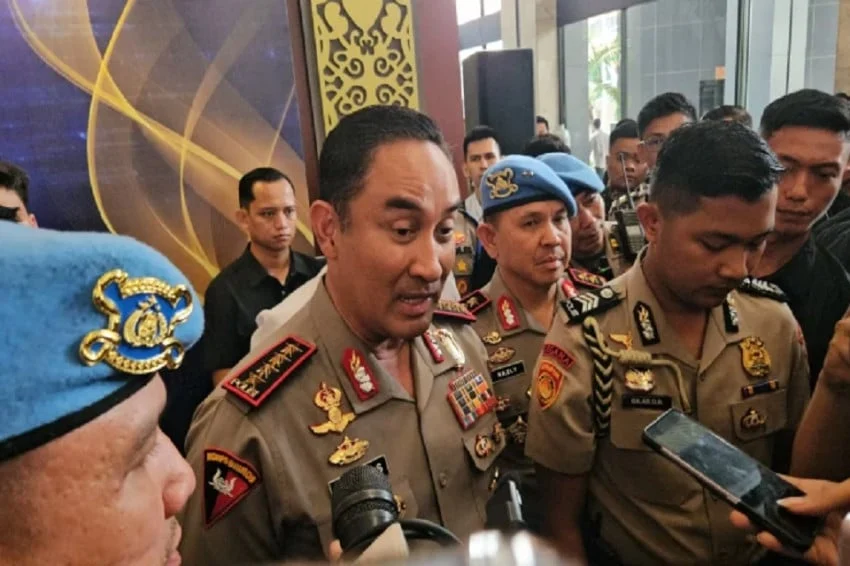
In a significant move to recalibrate the operational efficiency of the Indonesian National Police (Polri), Chief of National Police General Suyudi Ario Seto has issued a comprehensive directive resulting in the reassignment of 32 senior officers to key strategic positions within the Criminal Investigation Agency (Bareskrim Polri). This structural adjustment, formalized under the Police Telegram Number ST/2467/XI/KEP./2026, issued on November 2, 2026, represents a calculated effort to strengthen the force’s investigative capabilities amidst an increasingly complex national security landscape.
The scope of this latest rotation extends far beyond a routine administrative update. It is part of a broader, nationwide reorganization involving 264 high-ranking officers, encompassing both Perwira Tinggi (Pati) or high-ranking generals and Perwira Menengah (Pamen) or mid-ranking officers. By strategically placing personnel with diverse expertise into the Bareskrim command structure, the Polri leadership aims to address modern criminal threats, including cybercrime, transnational economic offenses, and organized narcotics trafficking.
Understanding the Structural Dynamics of the Reassignment
The 32 officers designated for the Bareskrim Polri include a diverse blend of ranks, reflecting the hierarchy required to manage sophisticated investigative units. The breakdown includes one Inspector General (Irjen Pol), three Brigadier Generals (Brigjen Pol), 24 Senior Commissioners (Kombes Pol), and four Adjunct Senior Commissioners (AKBP).
The reassignment list highlights a deliberate focus on expertise. For instance, the appointment of Irjen Pol Krisno Halomoan Siregar as the Policy Analyst for Narcotics Crimes underscores the police’s commitment to prioritizing the eradication of drug syndicates. Similarly, the elevation of seasoned officers to the positions of Principal Criminal Investigators (Penyidik Tindak Pidana Utama) indicates a move toward bolstering the agency’s capacity to handle high-profile cases that require extensive legal acumen and forensic precision.
Chronology and Contextual Background
The mandate, signed on November 2, 2026, marks the latest chapter in a series of administrative reforms spearheaded by General Suyudi Ario Seto since his tenure began. Historically, the Indonesian National Police frequently utilizes these large-scale rotations as a mechanism for organizational "refreshment" (penyegaran). This practice serves three primary functions: preventing the stagnation of institutional leadership, mitigating the risks of corruption through the rotation of personnel in sensitive roles, and ensuring that officers gain cross-departmental experience.
The timeline for these changes is particularly significant, as it follows a period of intense public scrutiny regarding the performance of law enforcement in handling white-collar crimes. By shifting personnel like Kombes Pol Riky Haznul to the position of Head of the Coordination and Supervision Bureau of Civil Servant Investigators (Karokorwas PPNS), the Polri is signaling a desire to better integrate its efforts with other state investigative agencies, creating a more cohesive front against complex financial malfeasance.
Key Appointments and Strategic Assignments
The following table outlines the notable transitions within the Bareskrim structure, demonstrating the strategic movement of talent:
| Name | Previous Position | New Position |
|---|---|---|
| Irjen Pol Krisno Halomoan Siregar | Pati Bareskrim Polri | Analyst (Narcotics) |
| Brigjen Pol Johanes R Manalu | Dosen Utama STIK | Principal Investigator |
| Brigjen Pol Muhammad Firman | Widyaiswara Utama Sespim | Principal Investigator |
| Brigjen Pol Tommy Aria Dwianto | Analyst (Interpol) | Bareskrim (Assigned to BNN) |
| Kombes Pol Riky Haznul | Kabagmindik Rowassidik | Karokorwas PPNS |
| Kombes Pol Andri Ananta Yudhistira | Wadirtipideksus | Kabagmindik Rowassidik |
| Kombes Pol Ferdy Irawan | Analyst (Cyber) | Deputy Dir. Economic Crimes |
These assignments demonstrate a clear "upward-mobility" path for experienced officers. The movement of Kombes Pol Ferdy Irawan from a policy analyst role to the Deputy Director of Economic Crimes (Wadirtipideksus) is a prime example of the organization promoting officers who have demonstrated specialized knowledge in digital-era investigations, which is crucial for modern economic crime fighting.
Official Stance and Internal Rationale
Public Relations Division Chief of the Indonesian National Police, Irjen Pol Johnny Eddizon Isir, addressed the media in Jakarta on Monday, November 9, 2026, to provide clarity on the rationale behind the mass rotation. He emphasized that the decision was not merely a bureaucratic formality but a necessity for long-term institutional health.
"The mutation is a natural and essential process within the Polri organization," Isir stated. "This action is taken to maintain institutional continuity and to enhance the effectiveness of police duties in facing the dynamic challenges of our times. It is a form of organizational rejuvenation designed to ensure that the leadership and execution of tasks remain optimal as the nature of crime continues to evolve in complexity."
Experts in police science note that this response aligns with the "Professional, Modern, and Trusted" (Promoter) paradigm often cited in Indonesian police doctrine. By ensuring that leadership is not static, the Polri aims to foster an environment where fresh perspectives are brought to bear on old investigative challenges, such as cold cases or long-standing systemic corruption.
Broader Implications and Impact on Public Trust
The impact of such a large-scale reassignment reaches far beyond the Bareskrim walls. For the public, the shifting of personnel is often perceived as an indicator of the force’s willingness to reform. When officers with a track record of successful prosecution or specialized training are moved into leadership positions, it often correlates with increased public confidence in the agency’s ability to uphold the rule of law.
Furthermore, the integration of 24 Senior Commissioners (Kombes) into the Bareskrim ecosystem suggests a "flattening" of the workload. By distributing the investigative burden among more senior and experienced mid-level managers, Bareskrim aims to reduce the backlog of cases. This is particularly relevant in the context of the 13 Kombes officers who were recently promoted to "star" status (Brigadier General), signaling that the current administration is prioritizing a merit-based promotion system.
Analysis: Challenges in the Current Security Climate
The current security landscape in Indonesia presents a triad of threats: digital transformation of crime, transnational drug trafficking, and systemic financial crimes. Each of these requires a different investigative approach. The appointment of officers with backgrounds in NCB/Interpol and Cyber-crime policy suggests that General Suyudi Ario Seto is preparing for a future where traditional policing is no longer sufficient.
The emphasis on PPNS (Civil Servant Investigators) coordination, as seen in the new role for Kombes Pol Riky Haznul, indicates that the police recognize the need for inter-agency collaboration. Because many economic crimes involve regulatory breaches under the purview of ministries like the Ministry of Finance or the Ministry of Trade, a more robust coordination mechanism is required to build airtight criminal cases.
Conclusion and Future Outlook
As the 32 officers transition into their new roles, the immediate focus will be on the continuity of ongoing investigations. The effectiveness of this reorganization will be tested in the coming months, particularly in how these officers handle high-stakes cases currently under the jurisdiction of the Bareskrim.
The move by General Suyudi Ario Seto is a bold statement of intent. By clearing the path for new leadership and re-aligning technical experts with investigative units, the National Police is attempting to stay ahead of the curve. The success of this policy will ultimately be measured by the rate of successful prosecutions and the degree to which the public feels that the Indonesian National Police is capable of delivering impartial, high-quality justice.
For the rank-and-file, this rotation provides a clear message: competence, specialization, and the ability to adapt to modern investigative techniques are the new hallmarks of a career in the Indonesian National Police. As the agency moves forward into the latter half of 2026, the structural changes implemented this November will likely serve as the foundation for the police force’s strategy in the years to follow. The public and international observers alike will be watching closely to see if this personnel influx translates into a more agile and effective Bareskrim Polri.