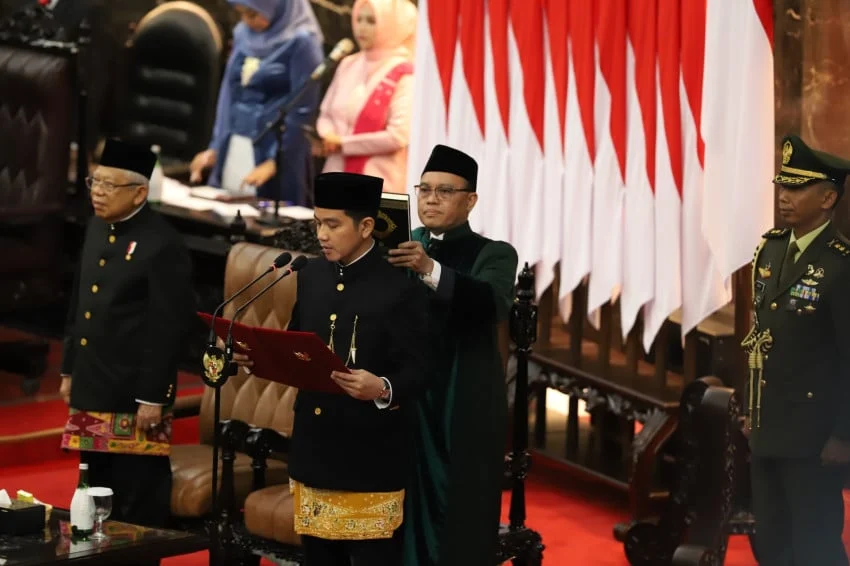
The office of the Vice President of the Republic of Indonesia has occupied a central and evolving role in the nation’s governance since the declaration of independence in August 1945. As contemporary political discourse in Jakarta increasingly focuses on debates surrounding the legitimacy and tenure of current Vice President Gibran Rakabuming Raka—including recent discussions regarding potential impeachment motions—a comprehensive examination of the historical lineage of Indonesia’s second-highest executive office provides essential context. From founding fathers and royal figures to career diplomats, military generals, technocrats, and regional leaders, a total of thirteen distinguished individuals have assumed the office of the Vice President of Indonesia across successive administrations.
This historical continuity highlights both the stabilizing function of the vice presidency during periods of national crisis and the dynamic constitutional transformations that have redefined executive power over nearly eight decades of republican history. Examining the origins, backgrounds, tenure dates, and political challenges faced by past holders of the office illuminates the institutional weight carried by contemporary occupants, particularly as lawmakers, political parties, and constitutional experts navigate intense polarization in the national legislature.
Contextualizing Contemporary Debates: The Political Landscape Surrounding Vice President Gibran Rakabuming Raka
The current political atmosphere in Jakarta has been marked by heightened scrutiny regarding the tenure of Vice President Gibran Rakabuming Raka, who assumed office for the 2024–2029 term alongside President Prabowo Subianto. Discussions regarding potential parliamentary mechanisms for impeachment have emerged from specific legal and political factions, drawing significant media attention and prompting debate among constitutional scholars, political analysts, and party leaders in the House of Representatives (DPR).
Critics and proponents of these procedural discussions have engaged in a robust debate regarding the strict legal thresholds required for the impeachment or removal of a sitting vice president under the 1945 Constitution of the Republic of Indonesia. According to the Indonesian constitutional framework, the removal of a president or vice president requires a rigorous multi-stage process involving allegations of treason, corruption, bribery, other severe criminal offenses, or moral turpitude, alongside formal evaluations by the Constitutional Court and subsequent deliberations by the People’s Consultative Assembly (MPR).
Amid these unfolding political developments, prominent public figures and legal experts have publicly addressed parliamentary leadership regarding how such petitions should be handled. Calls from figures such as constitutional law expert Jimly Asshiddiqie urging party leaders within the DPR to carefully weigh procedural propriety and national stability underline the gravity of these political maneuvers. As political parties calculate their stances, reviewing the historical precedent of Indonesia’s previous vice presidents offers a valuable perspective on how the office has weathered executive transitions, political friction, and constitutional amendments throughout the nation’s history.
Chronological Evolution and Diverse Backgrounds of Indonesia’s Vice Presidents
Since the inception of the republic, the office of the vice president has been held by figures representing a broad cross-section of Indonesian society. The diversity in professional backgrounds—spanning military leadership, political party activism, technocratic governance, entrepreneurship, religious scholarship, and regional administration—demonstrates how successive administrations sought to balance regional representation, ideological inclusivity, and functional expertise at the executive level.
The historical roster of Indonesia’s vice presidents encompasses thirteen distinct tenures, beginning with the proclamation era and extending through the Parliamentary Democracy period, the Guided Democracy era, the New Order regime, the Reformasi era, and into the contemporary democratic republic. Each era introduced unique constitutional responsibilities, ranging from serving as a primary advisor to the head of state to heading specific developmental portfolios or presiding over legislative bodies.
Detailed Biographical Profiles of Selected Historical Vice Presidents
Mohammad Hatta (1945–1956)
As Indonesia’s inaugural vice president, Mohammad Hatta played an indispensable role alongside President Sukarno in securing international recognition for Indonesia’s independence and laying the institutional foundations of the newly formed state. Born in Bukittinggi, West Sumatra, on August 12, 1902, Hatta was an intellectual, economist, and nationalist leader whose conceptualization of the cooperative economy earned him the title of the Father of Indonesian Cooperatives. Hatta resigned from the vice presidency in December 1956 due to growing ideological and political divergences with President Sukarno, particularly concerning the implementation of Guided Democracy and the centralization of executive authority. Hatta passed away on March 14, 1980, leaving behind a legacy of financial integrity, administrative discipline, and deep-seated democratic principles.
Sri Sultan Hamengku Buwono IX (1973–1978)
As the reigning monarch of the Yogyakarta Sultanate, Sri Sultan Hamengku Buwono IX contributed immensely to the survival and defense of the Indonesian republic during the national revolution, integrating his autonomous territory into the unitary state. Born in Yogyakarta on April 12, 1912, he held numerous high-level governmental positions before serving as vice president during the early New Order administration under President Suharto. Renowned for his administrative acumen, dedication to economic development, and quiet diplomacy, Hamengku Buwono IX chose not to seek a second term in 1978, citing health reasons and shifting political dynamics. He passed away on October 2, 1988, and was posthumously designated a National Hero of Indonesia.
Adam Malik (1978–1983)
Succeeding Sri Sultan Hamengku Buwono IX, Adam Malik brought a distinguished background in journalism, diplomacy, and party politics to the vice presidency. Born in Pematangsiantar, North Sumatra, on July 22, 1917, Malik was a co-founder of the Antara National News Agency and a prominent diplomat who served as Minister of Foreign Affairs and President of the United Nations General Assembly before assuming the nation’s second-highest office. His tenure as vice president was characterized by an independent streak and active engagement in international affairs. Malik passed away on September 5, 1984, remembered as a pragmatic statesman who navigated Cold War geopolitics with considerable skill.
Subsequent Figures in the Vice Presidential Lineage
The institutional lineage continued through subsequent decades with figures such as Umar Wirahadikusumah (1983–1988) and Sudharmono (1988–1993), both of whom brought military and administrative experience from the New Order apparatus. The transition into the late New Order and the tumultuous Reformasi era brought forward leaders such as Try Sutrisno (1993–1998) and B.J. Habibie (1998), the latter of whom assumed the presidency following the resignation of President Suharto.
The democratic consolidation era witnessed the tenures of Megawati Soekarnoputri (1999–2001), Hamzah Haz (2001–2004), Jusuf Kalla (2004–2009 and 2014–2019), Boediono (2009–2014), and Ma’ruf Amin (2019–2024), before the inauguration of Gibran Rakabuming Raka for the 2024–2029 term. Each of these leaders operated under distinct constitutional frameworks, particularly following the major constitutional amendments enacted between 1999 and 2002 that transformed the structural relationship between the executive and legislative branches.
Institutional Framework and Constitutional Powers of the Vice President
Under the amended 1945 Constitution, the role, powers, and succession protocols governing the Vice President of Indonesia are defined with greater legal precision than during the early decades of the republic. The constitution mandates that the president and vice president are elected directly on a single ticket by the citizenry, enhancing their democratic legitimacy and establishing a direct mandate from the electorate.
The primary constitutional duty of the vice president is to assist the president in the execution of governmental affairs. In the event that the president dies, resigns, is permanently incapacitated, or is removed from office during their term, the vice president assumes the presidential duties until the expiration of the term. This succession mechanism has been successfully invoked in Indonesia’s modern history, most notably during the transitions involving B.J. Habibie in 1998 and Megawati Soekarnoputri in 2001, demonstrating the institutional resilience of the constitutional framework during severe political crises.
Analysis of Legislative Dynamics and Impeachment Discourse
The recent discourse surrounding potential parliamentary scrutiny of Vice President Gibran Rakabuming Raka highlights the complex interplay between executive stability and legislative oversight in Indonesia’s presidential system. Political analysts note that while parliamentary parties possess constitutional mechanisms to initiate inquiries, interpellation, or expression of opinions (hak interpelasi, hak angket, and hak menyatakan pendapat), the threshold for actual impeachment remains exceptionally high to prevent political instability.
The requirement for bipartisan consensus across multiple political factions in the DPR, coupled with rigorous adjudication by the Constitutional Court, ensures that removal proceedings cannot be undertaken lightly based on transient political grievances. Observers emphasize that navigating these procedural hurdles requires adherence to constitutional norms and institutional restraint, ensuring that democratic governance and policy continuity remain prioritized above partisan contestation.
Broader Implications for Indonesia’s Democratic Consolidation
The ongoing debates regarding executive tenure and the historical evolution of the vice presidency carry significant implications for Indonesia’s democratic trajectory. As the world’s third-largest democracy continues to mature, the ability of its political institutions to resolve disputes through established legal channels rather than extra-constitutional disruption serves as a critical indicator of institutional strength.
The historical record demonstrates that the vice presidency has functioned effectively across diverse governance models, adapting to the shifts from parliamentary democracy to presidentialism and authoritarianism to democratic reform. Whether acting as a constitutional successor, a diplomatic envoy, or a principal advisor on economic and developmental policy, the occupant of the office remains a vital pillar of state administration.
Ultimately, as lawmakers, executive officials, and civil society monitor the debates surrounding Vice President Gibran Rakabuming Raka, the institutional lessons drawn from Indonesia’s past thirteen vice presidents underscore the enduring necessity of adherence to the rule of law, constitutional fidelity, and national stability in safeguarding the future of the republic.