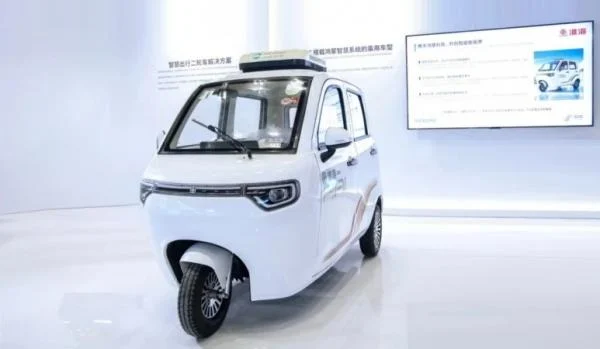
Huawei has officially expanded the reach of its proprietary HarmonyOS platform into the realm of electric tricycles (e-trikes), signaling a strategic pivot to digitize micro-mobility solutions in China. This development, unveiled during the HarmonyOS Ecosystem Conference 2026 in Shenzhen, represents the first instance of a three-wheeled vehicle being integrated with a comprehensive smart cockpit system traditionally reserved for high-end electric passenger cars. By partnering with the manufacturer Huaihai, Huawei is positioning its software as the foundational operating system for the next generation of urban transport, extending far beyond the standard automotive industry.
The Technological Leap in Micro-Mobility
For years, the technological sophistication of electric tricycles in China—a staple of logistics and personal transport in dense urban centers—has lagged significantly behind the rapid digitalization of four-wheeled New Energy Vehicles (NEVs). Huawei’s intervention changes this dynamic by introducing a suite of high-end features. The integration allows for voice-activated command systems, which enhance safety by minimizing the need for manual inputs while navigating traffic. Furthermore, the synchronization with HarmonyOS-powered smartphones allows users to monitor vehicle diagnostics, battery health, and location tracking in real-time, effectively turning a simple utility vehicle into a connected IoT node.
This move is not merely a software update; it is a fundamental shift in how micro-mobility is perceived. By providing the digital infrastructure for Huaihai’s hardware, Huawei demonstrates the scalability of its ecosystem. The certification presented during the Shenzhen conference confirms that these e-trikes are fully compatible with the broader HarmonyOS device network, meaning a user can seamlessly transition from their smartphone or tablet to their vehicle’s dashboard, maintaining a unified digital experience across all personal devices.
Chronology and Strategic Context
The announcement in late 2026 follows a multi-year trajectory of Huawei’s diversification strategy. Since facing severe restrictions in the global smartphone market, the company has aggressively invested in "smart car" solutions.
- 2021–2023: Huawei focused heavily on establishing partnerships with major automakers like Seres and BAIC to integrate its HI (Huawei Inside) system, which included autonomous driving capabilities and smart cockpits.
- 2024: The company began signaling its intent to move into the mass-market transportation segment, recognizing that the sheer volume of low-speed electric vehicles in China provided a massive, untapped market for software services.
- 2025: Research and development teams worked in conjunction with Huaihai to adapt the robust, high-performance HarmonyOS architecture for the simpler, low-voltage electrical systems typical of e-trikes.
- November 2026: The official unveiling at the HarmonyOS Ecosystem Conference marks the commercial launch of the initiative, establishing a new industry benchmark for smart micro-mobility.
This progression highlights Huawei’s long-term goal: to become the "Android of the automotive world," providing the operating system for everything from luxury sedans to functional three-wheeled delivery vehicles.
Industry Implications and Market Data
The Chinese market for electric tricycles is vast, with millions of units produced annually for both the logistics and the aging-population transport sectors. According to recent industry data, the micro-mobility sector in China is currently undergoing a rapid transformation. With urbanization rates continuing to climb, the demand for compact, efficient, and "smart" urban transit has never been higher.
The integration of Huawei’s software adds significant value to a hardware segment that has historically competed primarily on price. By adding smart functionality, Huaihai and Huawei are effectively creating a "premium" tier of e-trikes. Analysts suggest that this could trigger a wave of upgrades across the industry, as consumers and logistics companies prioritize efficiency, safety, and connectivity over basic cost-savings.
Furthermore, the data collected from these smart tricycles provides Huawei with invaluable insights into traffic patterns, battery efficiency in various climates, and user behavior. This data-driven approach is critical for the future of "Smart Cities," where vehicles, traffic lights, and public infrastructure must communicate to optimize flow and reduce congestion.
Official Perspectives and Partnership Dynamics
While Huawei has maintained a strict stance on not manufacturing the vehicles themselves—adhering to its role as a technology enabler rather than an original equipment manufacturer (OEM)—the partnership with Huaihai is highly symbiotic. Huaihai provides the industrial design, structural integrity, and market distribution channels, while Huawei provides the intelligence.

During the conference, spokespeople from both companies emphasized the concept of "Seamless Connectivity." For the user, this means the e-trike is no longer an isolated tool. When an operator approaches the vehicle, the smartphone can automatically authenticate the user, load their preferred settings, and prepare the navigation system before the driver even sits down. This level of user-centric design was previously unheard of in the utilitarian world of three-wheeled vehicles.
Industry experts note that this partnership is a calculated move to secure "ecosystem stickiness." By embedding HarmonyOS into the daily tools of the workforce, Huawei ensures that its software remains an indispensable part of the user’s life, creating a defensive moat against competitors who may offer similar hardware but lack the integrated digital environment.
Analysis: A Shift Toward Hyper-Connectivity
The integration of HarmonyOS into e-trikes highlights a broader shift in the tech industry: the dissolution of boundaries between consumer electronics and physical transportation. We are entering an era where a delivery driver’s e-trike is as connected as a high-end luxury sedan. This convergence offers several critical advantages:
- Safety and Maintenance: Real-time monitoring allows for predictive maintenance, alerting users to battery degradation or mechanical faults before they result in a breakdown.
- Logistics Efficiency: For delivery companies, the integration with smart systems allows for route optimization, real-time load management, and enhanced fleet coordination.
- User Experience: Voice-controlled interfaces reduce distraction, potentially lowering accident rates in busy urban environments.
- Data Monetization: The aggregation of travel data provides a roadmap for urban planners to improve city infrastructure, though it also raises questions regarding data privacy and the ethical management of user information.
However, the expansion is not without challenges. Integrating high-performance software into hardware that operates in diverse, often harsh environments requires significant optimization. The low-voltage systems of e-trikes are fundamentally different from the high-voltage architecture of electric cars, and ensuring that HarmonyOS runs smoothly without draining the vehicle’s battery is a significant engineering feat.
Broader Economic and Societal Impact
The transition to smart micro-mobility has significant implications for China’s economy. As the country continues to push for carbon neutrality, the shift from traditional combustion engines to electrified, smart-connected fleets is essential. Huawei’s move accelerates this transition by making the switch to electric more appealing for commercial operators who are wary of the downtime associated with new technology.

Moreover, by bringing sophisticated technology to the "bottom of the pyramid" of transportation, Huawei is democratizing access to smart services. This is a crucial aspect of China’s digital infrastructure strategy, where the goal is to bridge the gap between high-tech luxury goods and the tools used by the average citizen in their daily labor.
Future Outlook
As Huawei continues to refine the HarmonyOS ecosystem, the scope of its automotive and micro-mobility division is expected to grow. While the current focus is on the Chinese domestic market, the success of this model could provide a blueprint for expansion into other emerging markets in Southeast Asia, India, and Africa, where three-wheeled vehicles are the backbone of the economy.
The collaboration with Huaihai serves as a pilot project for a wider, decentralized network of smart devices. If successful, we can expect to see HarmonyOS integrated into a wider range of hardware, from electric bicycles and scooters to specialized industrial machinery.
In conclusion, the integration of HarmonyOS into electric tricycles is a watershed moment for the mobility industry. It underscores a fundamental shift where software, not just physical manufacturing, defines the utility and value of a vehicle. For Huawei, it is a strategic victory that reinforces its position as a central pillar of the digital age, effectively embedding its technology into the very fabric of urban mobility. Whether this move will lead to a new standard in global micro-mobility remains to be seen, but the initial reception in Shenzhen suggests that the market is hungry for a more connected, efficient, and intelligent approach to how we move through our cities. As technology continues to evolve, the distinction between a "smart device" and a "vehicle" will likely continue to blur, and Huawei is clearly positioning itself to be at the center of that transformation.