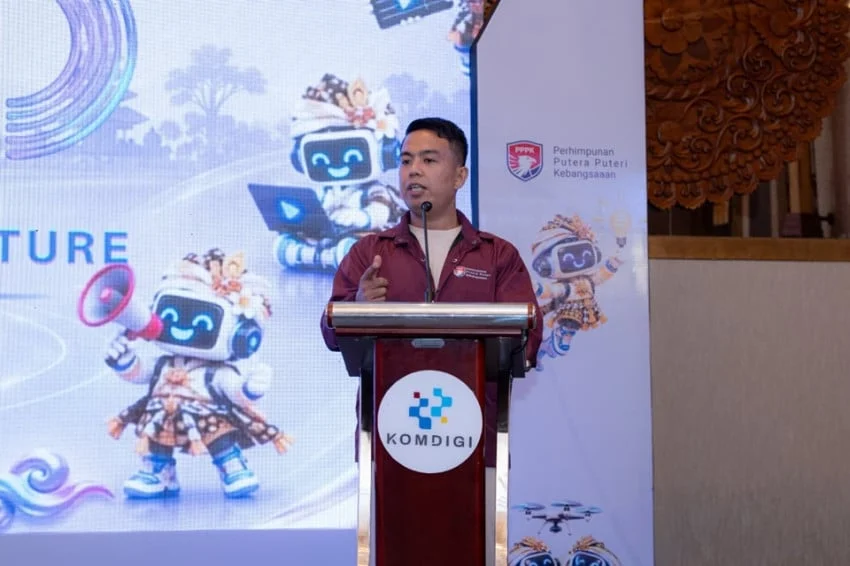
The rapid acceleration of the digital economy has placed unprecedented demands on the global workforce, forcing developing nations to rapidly adapt their educational paradigms and infrastructure to remain competitive. Within Southeast Asia, Indonesia stands at a crucial crossroads, balancing a burgeoning demographic dividend with the urgent need to upskill its young population. Addressing this national imperative, the Perhimpunan Putera Puteri Kebangsaan officially launched Digispace 2026 at the luxurious SereS Springs Resort in Gianyar, Bali. This strategic initiative serves as a multi-layered platform designed to bolster digital literacy, foster indigenous talent, and democratize the practical application of Artificial Intelligence (AI) across diverse segments of Indonesian society.
Conceived as a direct response to the widening technological gap between urban centers and regional areas, Digispace 2026 seeks to bridge structural divides by offering hands-on technological experiences to the public. As digital transformation sweeps through traditional sectors, initiatives like Digispace 2026 are no longer supplementary; they are foundational pillars required to support Indonesia’s long-term economic roadmap. By focusing heavily on AI literacy, internet accessibility, and practical implementation, the event organizers aim to equip the next generation of Indonesian leaders, creators, and professionals with the tools necessary to navigate and shape the future global technological landscape.
Core Objectives and Vision of Digispace 2026
The primary mandate of Digispace 2026 centers on empowering the nation’s youth and broader communities through comprehensive technological immersion. According to Muhammad Risal, Secretary-General of the Perhimpunan Putera Puteri Kebangsaan, the program directly aligns with national strategies aimed at fast-tracking digital talent acquisition. Speaking at the opening sessions in Gianyar, Risal emphasized that sustainable national development relies heavily on the inclusive distribution of digital knowledge.
"This program also serves as a form of contribution in supporting the government’s efforts to accelerate the development of Indonesia’s digital talent," stated Risal, highlighting the collaborative ethos underpinning the entire endeavor.
The initiative is built upon three foundational pillars: enhancing baseline digital literacy, expanding secure and productive internet access across various societal tiers, and demystifying Artificial Intelligence. Organizers recognize that while consumption of digital media in Indonesia is exceptionally high, the transition from passive consumers to active creators and innovators remains a critical bottleneck. Digispace 2026 aims to dismantle these barriers by translating abstract technological concepts into tangible, accessible modules that participants can directly apply to their daily lives and professional endeavors.
The Chronology and Setting of the Bali Summit
The selection of Bali—specifically the cultural and scenic backdrop of Gianyar—as the host location for Digispace 2026 was a deliberate choice by the steering committee. While the island is globally renowned for tourism, regional stakeholders are increasingly eager to diversify the local economy into a thriving hub for creative industries, remote work, and technology startups.
The event unfolded over a structured multi-day schedule, beginning with high-level stakeholder alignments and policy discussions, followed by immersive public workshops, and culminating in interactive technology showcases.
Day One of the summit commenced with opening remarks from national youth leaders, academic partners, and technology sector representatives. This initial phase focused heavily on outlining the current state of Indonesia’s digital ecosystem, addressing infrastructural hurdles, and debating the regulatory frameworks necessary to foster ethical AI adoption. Experts from various technological backgrounds dissected the multifaceted challenges facing the archipelago, noting that while mobile penetration is remarkably high, institutional integration of advanced computing tools requires targeted intervention.
Day Two transitioned from theoretical discourses to active, experiential learning laboratories. Participants were introduced to the AI Experience zone, a core component of the itinerary designed to provide real-time interaction with cutting-edge machine learning tools, generative design platforms, and automated workflow systems. By allowing attendees to directly experiment with AI applications, the program successfully bridged the gap between academic theory and practical utility, enabling participants to visualize how these technologies can be leveraged for creative content generation, problem-solving, and entrepreneurial ventures.
Contextualizing Indonesia’s Digital Talent Landscape
To fully understand the significance of Digispace 2026, one must examine the broader socioeconomic and educational context of modern Indonesia. Projections by the Ministry of Communication and Digital indicate that Indonesia requires millions of digitally literate professionals over the next decade to achieve its Golden Indonesia 2045 vision. Despite producing a vast number of university graduates annually, a persistent skills mismatch continues to challenge local industries. Traditional educational curricula often struggle to keep pace with the exponential growth of technologies such as machine learning, cloud computing, and automated data analytics.
Compounding this skills gap are infrastructural disparities between major metropolitan zones like Jakarta, Surabaya, and Bandung, and the country’s outer islands and rural districts. While fiber-optic backbones suchat the Palapa Ring project have significantly improved national connectivity, access to high-end computing resources, specialized mentorship, and advanced digital training remains unevenly distributed.
Initiatives spearheaded by civil society organizations like the Perhimpunan Putera Puteri Kebangsaan play an indispensable role in supplementing formal educational frameworks. By deploying targeted bootcamps, interactive seminars, and regional workshops, these programs reach demographics that might otherwise be excluded from the formal tech economy. In doing so, they democratize access to the tools of the Fourth Industrial Revolution, ensuring that the benefits of technological progress are shared equitably across geographic and socioeconomic boundaries.
The Role of Artificial Intelligence in Grassroots Empowerment
A central theme of the discussions at Digispace 2026 was the democratization of Artificial Intelligence. Historically perceived as an esoteric domain reserved for software engineers and corporate research laboratories, AI has evolved into a ubiquitous utility capable of transforming virtually every sector of human activity—from agriculture and healthcare to education and micro-entrepreneurship.
During the AI Experience sessions in Gianyar, participants explored how generative AI can be utilized by small and medium-sized enterprises (SMEs) to optimize marketing strategies, automate customer service inquiries, and streamline administrative workflows. For Indonesia’s vast SME sector—which contributes over 60 percent to the national Gross Domestic Product (GDP)—the ability to harness low-cost or open-source AI tools can mean the difference between stagnation and scalable growth.
Muhammad Risal elaborated on this transformative potential, noting that the objective is to teach participants not merely how to use existing technologies, but how to think critically and innovatively about problem-solving. "Digispace 2026 is organized with the aim of enhancing public understanding and capability in facing digital technological developments, specifically in recognizing, developing, and utilizing AI technology productively and responsibly," Risal explained.
This emphasis on responsibility is particularly timely. As AI adoption accelerates globally, concerns regarding data privacy, algorithmic bias, misinformation, and the ethical use of synthetic media have taken center stage in policy debates. By embedding discussions of responsible usage directly into the curriculum, Digispace 2026 ensures that young Indonesians are not only technologically proficient, but also ethically grounded.
Broader Impacts, Challenges, and Future Implications
While events like Digispace 2026 provide crucial localized momentum, broader economic analyses suggest that scaling these efforts will require deep, sustained collaboration between the public sector, private enterprises, and community organizations. Experts tracking Indonesia’s digital transformation frequently highlight three interdependent pillars that must be addressed simultaneously: infrastructure, regulation, and education.
On the infrastructural front, reliable high-speed internet access remains the foundational prerequisite for any meaningful digital inclusion initiative. While urban centers enjoy robust broadband connectivity, continuous capital investment is required to extend high-capacity networks to remote and underdeveloped regions. Without stable connectivity, the practical application of cloud-based AI tools and advanced educational platforms remains restricted.
Regulatory frameworks represent another critical domain. As Indonesia positions itself as a regional leader in digital innovation, policymakers are tasked with crafting agile laws that protect consumer data, secure intellectual property, and safeguard national security without stifling entrepreneurial creativity or overburdening emerging tech startups. Striking this delicate balance will determine whether Indonesia can attract foreign technology investments while nurturing domestic champions.
Finally, the educational ecosystem must undergo continuous revision. Programs modeled after Digispace 2026 offer a blueprint for agile, experiential learning that can be integrated into non-formal education settings. However, long-term impact will depend on the institutionalization of these principles within the national school curriculum, ensuring that digital literacy and computational thinking are instilled in students from an early age.
Conclusion: A Stepping Stone Toward a Resilient Digital Future
As Digispace 2026 concluded its intensive sessions in Bali, the reverberations of the event extended far beyond the walls of the SereS Springs Resort. By uniting young citizens, community leaders, and technology advocates under a shared vision of empowerment, the Perhimpunan Putera Puteri Kebangsaan has demonstrated the profound impact of grassroots engagement in national development.
The insights gained, the networks forged, and the technical competencies acquired during the summit will serve as vital building blocks for participants as they return to their respective communities. In an era defined by rapid disruption and technological evolution, initiatives that prioritize inclusive education, ethical AI stewardship, and practical empowerment are indispensable. Digispace 2026 stands as a testament to Indonesia’s proactive stance on digital transformation—proving that with the right guidance, the nation’s youth are not merely passive spectators of the future, but active architects empowered to build a resilient, innovative, and digitally inclusive society.