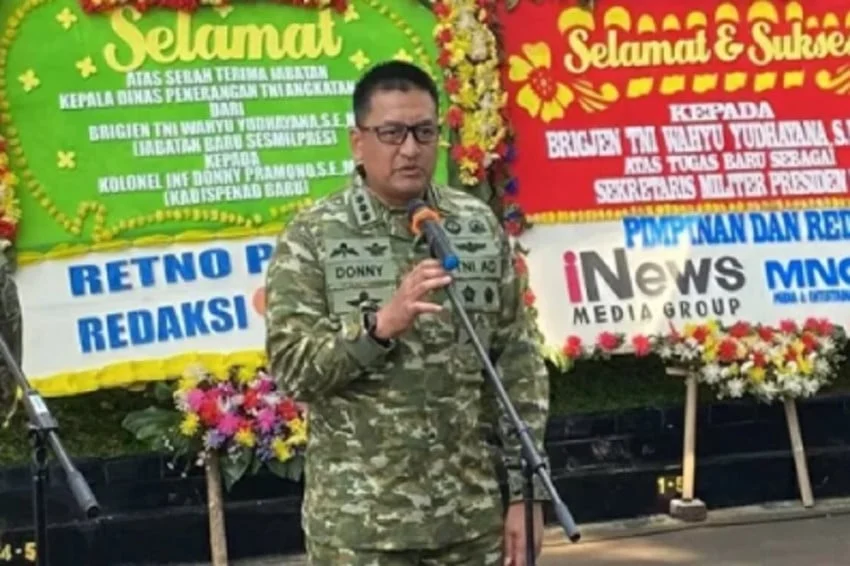
The Indonesian National Armed Forces, specifically the Army (TNI AD), has formally addressed recent public discourse and media inquiries regarding the increased visibility and deployment of military personnel within the Jakarta metropolitan area. In an official statement provided on Wednesday, November 4, 2026, the Head of the Army Information Service (Kadispenad), Brigadier General TNI Donny Pramono, clarified that the troop movements are a standard procedural measure aimed at maintaining the readiness and operational preparedness of military units amidst shifting national security landscapes.
This development follows a period of heightened political and social sensitivity in the capital, prompting observers to scrutinize the presence of military assets in urban centers. According to the TNI leadership, the deployment is not a reactive measure to a singular event but rather a proactive strategy mandated by the evolving legal framework governing national defense.
Legal Foundation and Constitutional Mandate
The primary justification provided for the troop deployment is rooted in the legislative updates made to the nation’s defense structure. Brigadier General Donny Pramono explicitly referenced the recently enacted Law Number 3 of 2025, which serves as an amendment to the foundational Law Number 34 of 2004 concerning the Indonesian National Armed Forces (TNI).
The 2025 amendment underscores the TNI’s core mission: the preservation of state sovereignty, the defense of territorial integrity, and the protection of the nation’s safety. Under the new legal paradigm, the military is tasked with maintaining a high level of "deterrence capability." This function is specifically designed to mitigate various forms of threats—whether conventional or unconventional—that may jeopardize the interests of the state, with a heightened emphasis on the seat of government.
Legal experts note that the 2025 revisions provide the military with a more robust framework for internal coordination, particularly in situations where civil order may be perceived as being at risk of disruption. By positioning Jakarta as a focal point for this readiness, the TNI is signaling that the capital remains the highest priority for operational security.
Chronology of Events and Deployment Patterns
The movement of personnel into Jakarta began appearing on the public radar in early November 2026. While the TNI has maintained that such movements are routine, the timing has coincided with broader public discourse regarding the stability of the executive branch.
In late October 2026, several incidents involving allegations of unauthorized surveillance against high-ranking government officials surfaced. These reports, which suggested potential compromises to presidential security and sovereignty, triggered a wave of concern among political analysts and civil society organizations. While there is no direct, publicly documented causal link provided by the military between these specific incidents and the troop deployments, the proximity of the two events has led to intense speculation.
The deployment patterns have been observed primarily in strategic areas of Jakarta, including major transport hubs, government installations, and key logistical corridors. Military analysts observing the movement noted that the presence of personnel appears to be integrated with existing local security apparatuses, implying a collaborative approach between the military and the National Police (Polri), who traditionally hold jurisdiction over civil security.
Understanding the Military’s Role in Domestic Security
To understand the current deployment, it is necessary to examine the broader role of the Indonesian military in domestic affairs. Since the reform era (Reformasi) began in 1998, the military’s domestic footprint has been a subject of ongoing debate. While the 2004 law sought to limit the military’s involvement in civilian governance, the subsequent 2025 amendments reflect a global trend where security agencies are being given broader mandates to address "hybrid threats."

Hybrid threats encompass a spectrum of challenges, including cyber-attacks, disinformation campaigns, and political instability that could paralyze government operations. By deploying personnel in Jakarta, the TNI is likely aiming to:
- Demonstrate Deterrence: High-visibility presence serves to discourage actors who might seek to exploit perceived weaknesses in the capital’s security.
- Rapid Response Capability: Positioning assets within the urban sprawl reduces the reaction time required to protect critical infrastructure in the event of a national security emergency.
- Logistical Rehearsal: Regular deployment cycles ensure that troops remain familiar with the operational terrain of the capital, a vital requirement for effective defense.
Reactions from Political Observers and Security Experts
The military’s transparency regarding the deployment has been met with a mixture of support and caution. Security analysts suggest that while the TNI’s constitutional role is clear, the perception of a "militarized" capital can have psychological effects on the public.
"There is a delicate balance between maintaining operational readiness and ensuring that the military’s presence does not inadvertently create an atmosphere of anxiety," noted a senior fellow at a Jakarta-based defense think tank. "The challenge for the TNI is to communicate that these deployments are for the protection of the state, not the suppression of civil discourse."
Opposition figures have called for clearer communication regarding the duration and scope of these deployments. They argue that if the mobilization is purely for "readiness," it should be conducted in a way that minimizes disruption to daily life. Conversely, supporters of the administration argue that given the recent volatility in the political landscape—including debates surrounding the integrity of executive protocols—a visible security presence is a necessary stabilizing force.
Supporting Data and Statistical Context
Data from the Ministry of Defense indicates that the 2025 budget allocation for territorial operations has seen a marginal increase. This funding is dedicated to the modernization of surveillance equipment and the enhancement of inter-agency communication channels.
Furthermore, the "Operational Readiness Index" for units stationed in the Greater Jakarta area has reportedly been upgraded to "Level Alpha," the highest tier of alert. This status, while standard for critical periods, is usually reserved for major national events or periods of elevated risk. The fact that this status has been maintained into November suggests that the military leadership is operating under a long-term strategic outlook rather than a temporary fix.
Broader Impact and Future Implications
The long-term implications of the current security stance are twofold. Firstly, it reaffirms the TNI’s position as a central pillar of the nation’s stability, reinforcing its role not just as a border defense force, but as an integral component of internal security. Secondly, it sets a precedent for how the 2025 laws will be interpreted in practice. If this deployment proves successful in maintaining order without infringing upon civil rights, it may become the standard operating procedure for future administrations facing similar challenges.
However, the risk remains that an over-reliance on military assets for domestic security could lead to a gradual erosion of the distinction between military and police functions. The ongoing collaboration between the TNI and civil authorities will be scrutinized closely by human rights observers and international monitoring groups.
Conclusion
The statement from Brigadier General Donny Pramono serves as an important clarification in a period of uncertainty. By grounding the deployment of personnel in the legal framework of the 2025 amendments, the TNI is attempting to provide a transparent basis for its actions. As the situation in Jakarta evolves, the military’s adherence to its defined role as a protector of sovereignty will remain under the watchful eyes of both the public and the political establishment.
For the time being, the presence of military personnel in the capital should be viewed as an exercise in national contingency planning. As the government navigates the complexities of modern governance, the TNI remains, as the leadership has stated, a force that must always be prepared to safeguard the nation against any eventuality. Whether this strategy will lead to a more stable environment or further complicate the national discourse remains a subject of ongoing analysis. For now, the military maintains that its operations are strictly in accordance with the law, focusing solely on the mandate to ensure that the nation—and its capital—remains secure, stable, and protected from all forms of threats.