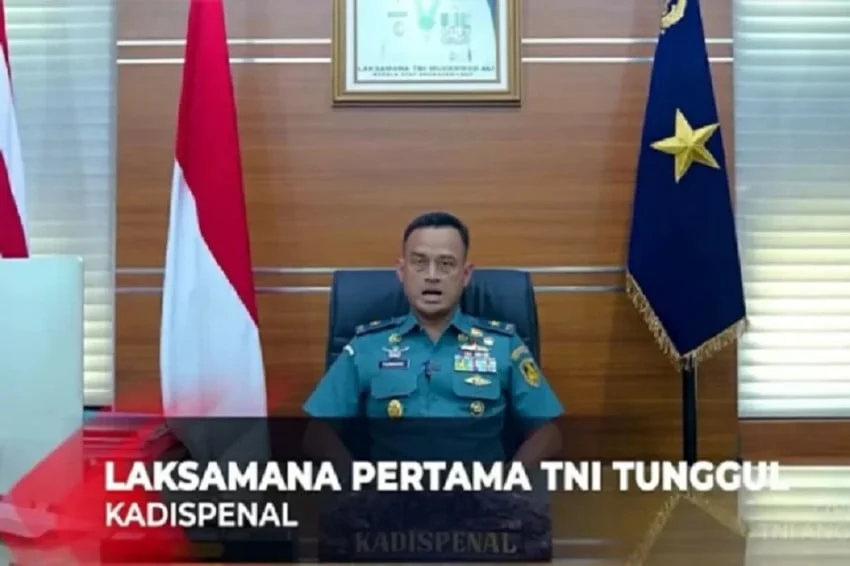
The Indonesian Navy, known as Tentara Nasional Indonesia Angkatan Laut (TNI AL), has officially confirmed the mobilization of significant troop deployments to the Jakarta metropolitan area. This strategic maneuver, acknowledged by the Head of the Navy Information Service (Kadispenal), First Admiral Tunggul, on Wednesday, November 4, 2026, serves a dual purpose: ensuring the maintenance of national stability and facilitating the necessary preparations for upcoming high-stakes military exercises, specifically the Operational Readiness Training (OVT).
As the capital city of Indonesia, Jakarta serves as the center of gravity for the nation’s political, economic, and social activities. The arrival of additional naval assets and personnel in the capital has prompted public discussion, yet military officials maintain that these movements are part of routine security protocols and institutional readiness training.
Strategic Objectives Behind the Deployment
The deployment is not an isolated event but rather a component of a broader security architecture designed to safeguard the nation’s capital during a period of potential regional uncertainty. According to official statements, the primary directive for the troops currently entering the Jakarta area is to bolster existing security measures.
In military operations, the term "stability" often refers to the prevention of civil unrest, the protection of vital national infrastructure, and the readiness to respond to non-traditional threats. By positioning specialized naval units within the metropolitan perimeter, the TNI AL aims to create a rapid response capability that can be deployed at a moment’s notice.
Furthermore, the "Operational Readiness Training" (OVT) mentioned by the naval command indicates that these troops are undergoing specific drills designed to test their interoperability. These exercises often involve maritime security protocols, coastal defense simulations, and urban warfare preparedness, which are essential for maintaining the integrity of the capital’s defense perimeter.
Chronology of Recent Military Activity
The mobilization of troops into Jakarta follows a series of regional security developments that have necessitated a heightened state of alert across all branches of the Indonesian Armed Forces (TNI).
- Late October 2026: Preliminary planning for the OVT begins, with command centers across the country receiving directives to evaluate personnel readiness.
- November 1, 2026: Preliminary logistical movements are detected, with naval assets being repositioned to support central command operations.
- November 3, 2026: Increased visibility of military personnel and vehicles is observed within the Jakarta outskirts, leading to public queries regarding the intent of the deployment.
- November 4, 2026: First Admiral Tunggul issues an official confirmation, clarifying that the deployments are standard operational procedures aimed at national security and training objectives.
This timeline reflects a structured approach to institutional readiness, ensuring that the armed forces remain a deterrent force capable of managing both internal and external challenges.
Inter-Branch Coordination: The Role of TNI AD
The mobilization of the Navy is occurring in tandem with broader discussions regarding the preparedness of the Indonesian Army (TNI AD). It is important to note that the military structure in Indonesia operates under a unified command system. When the Navy initiates large-scale movements, the Army and Air Force are typically kept in the loop to ensure seamless logistical and strategic coordination.
In a related development, the Indonesian Army recently reaffirmed its own stance on personnel readiness, noting that all branches must remain vigilant in the face of evolving security landscapes. While the Navy focuses on the maritime-to-land interface, the Army maintains the integrity of the land-based defensive perimeter. This integrated approach ensures that no single sector of the capital is left vulnerable, reinforcing the "Total People’s Defense System" (Sishankamrata) which serves as the bedrock of Indonesia’s defense doctrine.
The Significance of Operational Readiness Training (OVT)
The Operational Readiness Training is a critical element in the development of the Indonesian military’s professional capabilities. Unlike standard drills, OVT is designed to simulate complex, high-pressure environments that require real-time decision-making from unit commanders.
For the naval units deployed to Jakarta, the training focuses on:
- Command and Control (C2) efficiency: Ensuring that communication channels between field units and headquarters remain secure and effective.
- Logistic Sustainability: Testing the ability to maintain a standing force in an urban environment, which presents unique challenges compared to standard maritime operations.
- Inter-Agency Cooperation: Coordinating with civilian authorities to ensure that military activities do not disrupt public services while simultaneously enhancing security.
These exercises are essential for maintaining the morale and proficiency of the troops. By rotating personnel through these training cycles, the TNI AL ensures that it has a deep pool of experienced soldiers capable of adapting to diverse mission requirements.

Implications for National Stability
The presence of military forces in the capital naturally draws attention to the state of national security. Analysts suggest that such deployments are often proactive measures to signal strength and readiness. In an era of unpredictable geopolitical shifts, the ability of a nation to project power and maintain order within its own capital is a fundamental metric of its sovereignty.
The deployment of naval personnel, in particular, highlights the evolving nature of maritime security. While the Navy is traditionally associated with blue-water operations, its role in domestic security has expanded to include the protection of critical maritime-linked infrastructure, such as ports, communication hubs, and strategic facilities located within the Jakarta Bay area.
By integrating these units into the capital’s security grid, the government is effectively bridging the gap between coastal defense and urban protection. This ensures that in the event of an emergency, the transition from peace-time status to crisis management is seamless.
Official Stance and Public Communication
The transparency shown by the Indonesian Navy in confirming these movements is indicative of a broader shift toward greater military-civilian transparency. By addressing public curiosity through the Head of the Navy Information Service, the military mitigates the risk of misinformation spreading through social media and other digital channels.
"We assure the public that these movements are purely for professional and defensive purposes," First Admiral Tunggul noted in his briefing. This professional communication style is vital for maintaining the trust of the Indonesian people, who are sensitive to the visibility of military hardware and personnel within civilian spaces.
The military’s message is clear: the deployment is a standard, planned, and necessary part of the institution’s duty to ensure the safety of the state and its people. There is no indication that these measures are linked to any specific immediate threat, but rather they represent a long-term strategy for maintaining institutional readiness.
Analysis: The Future of Urban Military Preparedness
Looking forward, the integration of naval and army assets in metropolitan areas is likely to continue as part of the TNI’s modernization efforts. The "Minimum Essential Force" (MEF) program, which has guided Indonesian military procurement and training over the past decade, emphasizes not just the acquisition of modern weaponry, but the development of human capital.
The current mobilization serves as a practical testing ground for these modernized units. If the OVT in Jakarta proves successful, the techniques and protocols developed during these weeks will likely be standardized across other major urban centers in the Indonesian archipelago.
Furthermore, as the climate and geopolitical landscape continue to shift, the ability to rapidly mobilize forces is becoming increasingly important. Whether responding to humanitarian disasters or conventional security threats, the capability to move troops efficiently and integrate them into the local infrastructure is a skill set that the TNI is clearly prioritizing.
Conclusion
The mobilization of TNI AL troops to Jakarta is a calculated strategic decision aimed at enhancing the security posture of the Indonesian capital. Through a combination of rigorous Operational Readiness Training and a commitment to maintaining national stability, the Navy is ensuring that its personnel are prepared for the complexities of the modern security environment.
As the exercises proceed, the focus will remain on the efficacy of these units and their ability to integrate with broader national defense systems. For the residents of Jakarta, the presence of these troops is a reminder of the military’s ongoing commitment to the protection of the nation’s center of gravity. As the situation evolves, the TNI’s continued commitment to transparency and professional conduct will remain the most effective tool in maintaining public confidence and national order.
The events of early November 2026 serve as a testament to the fact that in a modern, interconnected world, the stability of a nation is not just about the strength of its borders, but about the preparedness of its forces in the very heart of its civilization. Through continued training and strategic positioning, the Indonesian military continues to evolve, ensuring it remains a formidable guardian of the nation’s interests, both at sea and on the ground.