
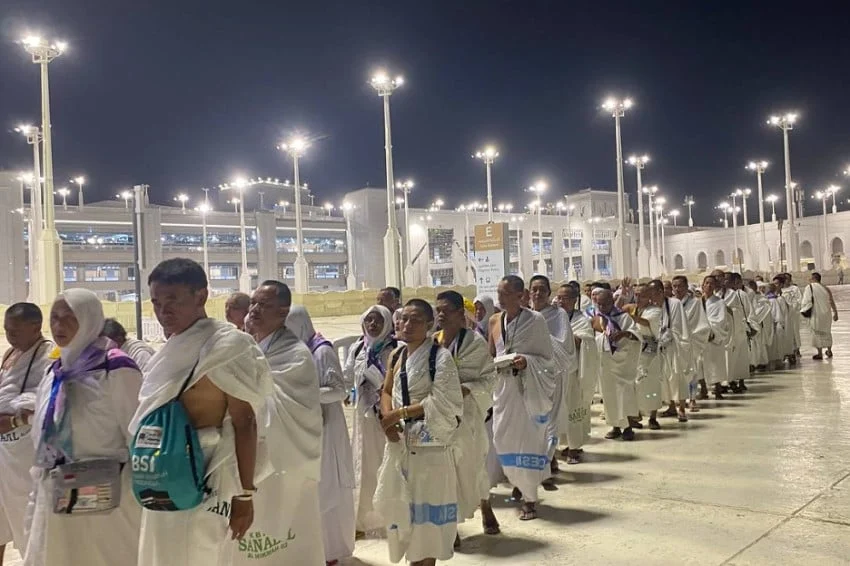
The Ministry of Haji and Umrah of the Republic of Indonesia has officially announced a comprehensive update regarding the roster of Special Hajj pilgrims deemed eligible to complete their payment obligations for the upcoming 1448 Hijriah / 2027 Gregorian pilgrimage season. This critical administrative adjustment stems from a rigorous data verification process executed by the ministry’s Center for Data and Information, commonly known as Pusdatin. The updated lists and associated directives have been formally transmitted through official written circulars directed to the leadership of all authorized Special Hajj Organizing Providers, universally referred to as Penyelenggara Ibadah Haji Khusus, operating across the Indonesian archipelago.
This policy update marks a pivotal moment in the ongoing preparations for the
1448 AH/2027 AD Hajj operations. As the Indonesian government continues to refine its digital infrastructure and administrative oversight, the Ministry of Haji and Umrah has placed a paramount emphasis on transparency, accountability, and strict adherence to regulatory standards. By leveraging advanced data integration techniques, the ministry aims to ensure that quota allocations for special pilgrimage packages are distributed fairly and in absolute compliance with national statutes and bilateral agreements established with the Kingdom of Saudi Arabia.
Chronology of the Administrative Update and Regulatory Framework
The dissemination of the updated pilgrim roster is anchored in a structured chronological sequence of administrative actions initiated by the Directorate General of Special Hajj Services. According to official records, the current update is formally codified under the Letter of the Director-General of Special Hajj Services Number S-103/PL/2026, which was officially issued on November 19, 2026. This directive serves as a direct operational successor and corrective measure to an earlier foundational circular, specifically Letter Number S-100/PL/2026, released earlier in the month on November 5, 2026.
The initial November 5 circular laid out the primary framework for identifying the initial cohort of Special Hajj pilgrims eligible to settle their Biaya Perjalanan Ibadah Haji Khusus, the specific travel cost component for special pilgrimages, and initiated the formal procedure for submitting deposit balances for the 1448 AH/2027 AD season. However, as administrative processes progressed, the imperative for deeper verification became apparent. The ensuing cross-referencing of national identification numbers, historical pilgrimage logs, and demographic parameters by Pusdatin necessitated the immediate issuance of the November 19 update to rectify discrepancies and refine the final roster.
Tuti Rianingrum, the Director of Special Hajj Services at the Ministry of Haji and Umrah, formally addressed the rationale behind these sweeping administrative adjustments during a press briefing. Speaking from Jakarta on Monday, November 23, 2026, Rianingrum elaborated on the technical necessities driving the ministry’s recent actions.
Based on the results of comprehensive data verification conducted meticulously by the Pusdatin team within the Ministry of Haji and Umrah, officials identified specific cases within the preliminary roster of pilgrims previously categorized as eligible to pay that required immediate status readjustments in strict accordance with prevailing laws and regulations, Rianingrum explained. She emphasized that these adjustments are not arbitrary but are designed to uphold absolute fairness for the hundreds of thousands of citizens currently languishing on the extensive national waiting lists.
Key Findings Driving Status Adjustments
A detailed examination of the appendix accompanying the official circular reveals two primary categories of discrepancies that triggered the necessity for status revisions among the Special Hajj cohort. These findings underscore the complexity of managing large-scale religious tourism and pilgrimage logistics in a nation with the world’s largest Muslim population.
The first major finding involves the identification of individuals who were previously listed as eligible to pay but were subsequently detected through database cross-checks to have performed the Hajj pilgrimage within a timeframe of less than eighteen years. Under current Indonesian regulations designed to expand equitable access to the sacred journey, individuals who have successfully completed the Hajj are generally barred from repeating the journey within a mandatory waiting period of eighteen years, thereby ensuring that first-time pilgrims are granted priority access to limited national quotas.
The second critical finding centers on demographic compliance, specifically concerning age restrictions. The verification protocols flagged several instances where prospective Special Hajj pilgrims failed to meet the mandatory minimum age requirement of sixteen years at the time of departure or registration processing. Ensuring compliance with the age threshold is vital for safeguarding the health, physical resilience, and overall safety of pilgrims navigating the demanding rituals of the Hajj in the challenging climate of Saudi Arabia.
Comprehensive Breakdown of the Updated Pilgrim Roster
Beyond outlining the disqualifying or restrictive criteria, the newly released documentation, officially titled the List of Eligible Special Hajj Pilgrims for the Year 1448 AH / 2027 AD, provides an exhaustive and granular dataset. The attached appendices encompass a vast array of individual identifiers designed to offer complete transparency to both the participating travel operators and the general public.
The detailed registry incorporates vital parameters for each registrant, beginning with the unique serial portion number, the full legal name of the pilgrim, exact chronological age, current financial settlement status, and the specific category of the pilgrimage portion. Furthermore, the documents explicitly identify the assigned Special Hajj Organizing Provider responsible for logistical coordination, the geographical domicile spanning regencies, municipalities, and provinces, as well as the designated conventional or Islamic Bank Authorized to Receive Deposits for the pilgrimage travel costs. Crucially, the documentation also features comprehensive notes detailing the current administrative validation status of each pilgrim’s dossier, ensuring that all stakeholders possess real-time visibility into processing milestones.
Broader Context and Synergy with Wider Ministry Initiatives
The release of this updated roster does not occur in a vacuum; rather, it forms a crucial pillar of the Ministry of Haji and Umrah’s broader, multi-layered strategic preparations for the 2027 operational cycle. The ministry has simultaneously been advancing parallel initiatives aimed at elevating the overall quality of service delivery across all operational sectors.
In a related development highlighting the ministry’s rigorous approach to operational excellence, Kemenhaj recently announced comprehensive preparations for the recruitment and training of 1,970 prospective Hajj officers for the 2027 season. Senior ministry officials have repeatedly stressed that these administrative personnel, medical professionals, and spiritual guides must demonstrate exceptional competence, deep cultural sensitivity, and a steadfast, unwavering orientation toward serving the needs of the pilgrims. The synchronization between meticulous pilgrim database management—as demonstrated by the Pusdatin verification drive—and the deployment of highly trained field personnel reflects a holistic administrative philosophy adopted by the ministry under its current leadership.
Implications for Special Hajj Organizing Providers and Pilgrims
The enforcement of these updated eligibility criteria carries profound operational and financial implications for the Special Hajj Organizing Providers operating across the country. Authorized travel agencies are now legally and administratively obligated to review their internal client databases against the newly issued ministerial circular. Agencies holding contracts with individuals whose statuses have been adjusted or deferred must proactively communicate these changes to the affected clients, guiding them through the necessary administrative recourse or refund procedures concerning their deposit balances.
For the prospective pilgrims themselves, the announcement serves as a sobering reminder of the stringent governance governing the Hajj journey. While disappointment may be felt by those whose statuses have been revised due to the 18-year waiting rule or age thresholds, legal analysts and community leaders point out that such measures are indispensable for maintaining the integrity of the system. With national waiting lists stretching across decades for standard quotas, ensuring that special pilgrimage slots are occupied strictly by eligible candidates preserves public trust in the institutional framework of religious administration.
Analytical Perspective on Administrative Modernization
From a broader administrative perspective, the systematic cleansing and updating of the 1448 AH/2027 AD Hajj registry illustrate the ongoing digital transformation within Indonesian state institutions. By empowering entities such as Pusdatin to execute cross-platform data audits, the Ministry of Haji and Umrah is systematically closing loopholes that historically allowed administrative oversights or policy circumventions.
This data-driven governance model minimizes human error, combats potential fraudulent practices, and aligns Indonesian bureaucratic practices with international standards of transparency. As the timeline toward the 2027 Hajj season progresses, the ministry’s ability to enforce these standards rigorously will serve as a definitive benchmark for future pilgrimage administrations. Stakeholders across the religious tourism sector will undoubtedly monitor the implementation of these directives closely, anticipating further operational announcements as the departure windows draw nearer.
