
A service vehicle belonging to the Mobile Brigade Corps (Brimob) unit stationed in Sentolo, Kulon Progo, was struck by a Yogyakarta International Airport (YIA) train at an unguarded level crossing in Tapen Hamlet, Argosari, Sedayu, Bantul, Yogyakarta Special Region (DIY), on Thursday morning, July 23. The incident, which occurred around 08:15 WIB (Western Indonesian Time), involved an Isuzu vehicle with police plate number 17416-XX IV and a KA Bandara (Airport Train) traveling from the north. Fortunately, both police personnel inside the vehicle, identified as Bripka Yudi Saputro (39), the driver, and his passenger, Bripda Tommy Priambada (31), escaped without injury, though the front hood of their official vehicle sustained damage. This near-miss has reignited critical discussions regarding the safety protocols and infrastructure at numerous unmanaged railway crossings across Indonesia, particularly in densely populated areas like DIY.
The Incident Unfolds: A Detailed Chronology
The events leading to the collision began as the Isuzu service vehicle, carrying the two Brimob officers, was proceeding from the southern direction towards the railway crossing located in Dusun Tapen, a known local artery for vehicular traffic. According to Iptu Rita Hidayanto, the Head of Public Relations for the Bantul Police, the driver, Bripka Yudi Saputro, reportedly failed to adequately observe the railway track situation upon approaching the crossing. This lapse in vigilance meant he did not perceive the impending arrival of the KA Bandara, which was simultaneously traversing the same section of the track from the north.
As the vehicle advanced onto the tracks, the high-speed airport train, unable to stop or significantly alter its course in such close proximity, made contact with the front passenger side of the Brimob vehicle. The impact, while significant enough to cause visible damage to the vehicle’s front hood, was thankfully not a direct, full-force collision, which could have resulted in far more severe consequences. The train "brushed against" or "sideswiped" the vehicle, as described by Iptu Rita Hidayanto, preventing the Isuzu from being dragged or completely demolished. Following the incident, the damaged Brimob vehicle was promptly evacuated from the scene and transported to a nearby workshop for repairs, allowing normal traffic flow and train operations to resume swiftly.
Behind the Wheel: The Involved Personnel and Vehicle
The two police officers involved, Bripka Yudi Saputro and Bripda Tommy Priambada, are members of Brimob Sentolo, a regional unit of Indonesia’s elite Mobile Brigade Corps. Brimob, known for its rapid response capabilities and specialized training, plays a crucial role in maintaining public order, counter-terrorism, and other high-risk operations. The service vehicle, an Isuzu, is typical of the robust transport used by security forces for various duties, from patrol to logistical support. The fact that the vehicle belonged to a law enforcement agency, whose personnel are often trained for high-stress situations and operate under strict protocols, underscores the universal danger posed by unguarded railway crossings, even to experienced drivers. Their fortunate escape without injury is a testament to the limited nature of the impact and perhaps a degree of quick reaction, but it also serves as a stark reminder of how close they came to a potentially fatal accident. The incident could have easily escalated, involving more serious injuries or even fatalities, further emphasizing the need for enhanced safety measures.
The Unmanned Peril: Context of Level Crossings in Indonesia
This incident at the Tapen Hamlet crossing highlights a pervasive and critical issue in Indonesia: the inherent dangers associated with unmanned or inadequately managed railway level crossings. Indonesia’s extensive railway network, while vital for transportation, intersects with countless roads, creating thousands of such crossings. Many of these, particularly in rural or semi-urban areas, lack essential safety infrastructure such as automatic boom barriers, warning lights, or even dedicated human guards.
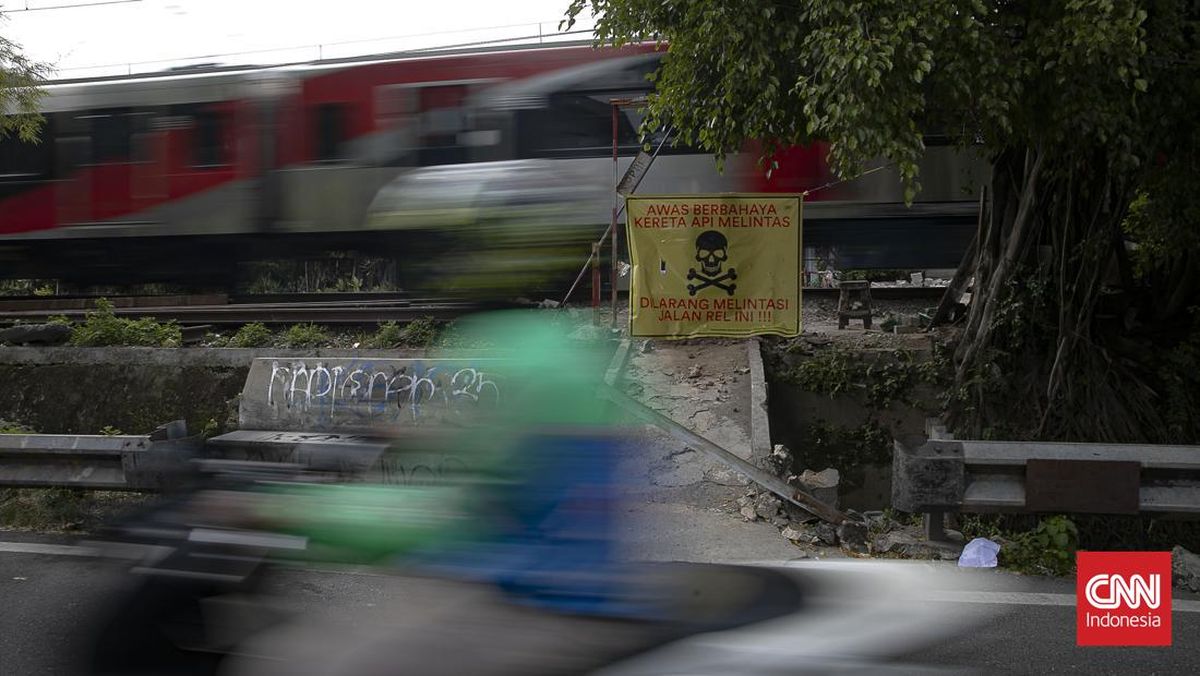
According to data from PT Kereta Api Indonesia (KAI), the state-owned railway company, accidents at level crossings are a recurring problem, often resulting in fatalities and significant property damage. In recent years, KAI has reported hundreds of incidents annually, with human error (both drivers and pedestrians) and the absence of adequate safety measures at crossings being primary contributing factors. The Ministry of Transportation has also frequently emphasized the urgency of improving level crossing safety, acknowledging the challenges posed by illegal crossings and the sheer scale of the existing network. Efforts have been made to close illegal crossings and upgrade others, but progress is often slow due to budgetary constraints, land acquisition issues, and the sheer number of locations requiring intervention. The Tapen Hamlet crossing, despite having a physical "pos perlintasan" (crossing post) structure, remained without operational automatic barriers or human supervision, fitting the profile of many high-risk crossings across the archipelago. This particular crossing’s infrastructure was reportedly scheduled to become fully operational with automated safety features in the following month, a delay that tragically coincided with this collision.
The Yogyakarta International Airport (YIA) Train Line and its Significance
The train involved in the incident was a KA Bandara, serving the Yogyakarta International Airport (YIA) in Kulon Progo. The YIA train line is a critical infrastructure project designed to improve connectivity between the bustling city of Yogyakarta and its modern international airport, which is located further west. These airport trains operate on a relatively frequent schedule and at higher speeds to ensure efficient passenger transfers. The increased speed and frequency of modern train services like the KA Bandara necessitate a commensurate upgrade in safety standards at all intersecting road crossings. Any disruption to the YIA train service, even minor, can impact air travelers and the operational efficiency of the airport, highlighting the broader implications of such incidents. The route of the KA Bandara traverses various landscapes, including urban, suburban, and rural areas, inevitably encountering numerous level crossings, each presenting a potential point of conflict if not properly secured.
Official Voices: Police, Railway Authority, and Local Government React
The incident quickly drew reactions from various stakeholders, underscoring the multi-faceted responsibility for railway safety.
Bantul Police Assessment and Ongoing Investigation
Iptu Rita Hidayanto of the Bantul Police reiterated the preliminary findings, attributing the accident to a combination of driver inattention and the non-operational status of safety infrastructure at the crossing. "Because the distance was already close, the train sideswiped the front hood of the car," she stated, confirming the nature of the impact. The police emphasized that while no lives were lost, the incident served as a critical reminder for all road users to exercise extreme caution at railway crossings. The Bantul Police indicated that a full investigation would be conducted to ascertain all contributing factors, including reviewing the circumstances surrounding the delay in activating the crossing’s safety mechanisms. They also stressed the importance of public awareness campaigns to educate drivers about the "stop, look, and listen" rule before crossing railway tracks.
PT KAI’s Stance on Safety and Infrastructure
While PT Kereta Api Indonesia (KAI) did not immediately issue a specific statement regarding this particular incident, their general stance on level crossing safety is well-documented. KAI consistently urges the public to adhere to traffic regulations at level crossings and emphasizes its commitment to working with local governments and the Ministry of Transportation to enhance safety. Representatives from KAI typically stress that driver vigilance is paramount, even at guarded crossings, and especially at unguarded ones. They often highlight ongoing programs to upgrade existing crossings, install automatic barriers, and close illegal crossings that pose significant risks. In the context of this incident, KAI would likely reiterate its calls for local authorities to expedite the operationalization of planned safety infrastructure and for continuous public education campaigns. The safety of train operations and passengers is a top priority, and any incident at a crossing poses a risk to both.
Local Authorities Address Infrastructure Gaps
The local government of Bantul and potentially representatives from the DIY provincial administration would likely acknowledge the concerns raised by the incident. Given that the crossing post existed but was not yet fully operational, local authorities would be pressed to explain the delay and outline the revised timeline for its activation. They would probably commit to accelerating the installation and activation of automatic barriers at this and other similar high-risk crossings within their jurisdiction. Statements would likely emphasize inter-agency cooperation between local police, railway authorities, and public works departments to identify and prioritize dangerous crossings for immediate safety upgrades. Furthermore, they would likely advocate for increased budget allocations from both regional and national levels to address the systemic issue of outdated or non-existent safety infrastructure at numerous railway intersections.
Awaiting Automation: The Promise of Future Safety Measures
A key factor highlighted by the Bantul Police was the non-operational status of the automatic boom barriers at the Tapen Hamlet crossing. While the physical structure for the crossing post was already in place, the sophisticated safety facilities, including the automatic gates and possibly warning lights and audible signals, were reportedly scheduled to commence official operation only in the subsequent month. This timing is particularly poignant, as the collision occurred just weeks before these preventative measures were due to be activated. The presence of a non-functional crossing post can sometimes create a false sense of security or confusion among drivers, who might expect some form of warning or barrier. The delay in operationalization, whether due to bureaucratic processes, technical installation, or other factors, inadvertently left the crossing vulnerable during this critical period. The full implementation of automated systems is crucial because they eliminate the reliance on human vigilance alone, providing clear, unmistakable warnings and physical barriers to prevent vehicles from entering the tracks when a train is approaching.
Beyond the Immediate: Broader Implications for Road and Rail Safety
This incident, while not resulting in fatalities, carries significant broader implications for road and rail safety in Indonesia. It serves as a stark reminder of the persistent challenges in managing the interface between increasingly fast and frequent train services and often chaotic road traffic.
Firstly, it underscores the critical need for an accelerated national program to upgrade all high-risk railway crossings with modern, automated safety systems. Relying on driver vigilance alone, especially in areas with high traffic volume or obstructed views, is inherently dangerous and unsustainable. The government, through the Ministry of Transportation and PT KAI, must prioritize these infrastructure investments.
Secondly, the incident highlights the dual responsibility for safety. While infrastructure providers are responsible for installing and maintaining safety features, road users bear the responsibility of obeying signals, signs, and exercising extreme caution. Public awareness campaigns, continuously reinforced through various media, are essential to instill a culture of vigilance and adherence to safety protocols at all crossings, regardless of whether they are guarded or not. Driver education programs should specifically address the dangers of level crossings and the appropriate actions to take.
Thirdly, inter-agency coordination is paramount. Effective collaboration between national railway operators, local governments, police, and public works departments is crucial for identifying dangerous crossings, planning and executing upgrades, and enforcing traffic regulations. The delay in operationalizing the barriers at Tapen Hamlet suggests potential bureaucratic hurdles that need to be streamlined.
Finally, the incident serves as a case study for prevention. By analyzing the factors that led to this near-tragedy—the non-operational safety features, the driver’s lapse in attention, and the characteristics of the crossing—authorities can develop more robust strategies to prevent future occurrences. This includes not only infrastructure improvements but also targeted enforcement and continuous public engagement. The potential for economic disruption, even from minor incidents like this, including train delays, emergency response costs, and vehicle damage, further justifies proactive investment in safety.
Lessons Learned and Forward Steps
The collision involving the Brimob vehicle and the YIA Airport Train, while fortunately without casualties, offers valuable lessons. It forcefully illustrates that even minor delays in implementing critical safety infrastructure can have tangible and dangerous consequences. The commitment to operationalize automatic barriers at the Tapen Hamlet crossing in the near future is a positive step, but such initiatives must be expedited across the entire network, especially at crossings identified as high-risk.
Moving forward, key actions must include:
- Accelerated Infrastructure Upgrades: Prioritizing and rapidly deploying automated warning systems, boom barriers, and adequate signage at all identified high-risk crossings.
- Enhanced Public Awareness Campaigns: Continuously educating drivers, pedestrians, and cyclists on the "stop, look, and listen" rule, emphasizing the inherent dangers of railway crossings, and the importance of never trying to beat a train.
- Improved Inter-Agency Coordination: Strengthening collaboration between PT KAI, local governments, and law enforcement agencies to ensure a unified approach to railway crossing safety, from planning to enforcement.
- Regular Audits and Maintenance: Conducting routine inspections and maintenance of existing safety infrastructure to ensure its optimal functionality.
- Strict Enforcement: Applying traffic laws rigorously against those who disregard safety warnings at railway crossings.
Conclusion
The incident in Bantul serves as a potent reminder of the precarious balance between modern railway operations and existing road infrastructure. While the two Brimob officers involved were spared from serious injury, the event highlights a systemic vulnerability that demands urgent and comprehensive attention. The path towards preventing future, potentially more tragic, collisions lies in a concerted effort combining robust infrastructure development, unwavering public vigilance, and effective governance. Only through such a multi-pronged approach can Indonesia ensure safer passage for both its railway passengers and road users across its extensive and vital transportation network.
