
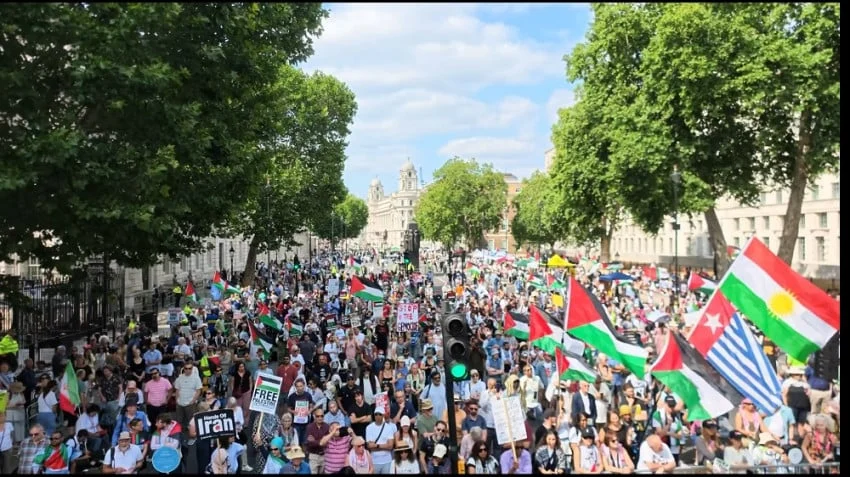
Tens of thousands of young people, students, and workers flooded the streets in major urban centers across more than 25 European countries in a coordinated international day of action that underscores a profound generational divide. Mobilized primarily by members of Generation Z, the widespread demonstrations on Friday marked a significant escalation in youth-led political activism. Protesters converged on public squares, government buildings, and educational institutions in the United Kingdom, France, Spain, Italy, and numerous other nations, expressing deep-seated fury over compounding socioeconomic crises, escalating educational expenses, underfunded public services, and geopolitical conflicts.
The demonstrations represent a convergence of multiple socio-economic and political grievances that have disproportionately impacted younger demographics in the post-pandemic era. Chief among the catalysts for the unrest are the soaring costs of living driven by persistent inflation, skyrocketing university tuition fees, the crumbling infrastructure of state-funded education systems, and intense outrage over European political leadership regarding the ongoing war in Gaza. Furthermore, the mobilization serves as a platform to voice anxieties over structural youth unemployment, the accelerating climate crisis, and regulatory inaction concerning the rapid, unchecked integration of artificial intelligence into the global economy and labor market.
In Italy, the scope of the protests broadened significantly as major labor unions aligned with the student movement. The Italian General Confederation of Labour (CGIL), the country’s largest trade union, actively joined the demonstrations, calling for a sweeping national general strike. This alliance between students and organized labor dramatically amplified the disruptive impact of the day of action, paralyzing key sectors and signaling a rare cross-generational coalition of discontent.
Main Facts and Scale of the Demonstrations
The transnational mobilization spanned more than 25 countries, transforming capital cities and regional hubs into sites of mass political expression. From the historic plazas of Rome and Milan to the streets of London, Paris, and Madrid, demonstrators marched under banners demanding systemic change and urgent governmental intervention.
In Italy alone, CGIL reported that demonstrations took place in over 100 distinct locations. One of the focal points was the iconic Piazza del Duomo in Milan, where thousands of students and workers gathered to voice their grievances. The protests in Italy coincided with coordinated strikes by transportation workers, which severely disrupted railway services nationwide—a disruption expected to extend through the weekend, affecting commuters and freight logistics alike.
In the United Kingdom, student unions coordinated walkouts and rallies outside universities and government offices, focusing heavily on tuition fee burdens and the housing crisis that has left many young professionals and students unable to secure affordable accommodation. Meanwhile, in France and Spain, youth organizations mobilized against precarious labor market conditions, demanding higher starting wages, robust climate policies, and an immediate end to diplomatic and material support for military actions in the Middle East that they argue violate international humanitarian norms.
Background Context and Root Causes
To understand the scale and urgency of the Generation Z mobilization, analysts point to a confluence of economic and systemic pressures that have accumulated over the past decade. Europe’s youth have navigated the economic fallout of the COVID-19 pandemic, followed immediately by a historic cost-of-living crisis sparked by energy market volatility and geopolitical conflicts.
Inflation rates across the eurozone have eroded the purchasing power of entry-level workers, while housing markets in major European cities have reached crisis levels, rendering independent living nearly impossible for a vast majority of young adults. Concurrently, public spending on education has faced continuous austerity measures in various member states, resulting in dilapidated facilities, overcrowded classrooms, and overworked academic staff. Higher education, once viewed as a reliable escalator to social mobility, has increasingly become a source of lifelong debt for students facing rising tuition costs coupled with inadequate financial aid frameworks.
Geopolitically, the youth demographic has demonstrated a distinct ideological divergence from mainstream European political establishments, particularly regarding foreign policy in the Middle East. Protesters have consistently criticized European governments for what they characterize as complicity or inadequate opposition to the humanitarian crisis in Gaza. This foreign policy stance has fused with domestic economic frustrations, creating a unified narrative that current political leaders are failing to safeguard both the immediate welfare and the long-term future of younger generations.
Beyond immediate economic and geopolitical concerns, the protests highlighted systemic anxieties regarding future existential threats. High youth unemployment rates in southern European nations remain a persistent structural failure. At the same time, the looming threat of the climate crisis continues to drive climate anxiety among youth who feel betrayed by incrementalist environmental policies. Furthermore, the rapid, unregulated deployment of artificial intelligence has generated widespread apprehension about future job displacement, with protesters demanding proactive legislative guardrails to protect entry-level employment markets.
Chronology of the Autumn Mobilization Wave
The international day of action on Friday was not an isolated event but the culmination of an escalating wave of youth-led political mobilization that gained momentum throughout the autumn season.
Early September saw localized student strikes and campus occupations across the United Kingdom and France, initially organized to protest university budget cuts and housing shortages. By late September, these localized actions began to coalesce into national networks, facilitated by digital organizing platforms and cross-border solidarity pacts among student unions.
Throughout October, the scope of grievances expanded rapidly to incorporate broader economic demands and anti-war sentiments. Student groups established formal and informal coalitions with civil society organizations, environmental activists, and labor unions. In early November, Italian labor unions announced their intention to support student walkouts, setting the stage for the coordinated multi-nation mobilization observed on Friday. The inclusion of labor unions transformed the movement from a purely student-led protest into a broader working-class challenge against prevailing government austerity and economic policies.
Official Responses and Institutional Reactions
As tens of thousands of demonstrators disrupted urban centers across the continent, municipal and national governments faced mounting pressure to respond to the unprecedented wave of youth dissent.
Law enforcement agencies in major capitals deployed heavy security details to manage the crowds, resulting in temporary traffic paralysis and minor clashes in isolated incidents, though the vast majority of protests remained peaceful. Local authorities in cities such as Milan, Rome, and Paris issued continuous transit advisories, urging citizens to utilize alternative transportation methods as public transit strikes took effect.
National governments have offered varied responses to the demands articulated by the protesters. Education ministries in several countries issued statements acknowledging the financial pressures faced by students and emphasizing ongoing efforts to reform student aid programs and increase funding for higher education infrastructure. However, student leaders have dismissed these official responses as superficial, arguing that governments continue to prioritize fiscal austerity and military expenditures over the fundamental needs of the public.
Regarding the foreign policy demands concerning the Gaza conflict, national leaders across the European Union have reiterated their diplomatic positions, balancing calls for humanitarian aid and adherence to international law with traditional alliances. Yet, the persistence of youth-led demonstrations has placed considerable domestic political pressure on ruling coalitions, forcing political parties to reevaluate how they engage with younger, politically active demographics ahead of upcoming electoral cycles.
Broader Impact and Implications for European Politics
The coordinated protests across 25 European countries carry significant implications for the future of European domestic politics, labor relations, and socio-economic policy formulation.
First, the alignment between Generation Z student groups and traditional labor unions, as demonstrated notably in Italy, signals a potential revitalization of cross-sector labor solidarity. By merging the specific demands of students—such as affordable education and climate action—with the broader economic demands of workers—such as wage increases and job security—the movement has created a formidable coalition capable of exerting substantial economic and political leverage through strikes and mass demonstrations.
Second, the mobilization highlights a widening trust deficit between traditional political institutions and the younger electorate. Generation Z voters, who are increasingly entering the political mainstream, have demonstrated a willingness to utilize direct action to challenge status quo policies. This disillusionment poses a long-term challenge for established political parties across the ideological spectrum, which must now contend with an electorate that is highly interconnected, ideologically driven, and deeply critical of incremental reforms.
Finally, the inclusion of technological concerns, specifically regarding the unmitigated rise of artificial intelligence, establishes a new frontier for labor and youth activism. As AI continues to transform the modern workplace, the demands for regulatory oversight voiced during Friday’s protests indicate that future political discourse will increasingly center on the ethical deployment of technology and the protection of human labor against automated displacement.
As cleanup operations began and transport networks slowly resumed normal operations following the weekend strikes, the reverberations of Friday’s international day of action remained palpable across European capitals. The mobilization has firmly established Generation Z not merely as passive observers of contemporary crises, but as an organized, transnational political force demanding fundamental structural transformation across the European continent.
