
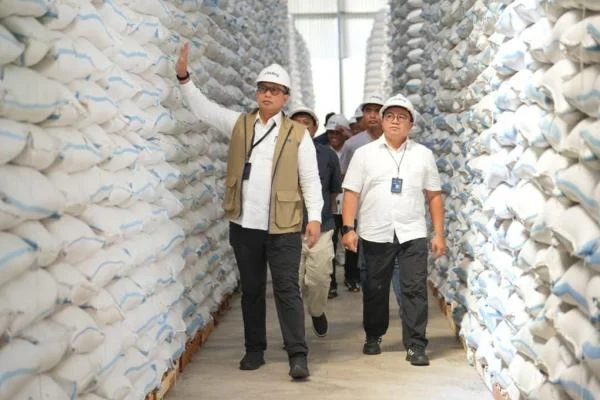
The Indonesian State Logistics Agency, Perum Bulog, has officially announced a significant milestone in its national food security mission, recording the procurement of 3.5 million tons of domestically produced rice as of July 24, 2026. This figure represents approximately 87 percent of the annual target of 4 million tons set by the Indonesian government for the current fiscal year. The achievement underscores a robust period for the nation’s agricultural sector and reflects the efficacy of integrated supply chain management strategies implemented by the state.
Ahmad Rizal Ramdhani, the President Director of Perum Bulog and a retired Lieutenant General of the Indonesian National Armed Forces (TNI), highlighted that this progress is a critical pillar in fortifying the Government Rice Reserve (CBP). Speaking in Jakarta, Ramdhani emphasized that the procurement levels achieved by mid-July serve as a testament to the country’s movement toward sustainable food self-sufficiency, a long-standing priority for the administration’s economic and social stability agenda.
Strategic Procurement and Collaborative Efforts
The successful accumulation of 3.5 million tons of rice is not merely a logistical feat but the result of a multi-sectoral collaboration involving a diverse array of stakeholders. According to the Bulog leadership, the synergy between the central government, local authorities, and grassroots agricultural workers has been the primary driver of this year’s success.
The procurement process involved direct engagement with local farmers and was facilitated by Agricultural Extension Officers (PPL), who provided technical guidance to maximize crop yields. Furthermore, the involvement of the Indonesian National Armed Forces (TNI) through the Village Supervisory Officers (Babinsa) and the National Police (Polri) via the Community Police Officers (Bhabinkamtibmas) ensured that the procurement process remained transparent and efficient. These officers played a pivotal role in monitoring the harvest and assisting in the mobilization of grain from remote rural areas to Bulog’s regional storage facilities.
"Alhamdulillah, as of July 24, 2026, the procurement of domestic rice harvests has reached 3.5 million tons," stated Ahmad Rizal Ramdhani on Saturday. "This achievement is the fruit of hard work and synergy from all parties, starting from the farmers, agricultural extension workers, Babinsa, Bhabinkamtibmas, Bulog’s business partners, and both local and central governments."
Chronology of the 2026 Harvest Cycle
The 2026 procurement cycle began with high expectations following a series of infrastructure investments in the previous year. In the first quarter of 2026, Bulog initiated aggressive purchasing strategies during the "Raya" harvest (the primary harvest season), which typically accounts for the largest portion of annual production.
By March 2026, procurement figures were already showing a positive trend, outpacing the growth rates seen in 2025. The government’s decision to adjust the Government Purchase Price (HPP) to better reflect market realities and production costs for farmers proved to be a decisive factor. This adjustment incentivized farmers to sell their surplus to Bulog rather than private middlemen, ensuring that the national reserve remained the priority destination for domestic grain.
Throughout the second quarter, despite localized weather fluctuations in parts of Sumatra and Kalimantan, the central rice-producing regions of Java and Sulawesi maintained high productivity. Bulog’s regional offices reported a steady stream of intake, averaging hundreds of thousands of tons per month. By June, the agency had crossed the 3-million-ton mark, setting the stage for the 87 percent achievement reported in late July.
Infrastructure and Quality Control
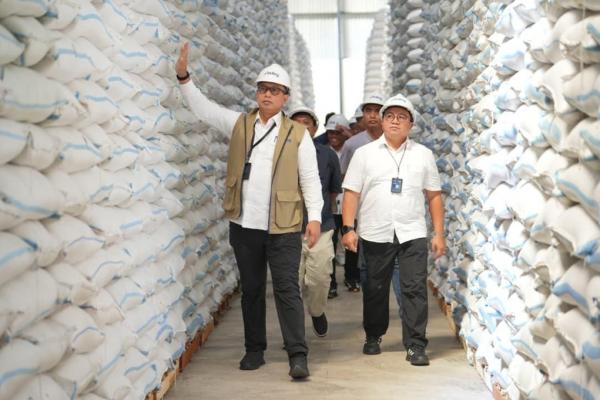
A critical component of this year’s procurement success is the utilization of Modern Rice Milling Plants (MRMP) and Grain Drying Centers (GDC) across strategic locations. These facilities, which have been expanded over the last two years, allow Bulog to process raw paddy more efficiently and maintain higher quality standards for the stored rice.
In regions like Papua, where logistics have historically been a challenge, Bulog has made significant strides. Recent reports indicate that rice stocks in Papua have reached 17,000 tons, with plans to triple that capacity in the coming months. The focus in the eastern regions is not only on quantity but on ensuring that the quality of the rice remains consistent despite the long-distance transport and varied climatic conditions. This regional focus ensures that food security is balanced across the archipelago, reducing the dependency of eastern provinces on shipments from Java.
Market Intervention and the SPHP Program
The procurement of 3.5 million tons is intrinsically linked to Bulog’s role in price stabilization. The agency is currently preparing to launch a "Premium" version of the Stabilization of Food Supply and Prices (SPHP) rice. While the standard SPHP rice has been a staple in controlling inflation and providing affordable food to the lower-income segments, the premium version is designed to cater to a broader market while simultaneously putting downward pressure on rising commercial rice prices.

The SPHP program serves as a market intervention tool. When market prices for rice begin to fluctuate or spike due to seasonal scarcity, Bulog releases its reserves through the SPHP channel. By securing 3.5 million tons domestically, Bulog has ensured it has the "firepower" necessary to intervene in the market effectively throughout the remainder of 2026 and into the early months of 2027.
Supporting Data and Economic Context
To put the 3.5 million ton figure into perspective, it is helpful to look at Indonesia’s historical consumption and production data. Indonesia consumes approximately 2.5 to 2.6 million tons of rice per month. A reserve of 3.5 million tons, combined with the remaining 13 percent expected to be procured, provides a significant buffer against potential global supply chain disruptions or domestic crop failures.
Furthermore, the focus on domestic procurement serves a dual economic purpose. First, it reduces the need for costly imports, thereby preserving the country’s foreign exchange reserves. Second, it circulates government funds directly back into the rural economy, supporting the livelihoods of millions of farming households. Economic analysts suggest that the 4 million ton target, once achieved, will provide Indonesia with one of the most stable food security cushions in Southeast Asia for the 2026-2027 period.
Challenges and Future Outlook
Despite the optimism, Bulog remains vigilant regarding several challenges. Climate change continues to be an unpredictable factor, with shifting rainfall patterns potentially affecting the secondary harvest seasons later in the year. Additionally, the rising cost of fertilizers and logistics continues to put pressure on the agricultural supply chain.
However, Ahmad Rizal Ramdhani expressed confidence that the remaining 500,000 tons required to meet the 4 million ton target would be secured shortly. "Bulog is optimistic that the 4 million ton target will be achieved soon. This is not just about reaching a number; it is a tangible manifestation of our collective success in strengthening national food independence," he said.
The agency is also looking toward 2027, with plans to further integrate digital technology into the procurement process. This includes the use of satellite imagery to predict harvest yields more accurately and blockchain-based systems to track the movement of grain from the farm gate to the warehouse, ensuring maximum efficiency and minimal waste.

Implications for National Stability
The stability of rice prices is often viewed as a barometer for the overall health of the Indonesian economy. High rice prices have historically been a major contributor to inflation, which can diminish the purchasing power of the population and lead to social unrest. By successfully managing a domestic-heavy procurement strategy, Bulog is effectively acting as a stabilizer for the national economy.
The proactive stance taken by Bulog in 2026 reflects a broader shift in Indonesian policy toward "Food Sovereignty." Rather than relying on the volatility of the international commodities market, the focus has shifted to empowering local production cycles. The achievement of 87 percent of the target by July suggests that this policy shift is yielding concrete results.
As the year progresses, the focus will shift from procurement to distribution and maintenance. Ensuring that the 3.5 million tons currently in storage remain in peak condition and are distributed to areas of high demand will be the next major hurdle for the agency. However, with the current momentum and the support of a multi-agency framework, Bulog appears well-positioned to navigate the complexities of the national food landscape.
In conclusion, the announcement of the 3.5 million ton milestone marks a high point in Indonesia’s 2026 agricultural calendar. It reinforces the importance of domestic production in the face of global uncertainty and highlights the critical role of Perum Bulog in maintaining the delicate balance between producer incentives and consumer affordability. With the final 13 percent of the target within reach, the nation moves closer to a state of secure and sustainable food independence.
