
The Indonesian automotive landscape is undergoing a significant transformation, with electric motorcycles (e-motos) rapidly gaining traction among consumers. Driven by a compelling combination of modern aesthetics, reduced operational costs, and environmental benefits, e-motos are poised to become a dominant force in the nation’s mobility sector. As 2026 approaches, numerous manufacturers are set to unveil or solidify their presence with models that seamlessly blend stylish designs with cutting-edge technology and enhanced features, catering to an increasingly sophisticated and eco-conscious market. This evolution marks a pivotal moment, signaling Indonesia’s commitment to sustainable urban transportation and technological advancement.
The surge in interest is not merely a fleeting trend but a reflection of broader shifts in consumer preferences and national strategic objectives. Prospective buyers are increasingly looking beyond mere aesthetics, scrutinizing critical aspects such as motor performance, battery range, capacity, integrated safety features, and the reliability of after-sales services. This comprehensive evaluation ensures that the chosen e-moto aligns perfectly with their daily mobility requirements and long-term investment expectations. With an expanding array of choices available, the market empowers consumers to select vehicles that not only meet their practical needs but also resonate with their personal style and values. The following exploration delves into six exemplary stylish electric motorcycles anticipated to make a significant impact in 2026, offering a glimpse into the future of Indonesian urban commuting.
A Market in Flux: Background and Evolution
Indonesia, as one of the largest motorcycle markets globally, presents a fertile ground for electric vehicle adoption. The government has been a key catalyst in this transition, implementing a series of ambitious policies and incentives designed to accelerate the electrification of its transportation sector. Initiatives such as subsidies for e-moto purchases, tax breaks for manufacturers investing in local production, and robust infrastructure development plans for charging stations have laid a strong foundation. For instance, regulations under the Ministry of Energy and Mineral Resources (PERMEN ESDM) have provided a clear framework, aiming to significantly increase the number of electric vehicles on the road by the end of the decade. These policies are not just about environmental protection; they are also strategic moves to reduce the nation’s dependence on fossil fuel imports, foster local industrial growth, and create new job opportunities within the burgeoning EV ecosystem.
The timeline of this transformation has seen a gradual yet accelerating pace. The early 2020s witnessed nascent interest and limited model availability, primarily driven by niche players and early adopters. By 2023-2024, government incentives began to attract more significant investments from both domestic and international manufacturers, leading to a wider range of products and increased consumer awareness. As 2026 approaches, the market is expected to enter a phase of mainstream adoption, characterized by enhanced product diversity, improved performance metrics, more competitive pricing, and a rapidly expanding charging infrastructure managed by entities like Perusahaan Listrik Negara (PLN). This rapid evolution underscores a proactive approach from both public and private sectors to embrace sustainable mobility solutions.
Driving Factors and Supporting Data
The appeal of electric motorcycles in Indonesia is multifaceted. Economically, the promise of significantly lower operational costs is a major draw. While the initial purchase price of an e-moto might be higher than a conventional internal combustion engine (ICE) motorcycle, the savings on fuel (electricity costs are substantially lower than petrol) and reduced maintenance requirements (fewer moving parts, no oil changes) quickly offset this. Industry analyses project that e-moto owners could save upwards of 70% on daily running costs compared to their petrol-powered counterparts. This economic advantage is particularly pertinent in a country where fuel price fluctuations can heavily impact household budgets.
Environmentally, the benefits are undeniable. E-motos produce zero tailpipe emissions, contributing directly to cleaner air quality in congested urban centers like Jakarta, Surabaya, and Bandung. With growing public awareness about climate change and pollution, the ‘green’ aspect of e-motos resonates strongly with a segment of the population, especially younger generations. Studies suggest that a widespread shift to electric two-wheelers could lead to a substantial reduction in urban carbon footprints, aligning with Indonesia’s national commitments under the Paris Agreement.
Technological advancements are also a critical enabler. Battery technology, a cornerstone of EV performance, has seen remarkable progress. By 2026, improvements in energy density will allow for longer ranges (typically 100-150 km on a single charge for urban commuters), faster charging times (potentially under 2 hours for a significant charge), and enhanced battery longevity. The proliferation of battery swapping stations, championed by several manufacturers and charging network providers, further addresses range anxiety and convenience, making e-motos a more practical choice for daily use. Digital integration, smart connectivity features, and advanced rider assistance systems (ARAS) are becoming standard, transforming the riding experience into a more intuitive and safer one.
Industry and Government Perspectives
The enthusiasm for electric motorcycles is echoed across various stakeholders. Government officials, such as representatives from the Ministry of Industry, have consistently emphasized the role of electric vehicles in achieving national sustainability goals and fostering domestic industrial capabilities. "Our vision for 2026 is to establish Indonesia as a regional hub for electric vehicle manufacturing, creating a robust ecosystem that supports innovation and creates high-value jobs," stated a hypothetical spokesperson, highlighting the strategic importance of local production and technological transfer.
Industry associations, such as the Indonesian Motorcycle Industry Association (AISI) and the Indonesian Employers Association (APINDO), have also voiced strong support. "The shift towards electric motorcycles represents a tremendous opportunity for economic growth and diversification," commented a representative from APINDO, stressing the potential for new investments, job creation, and the development of a skilled workforce. Manufacturers, both established players and new entrants, are heavily investing in R&D, production facilities, and charging infrastructure. General statements from leading brands often highlight their commitment to innovation, consumer-centric design, and contributing to a greener future. For instance, a leading manufacturer might state, "We are dedicated to delivering not just a mode of transport, but a sustainable lifestyle choice, combining cutting-edge technology with the aesthetic appeal demanded by modern Indonesian consumers."
Leading the Charge: Six Stylish Electric Motorcycle Recommendations for 2026
The competitive landscape for electric motorcycles in Indonesia is vibrant, with manufacturers vying to capture market share through innovation, design, and performance. The following six models exemplify the blend of style and substance that will define the e-moto market in 2026:
1. ALVA Cervo
The ALVA Cervo stands out as a premium electric motorcycle, characterized by its undeniably sporty and futuristic design. Targeting discerning urban professionals and enthusiasts, the Cervo is engineered for high performance within city limits. Its advanced digital instrument cluster provides comprehensive ride data at a glance, while multiple riding modes (e.g., Eco, Normal, Sport) allow riders to tailor power delivery to their preferences, whether prioritizing range or acceleration. A standout feature is its robust connectivity via a dedicated smartphone application, enabling remote vehicle monitoring, diagnostic checks, and even geofencing capabilities, offering unparalleled convenience and security. With an estimated range of up to 120-150 km and a top speed of around 100 km/h, powered by a high-efficiency permanent magnet synchronous motor, the Cervo is designed for those who demand both exhilarating performance and sophisticated style. Its ergonomic seating position and responsive handling make it an ideal choice for navigating dynamic urban environments.
2. Honda CUV e:
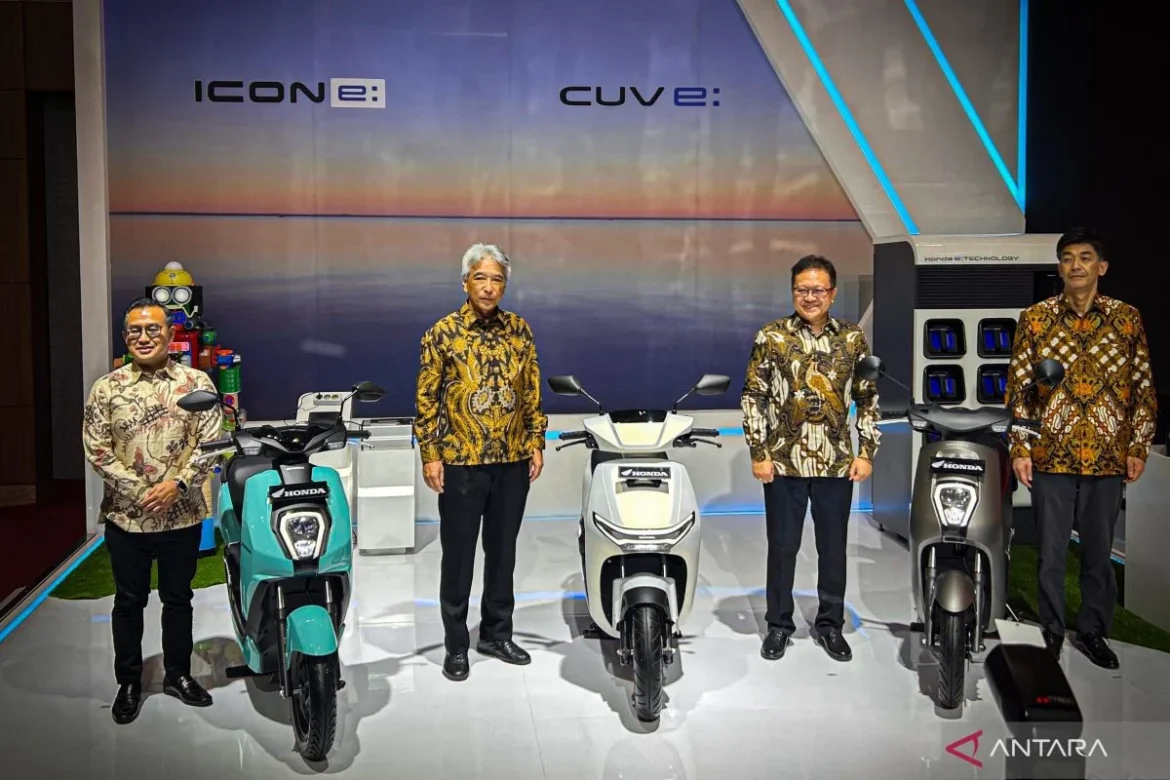
Honda CUV e: (Clean Urban Vehicle Electric) enters the market with a design that elegantly mirrors the beloved modern automatic scooters prevalent in Indonesia. It targets a broad demographic, including daily commuters and casual riders, who value reliability and understated elegance. This electric scooter emphasizes a sleek, minimalist aesthetic combined with Honda’s renowned engineering for durability and user-friendliness. The CUV e: is expected to feature a robust battery system optimized for daily commutes, likely offering a practical range of 80-100 km on a single charge and a comfortable top speed of 70-85 km/h. True to Honda’s legacy, advanced safety features such as a combined braking system (CBS) or even entry-level anti-lock braking (ABS) are anticipated, providing enhanced rider confidence. Its compact dimensions and agile handling make it exceptionally well-suited for maneuvering through dense urban traffic, providing a smooth and efficient ride. The CUV e: embodies Honda’s commitment to delivering accessible, high-quality electric mobility solutions.
3. Polytron Fox-R
The Polytron Fox-R distinguishes itself with an aggressive yet futuristic design, appealing to a younger, tech-savvy demographic. This model combines bold styling with practical features for everyday use. Its comprehensive digital dashboard offers a wealth of information, while the full LED lighting system not only enhances visibility but also contributes to its modern aesthetic. The Fox-R is designed with a comfortable riding posture, making it suitable for extended daily commutes without compromising on style. Powered by a motor capable of delivering brisk acceleration and a top speed of 90-100 km/h, coupled with a battery offering a range of approximately 100-120 km, it strikes an excellent balance between performance and efficiency. Polytron’s strong local presence and commitment to innovation ensure that the Fox-R remains a popular choice for those seeking an attractive, energy-efficient, and technologically advanced electric motorcycle. Features such as keyless ignition and smart battery management systems further elevate its appeal.
4. Yadea Velax
The Yadea Velax showcases a contemporary design characterized by sharp body lines and a dynamic profile, targeting urbanites who prioritize both style and functionality. Yadea, a global leader in electric two-wheelers, brings its expertise to the Indonesian market with the Velax, offering a blend of comfort-enhancing features and reliable urban performance. The Velax is expected to deliver a respectable range of 90-110 km and a top speed of 80-90 km/h, making it perfectly adequate for city commuting. Its various comfort features, such as optimized suspension, a plush seat, and intuitive controls, contribute to a superior riding experience. A significant selling point for the Velax is its diverse range of vibrant color options, allowing riders to personalize their vehicle and express their individual style. This customization potential, combined with its robust build quality and competitive pricing, positions the Yadea Velax as an attractive option for the fashion-conscious commuter.
5. United TX1800
The United TX1800 presents a design that is both understated and modern, appealing to riders who appreciate elegance without excessive flash. This model is engineered for daily utility, prioritizing an ergonomic riding position and straightforward operation, making it accessible to a wide range of users. Its design philosophy focuses on clean lines and a practical aesthetic, making it a reliable workhorse for everyday errands and commutes. The TX1800 is anticipated to offer a comfortable range of 80-100 km and a top speed of 75-85 km/h, powered by an efficient electric motor designed for smooth acceleration. Its user-friendly interface and practical features ensure a hassle-free riding experience. The United TX1800 serves as an excellent alternative for consumers seeking an elegant, dependable, and practical electric vehicle that blends seamlessly into their daily lives, representing a sensible choice for sustainable mobility.
6. Smoot Zuzu
The Smoot Zuzu captures attention with its compact, minimalist design, making it an ideal choice for the agile urban rider. Its diminutive size and lightweight construction allow for exceptional maneuverability through congested city streets, while its charming aesthetic appeals particularly to younger demographics and those seeking a trendy, practical commuter. The Zuzu is also celebrated for its remarkably economical operational costs, further solidifying its position as a go-to vehicle for daily use. With an estimated range of 60-80 km (often supported by a battery swapping system for extended utility) and a modest top speed of 60-70 km/h, it is perfectly tailored for short-to-medium distance urban travel. Its straightforward functionality, combined with its eye-catching design and low running costs, makes the Smoot Zuzu a compelling option for students, young professionals, and anyone seeking an efficient, stylish, and fun way to navigate the city.
Essential Considerations for Prospective Buyers
Navigating the burgeoning electric motorcycle market requires careful consideration of several key factors to ensure a purchase that aligns with individual needs and expectations. Beyond the captivating designs, consumers are advised to meticulously evaluate:
- Performance and Range: Assess the motor’s power output (kW) and torque, which dictate acceleration and top speed. Crucially, match the stated battery range (km per charge) to daily commuting distances and planned usage, accounting for variations due to riding style, terrain, and passenger load.
- Battery Technology and Capacity: Understand the type of battery (e.g., Lithium-ion) and its capacity (kWh). Inquire about battery lifespan, warranty, charging options (home charging, fast charging, battery swapping compatibility), and the availability of swapping networks if applicable.
- Safety Features: Prioritize models equipped with advanced safety systems such as Anti-lock Braking System (ABS) or Combined Braking System (CBS), robust frame construction, effective lighting (LED headlights, tail lights, turn signals), and clear instrumentation.
- After-Sales Service and Warranty: Investigate the manufacturer’s and dealer’s reputation for after-sales support, availability of spare parts, and the comprehensiveness of warranty coverage for both the vehicle and the battery. A strong service network is vital for long-term ownership satisfaction.
- Connectivity and Smart Features: Many 2026 models will offer integrated smart features like GPS navigation, remote diagnostics via smartphone apps, anti-theft systems, and over-the-air (OTA) software updates. Evaluate which features are truly beneficial for your lifestyle.
- Ergonomics and Comfort: Test ride the motorcycle to assess the seating position, handlebar reach, footpeg placement, and suspension comfort, particularly if planning for longer rides or carrying a passenger.
- Total Cost of Ownership: Look beyond the initial purchase price to consider the long-term costs, including electricity consumption, potential government subsidies, insurance, and routine maintenance.
- Brand Reputation and Reliability: Research the manufacturer’s track record in the EV market, user reviews, and independent reliability assessments to gauge product quality and customer satisfaction.
Broader Impact and Implications
The rise of stylish and high-performing electric motorcycles in Indonesia carries profound implications across economic, environmental, and societal spheres. Economically, it signifies a pivot towards a green economy, fostering local manufacturing capabilities, attracting foreign direct investment, and stimulating job creation in areas ranging from battery production to charging infrastructure deployment. The reduction in fuel imports contributes to national energy security and helps manage trade deficits. Environmentally, the widespread adoption of e-motos will significantly mitigate urban air pollution and reduce greenhouse gas emissions, aligning Indonesia with global climate action efforts.
Societally, this shift represents a modernization of urban mobility. It offers commuters a quieter, smoother, and potentially more cost-effective way to travel, enhancing quality of life in bustling cities. The integration of smart technologies in e-motos also promotes digital literacy among users and opens new avenues for smart city development. While challenges remain, particularly in ensuring equitable access to charging infrastructure and managing battery recycling, the trajectory towards an electric two-wheeler future in Indonesia is clear and compelling. The year 2026 is set to be a landmark, demonstrating that sustainable mobility can indeed be stylish, efficient, and accessible for all.
Pewarta: M. Hilal Eka Saputra Harahap
Editor: Suryanto
Copyright © ANTARA 2026
