
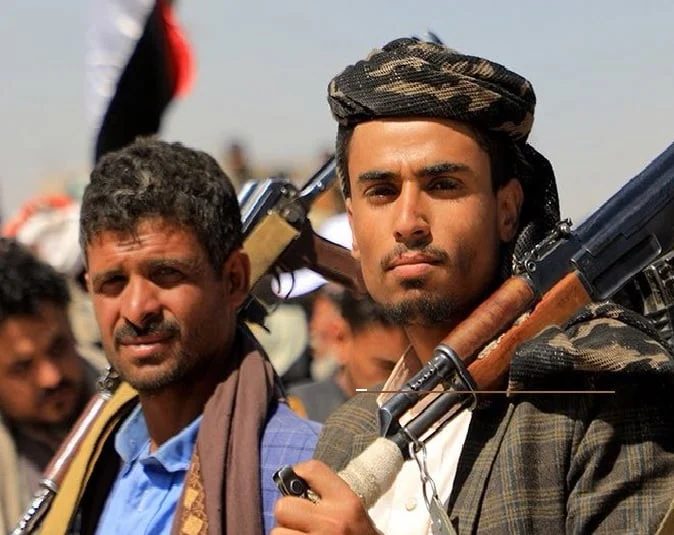
In a significant escalation of rhetoric, Hizam al-Assad, a senior official within Yemen’s Ansarullah resistance movement, commonly known as the Houthis, has issued a direct threat targeting Saudi Arabia’s critical oil infrastructure. Assad declared that all Saudi oil facilities and other vital installations would become legitimate targets for missile and drone attacks should the Kingdom initiate a "comprehensive aggression" against Yemen. This stern warning, articulated through a post on the social media platform X on Saturday morning, underscores the deepening volatility in the protracted Yemeni conflict and the broader regional geopolitical landscape. The statement not only threatened physical attacks but also explicitly held the Saudi regime accountable for the severe environmental consequences that would result from the destruction of oil wells, transmission lines, tankers, refineries, export ports, fuel stations, and petrochemical plants. Assad emphasized the potential for widespread suffering among local populations due to "intense fires and thick black plumes of smoke," painting a grim picture of the potential aftermath of such retaliatory strikes.
Assad’s pronouncement further asserted that the people of Yemen, with divine assistance, would reclaim their inherent rights, dismantle the stringent blockade imposed upon their homeland, and exact retribution for the sacred blood of martyrs and the shattered hearts that have endured immense suffering throughout what he described as 11 years of aggression and blockade. This rhetoric reflects a deep-seated grievance within the Houthi movement, framed by years of conflict and humanitarian crisis. The timing of this threat follows a period of heightened tension, specifically an incident earlier in the week where Saudi Arabia allegedly struck Sana’a International Airport to prevent an Iranian aircraft from landing. That plane was reportedly carrying an Ansarullah delegation en route to Tehran to participate in the funeral ceremonies for the recently deceased Iranian President Ebrahim Raisi and Foreign Minister Hossein Amir-Abdollahian, who perished in a helicopter crash. This particular event added another layer of complexity to the already intricate web of regional rivalries, directly linking the Yemeni conflict to broader Saudi-Iranian geopolitical competition.
The Strategic Context of the Houthi Threat
The Houthi threat against Saudi oil infrastructure is not an isolated incident but rather a recurring motif in the nine-year-old Yemeni conflict. Saudi Arabia, as the world’s largest crude oil exporter and a pivotal player in global energy markets, possesses infrastructure that is both strategically vital and, in certain areas, vulnerable to long-range missile and drone attacks. The Kingdom’s oil facilities, including its vast oil fields, processing plants like Abqaiq, export terminals such as Ras Tanura, and extensive pipeline networks, are the backbone of its economy and hold immense global significance. Any disruption to these facilities can send shockwaves through international energy markets, impacting crude oil prices and global economic stability.
The Houthis have previously demonstrated their capability to strike deep into Saudi territory, employing sophisticated drones and ballistic missiles. These past attacks have served to underscore the group’s evolving military prowess and its willingness to escalate tensions beyond the immediate conflict zones within Yemen. The current warning, however, carries an added dimension by explicitly detailing the potential environmental catastrophe, suggesting a calculated strategy to amplify the perceived cost of continued Saudi military action. By invoking environmental damage, the Houthis aim to exert pressure not only on Riyadh but also on the international community, highlighting the broader ramifications of prolonged conflict.
A Decade of Conflict: Roots of the Yemeni War
To understand the gravity of the Houthi warning, it is crucial to revisit the origins and trajectory of the Yemeni civil war. The conflict largely began in late 2014 when the Houthi movement, a Zaidi Shia group that had long felt marginalized by the central government, swept south from their northern stronghold of Saada, eventually seizing the capital Sana’a in September 2014. This takeover led to the collapse of the internationally recognized government of President Abdrabbuh Mansur Hadi.
In March 2015, a Saudi-led coalition, comprising several Arab states and backed by Western powers including the United States, intervened in Yemen with the stated aim of restoring Hadi’s government and countering what it perceived as growing Iranian influence in its southern backyard. The coalition launched extensive air campaigns and imposed a naval and air blockade on Yemen, significantly restricting the flow of goods, including essential humanitarian aid, into the country. The conflict quickly devolved into a brutal proxy war, exacerbating an already fragile humanitarian situation in the Arab world’s poorest nation.
The Houthi movement, officially known as Ansarullah, views its actions as a legitimate defense against foreign aggression and a struggle for national sovereignty. They accuse Saudi Arabia and its allies of perpetrating a devastating war and an illegal blockade that has brought Yemen to the brink of famine. Their narrative of "11 years of aggression and blockade" refers to the broader historical grievances and the protracted nature of the Saudi-led intervention, which has now lasted for over nine years, coupled with the ongoing siege conditions.
Precedent for Attacks: Houthi Capabilities and Past Strikes
The Houthi threat is not without precedent. Over the years, the group has launched numerous missile and drone attacks against Saudi Arabia, targeting military installations, airports, and critically, oil facilities. Perhaps the most significant of these attacks occurred in September 2019, when drones and missiles struck two major Saudi Aramco oil facilities – Abqaiq, the world’s largest oil processing plant, and Khurais, a major oil field. These attacks temporarily halved Saudi Arabia’s oil production, amounting to about 5% of global crude supply, and sent oil prices soaring. Although the Houthis claimed responsibility, the sophistication and scale of the attacks led many international observers, including the United States, to attribute them directly to Iran, a claim Tehran denied.
Other notable incidents include:
- March 2021: A series of drone and missile attacks targeted Ras Tanura, one of the world’s largest oil shipping ports, and a Saudi Aramco facility in Dhahran. While Saudi Arabia reported no significant damage or casualties, the attacks highlighted the persistent threat.
- December 2021 – January 2022: A surge in cross-border attacks, including against economic targets in Saudi Arabia and the UAE, marked a period of heightened Houthi activity.
- March 2022: During a Formula 1 race in Jeddah, a Houthi missile attack struck an Aramco oil depot near the venue, causing a massive fire and raising concerns about the security of major international events in the Kingdom.
These incidents demonstrate the Houthis’ evolving arsenal and their capability to inflict substantial economic and reputational damage on Saudi Arabia. The group’s use of domestically produced or Iranian-supplied drones and missiles has proven to be a persistent challenge for Saudi air defenses, despite significant investments in advanced anti-missile systems.
Recent Flashpoint: The Sana’a Airport Incident and Diplomatic Fallout
The immediate trigger for the latest Houthi threat appears to be the Saudi action against Sana’a International Airport. The incident, which occurred on Monday, involved Saudi forces reportedly preventing an Iranian aircraft from landing in the Yemeni capital. The plane was said to be transporting a Houthi delegation to Tehran for the funeral of Iranian President Ebrahim Raisi and Foreign Minister Hossein Amir-Abdollahian. The deaths of these high-ranking officials in a helicopter crash had prompted a period of national mourning and attracted high-level delegations from allied nations to Iran.
The Saudi interception of the flight, if confirmed, would represent a direct assertion of the coalition’s control over Yemeni airspace and its continued enforcement of the blockade, even for what might be considered diplomatic travel. For the Houthis, this action would likely be perceived as an affront to their sovereignty and a deliberate obstruction of their diplomatic engagement, further fueling their narrative of an ongoing siege. This incident highlights the complex interplay between the Yemeni conflict and broader regional power dynamics, particularly the rivalry between Saudi Arabia and Iran, where Yemen often serves as a proxy battleground.
The Unfolding Humanitarian Catastrophe in Yemen
Beyond the geopolitical maneuvers and military threats, the human cost of the Yemeni conflict remains staggeringly high. The "11 years of aggression and blockade" cited by Hizam al-Assad, while perhaps a rhetorical embellishment of the actual nine-year intervention, reflects the profound suffering endured by the Yemeni population. According to the United Nations, the conflict has resulted in one of the world’s worst humanitarian crises.
Key statistics underscore the devastating impact:
- Casualties: Tens of thousands of civilians have been killed directly in fighting, with hundreds of thousands more dying from indirect causes such as lack of food, healthcare, and sanitation. UNICEF estimated that by the end of 2021, over 10,000 children had been killed or maimed.
- Displacement: Over 4.5 million people have been internally displaced, forced to flee their homes due to violence.
- Food Insecurity: An estimated 17 million people, more than half of Yemen’s population, are food insecure, with millions facing emergency levels of hunger. The UN has consistently warned of widespread famine.
- Healthcare Collapse: Yemen’s healthcare system has largely collapsed, with only about half of health facilities fully functional. This has led to outbreaks of preventable diseases like cholera and diphtheria.
- Economic Devastation: The blockade and conflict have crippled Yemen’s economy, leading to mass unemployment and widespread poverty. The value of the Yemeni riyal has plummeted, making essential goods unaffordable for many.
The Houthi leadership frequently leverages this humanitarian crisis in its rhetoric, portraying itself as the defender of a besieged nation. The explicit mention of environmental consequences in Assad’s latest threat could also be seen as an attempt to draw attention to the broader, long-term impact of war on a country already reeling from ecological damage and resource scarcity.
International Response and Calls for De-escalation
The international community has consistently expressed deep concern over the Yemeni conflict and its humanitarian fallout. The United Nations, through its special envoys, has repeatedly called for a nationwide ceasefire and a political resolution to the crisis. Following any escalation of rhetoric or military action, the standard response from the UN and major international powers is usually a plea for de-escalation and adherence to international humanitarian law.
Global energy markets also react nervously to threats against Saudi oil infrastructure. Analysts closely monitor such developments, as even the potential for disruption can influence crude oil prices. Major consuming nations, including the United States, Europe, and Asian economies, have a vested interest in the stability of oil supplies from the Middle East. Therefore, any credible threat from the Houthis typically prompts statements from these nations urging restraint and warning against actions that could destabilize global energy security. Regional players, particularly those involved in the Saudi-led coalition, would likely condemn the Houthi threats as acts of terrorism and reaffirm their commitment to Saudi Arabia’s defense.
Saudi Arabia’s Defense Posture and Regional Ambitions
Saudi Arabia has consistently maintained that its intervention in Yemen is a legitimate response to a threat on its southern border and a necessary measure to counter Iranian expansionism. Riyadh views the Houthis as an Iranian proxy, a claim that the Houthis deny, asserting their independent Yemeni identity. The Kingdom has invested heavily in advanced air defense systems, including Patriot missile batteries, to protect its critical infrastructure and population centers from Houthi attacks. While these defenses have intercepted numerous incoming projectiles, the sheer volume and sophistication of some Houthi strikes have occasionally breached them.
The Kingdom has also been engaged in back-channel talks with the Houthis, particularly after a UN-brokered truce in April 2022, which largely held for several months. These talks, often facilitated by Oman, aimed to find a political pathway out of the conflict. However, progress has been slow and punctuated by renewed hostilities and hardening rhetoric, as exemplified by the latest Houthi warning. Riyadh’s primary objectives remain securing its borders, preventing a hostile, Iran-aligned entity from controlling Yemen, and ultimately facilitating a political settlement that ensures stability.
Iran’s Alleged Role and Regional Power Dynamics
The role of Iran in supporting the Houthi movement is a contentious but crucial element of the Yemeni conflict. Saudi Arabia and the United States have repeatedly accused Iran of providing military, financial, and logistical support to the Houthis, including advanced missile and drone technology. While Iran denies direct military involvement, it openly expresses political and moral support for the Houthis, viewing them as a legitimate resistance movement against Saudi aggression. The transfer of military technology, whether directly or indirectly, has enabled the Houthis to develop their offensive capabilities significantly.
This dynamic places the Yemeni conflict firmly within the broader context of the Saudi-Iranian regional rivalry. Both powers vie for influence across the Middle East, with proxy conflicts in Yemen, Syria, Iraq, and Lebanon. Any escalation in Yemen therefore carries the risk of widening the conflict and further destabilizing an already volatile region. The incident involving the Iranian plane at Sana’a Airport underscores this intricate connection, highlighting how seemingly localized events can quickly become flashpoints in the larger geopolitical struggle.
Geopolitical and Economic Implications of Escalation
A renewed "comprehensive aggression" by Saudi Arabia, as warned by the Houthis, or successful Houthi strikes on critical Saudi oil infrastructure, would have profound geopolitical and economic implications. Economically, even a temporary disruption to Saudi oil supplies could trigger a global oil price surge, impacting inflation, consumer costs, and economic growth worldwide. Given the current global economic uncertainties and geopolitical tensions elsewhere, such an event would be highly destabilizing. Furthermore, the environmental catastrophe explicitly mentioned by Assad, involving widespread fires and thick smoke, would not only devastate local ecosystems and public health but also create a global environmental crisis with long-term consequences.
Geopolitically, an escalation could unravel any fragile progress made towards peace in Yemen and further complicate regional stability. It could draw in more international actors, deepen the proxy conflict, and potentially lead to a direct confrontation between regional rivals. The humanitarian crisis in Yemen would undoubtedly worsen, straining international aid efforts and leading to an even greater loss of life. The prospect of an uncontrolled environmental disaster would also bring unprecedented international pressure and scrutiny to all parties involved, demanding immediate cessation of hostilities and environmental mitigation efforts.
Challenges to Peace and the Path Forward
Despite numerous peace initiatives, including UN-led negotiations and Omani-mediated talks, a comprehensive political solution to the Yemeni conflict remains elusive. Key sticking points include power-sharing arrangements, the future status of the Houthi movement, and the lifting of the blockade. The latest Houthi threats, coupled with recent Saudi actions, indicate a hardening of positions and a regression from any perceived diplomatic momentum.
The path forward demands sustained international diplomatic engagement, robust humanitarian aid, and a renewed commitment from all parties to de-escalate and prioritize civilian protection. The international community must press for a durable ceasefire, unimpeded humanitarian access, and an inclusive political process that addresses the legitimate grievances of all Yemeni factions. Without these fundamental steps, the cycle of violence, humanitarian suffering, and destabilizing threats against vital infrastructure is likely to continue, perpetuating one of the world’s most enduring and devastating conflicts. The explicit warning about environmental consequences adds a critical, urgent dimension to these calls for peace, highlighting the potentially irreversible damage of continued conflict.
