
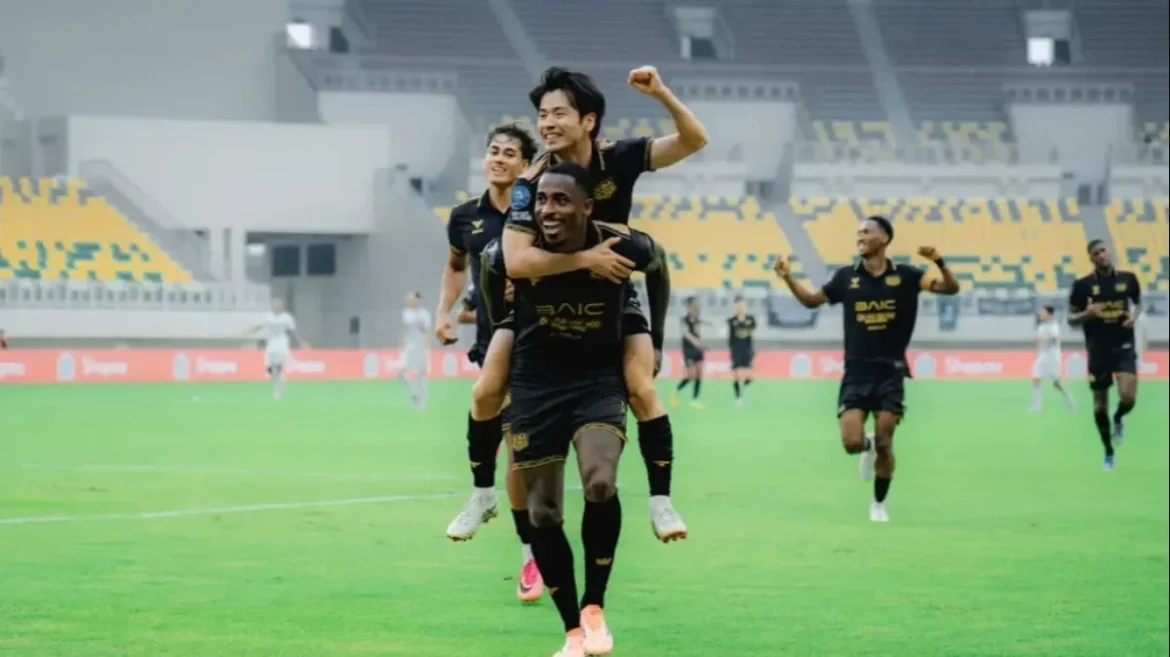
The BRI Super League 2026/27 has reached its first major inflection point, pausing for the September-October international window with Dewa United Banten FC sitting proudly at the summit of the table. As the domestic competition temporarily halts to accommodate national team duties across the globe, clubs, coaching staffs, and management teams are using this interval to evaluate their tactical output, address early-season vulnerabilities, and prepare for the grueling months of football ahead. The opening phase of the campaign has provided fans with high drama, tactical evolution, unexpected surges from traditional contenders, and early struggles from newly promoted outfits trying to find their footing in the top flight.
Dewa United Banten FC currently occupies the premier position as the only club to have amassed 10 points from their first four fixtures. Their consistent run of form, characterized by three hard-fought victories and a solitary draw, reflects the structural maturity and depth that the club has cultivated over recent seasons. Under the guidance of their tactical leadership, Dewa United demonstrated resilience in their most recent outing, securing a narrow yet vital 2-1 victory over PSS Sleman. This triumph ensured that they retained their grip on first place, holding a delicate one-point cushion over their closest pursuers. The club’s ability to grind out results even when not playing at their absolute fluent best has established them as genuine early contenders for the league crown, turning heads across the Indonesian football landscape.
Chasing the league leaders closely are two historic and formidable powerhouses: Madura United and Persija Jakarta. Both clubs have enjoyed flawless starts to their respective campaigns, accumulating nine points each from three matches. Their identical records of three wins from three outings highlight a razor-thin margin at the top of the standings, with both teams yet to drop a single point. Madura United continues to display the disciplined, counter-attacking efficiency and defensive solidity that made them a formidable force in previous seasons. Their tactical cohesion has allowed them to control matches against tricky opponents, maximizing their scoring opportunities while remaining defensively compact.
Meanwhile, Persija Jakarta has captured the imagination of the league with a series of high-octane performances that underline their championship ambitions. The capital city club, affectionately known as the Macan Kemayoran, has maintained a 100 percent win record, highlighted by a high-profile victory over arch-rivals Persib Bandung. This particular derby triumph not only injected immense momentum into Persija’s campaign but also sent a resounding statement of intent to the rest of the league. The tactical approach implemented by the coaching staff has unleashed the full creative potential of their midfield, while their defensive line has proven remarkably difficult to breach. The early-season momentum has energized the club’s massive fan base, fostering a belief that this could finally be the year they reclaim ultimate domestic glory.
Mid-Table Battles and Tactical Shifts
Beneath the leading trio, the competition intensifies as clubs vie for crucial positioning to avoid mid-table stagnation. Bali United currently holds fourth place with six points from three matches. The Serdadu Tridatu secured two impressive victories in their opening fixtures, showcasing their trademark attacking flair and tactical flexibility. However, their momentum suffered a temporary setback just before the international break when they fell to a narrow 0-1 defeat against Borneo FC. This defeat serves as a reminder of the unforgiving nature of the BRI Super League, where minor lapses in concentration can instantly alter a team’s trajectory in the standings.
Capitalizing on Bali United’s slip-up is Borneo FC, who leapfrogged into sixth place, also boasting six points. Like the league leaders, the Pesut Etam are one of only two teams to have completed four matches thus far. Their resilience and tactical adaptability have been key components of their early campaign, allowing them to grind out results in hostile away environments and bounce back swiftly from setbacks. The coaching staff has emphasized physical endurance and positional discipline, traits that have paid dividends as the league enters its first grueling block of fixtures.
Defending Champions Seeking Consistency
Rounding out the top five is defending champion Persib Bandung, a side that has experienced a rollercoaster opening to their title defense. The Maung Bandung have collected six points from three matches, registering two victories and one defeat. Their lone blemish came in the high-profile defeat to Persija Jakarta, a result that momentarily stunned the defending champions and raised questions regarding their defensive frailties under pressure.
However, the response from the Bandung faithful and the squad itself was immediate and emphatic. Persib bounced back swiftly with a convincing victory over Persijap Jepara, demonstrating the mental fortitude and championship pedigree expected of a titleholder. This bounce-back victory ensured that Persib remained firmly entrenched in the upper echelons of the table, despite having played fewer matches than table-toppers Dewa United and Borneo FC. The technical team understands that maintaining domestic supremacy requires squad rotation and tactical adjustments, especially as they balance domestic aspirations with potential continental commitments later in the calendar.
Struggles at the Foot of the Table
While the upper tier of the standings showcases tactical brilliance and competitive fervor, the bottom of the table tells a story of survival, adaptation, and early-season panic. Newly promoted Persijap Jepara has endured a baptism of fire in the top flight, occupying the 16th position without a single point to their name after suffering defeats in all three of their opening fixtures. The step up in intensity, technical execution, and physical demands has exposed the harsh realities of elite Indonesian football for the promotion-winning side. Management and coaching staff are reportedly utilizing the international break to recalibrate their defensive structures and integrate new signings, knowing full well that an immediate turnaround is required to avoid an expedited return to the lower division.
Similarly, PSS Sleman finds themselves mired in a difficult phase, sitting 15th in the standings with zero points and a concerning goal difference of 3-7. The Elang Jawa have struggled to find defensive stability, conceding goals at an alarming rate while failing to capitalize on their own attacking opportunities. The defensive frailties exposed in their 2-1 loss to Dewa United highlighted systemic issues that the coaching staff must urgently address during the international hiatus.
At the very bottom of the league pyramid, Java United FC and Isenmulang Kalteng FC are experiencing a nightmare start to the campaign, languishing with negative points due to early disciplinary sanctions or regulatory adjustments compounded by poor form. Java United occupies the 17th spot with minus one point, while Isenmulang Kalteng FC anchors the league table as the juru kunci with minus two points. The psychological toll of starting a season in the negative has heavily impacted these clubs, making the upcoming weeks of preparation crucial for any hopes of a miraculous relegation escape.
Context, Background, and Structural Evolution of the BRI Super League 2026/27
The ongoing 2026/27 season of the BRI Super League represents a pivotal chapter in the evolution of Indonesian professional football. Over recent years, league organizers have systematically implemented structural reforms aimed at elevating the overall competitive standard, improving refereeing standards through the integration of technological assistance, and enhancing infrastructural compliance across all participating clubs. These changes have directly influenced the on-field product, resulting in faster-paced matches, more sophisticated tactical setups, and a higher standard of technical execution from both domestic talents and foreign marquee signings.
The financial injection from title sponsor BRI, coupled with improved broadcasting revenue distribution, has allowed clubs to invest heavily in sports science, youth academies, and professional coaching staff. Consequently, the traditional gap between established giants like Persib, Persija, and Bali United, and emerging challengers like Dewa United and Borneo FC, has narrowed significantly. This competitive parity has transformed every matchday into an unpredictable spectacle, where upsets are common and league positions fluctuate wildly with every single goal scored.
Furthermore, the introduction of stricter licensing regulations has forced clubs to operate with greater administrative transparency and financial sustainability. Teams can no longer rely solely on short-term fixes; instead, they must construct balanced squads featuring a blend of experienced veterans and dynamic young prospects. This strategic shift is already bearing fruit, as evidenced by the seamless integration of academy graduates into the starting line-ups of several top-tier clubs during the opening weeks of the current campaign.
Tactical Trends and Managerial Perspectives
As tactical analysts dissect the opening four weeks of the BRI Super League 2026/27, several clear tactical trends have emerged. The modern Indonesian game has largely transitioned away from rigid, traditional formations toward fluid, hybrid systems that prioritize high-intensity pressing, positional rotation, and rapid transitions. Coaches are increasingly demanding tactical versatility from their players, requiring full-backs to operate as inverted playmakers and central defenders to initiate attacking sequences with pinpoint long-range distribution.
Dewa United’s success at the summit is a prime testament to this tactical evolution. Their head coach has fostered a balanced philosophy that seamlessly merges defensive solidity with quick, vertical ball progression. By dominating the center of the pitch and denying opponents space between the lines, Dewa United has effectively controlled the tempo of their matches. Their ability to transition from a low defensive block to a rapid counter-attack has caught numerous opponents off guard.
In contrast, high-flying Persija Jakarta has leaned heavily on an aggressive, possession-based dominance style. Under their current technical direction, the Macan Kemayoran look to suffocate opponents through sustained periods of ball retention, using numerical superiority in the midfield to wear down defensive structures before exploiting spaces in the channels. This approach requires exceptional physical conditioning and tactical discipline, attributes that the squad has displayed in abundance during their flawless three-match winning streak.
Conversely, clubs struggling at the bottom of the table, such as PSS Sleman and Persijap Jepara, have largely suffered from an inability to adapt to these heightened tactical demands. Defensive lapses, poor transitional tracking, and a lack of clinical execution in the final third have repeatedly punished these sides. Football pundits and analysts frequently point out that survival in the modern BRI Super League requires not just individual brilliance, but absolute collective synchronization. Teams that fail to maintain defensive shape for the full ninety minutes are systematically dismantled by the league’s increasingly lethal attacking units.
Implications of the International Break
The arrival of the September-October international window offers a vital sanctuary for clubs to recalibrate. For teams currently leading the pack, such as Dewa United, Madura United, and Persija, the break provides an opportunity to rest fatigued legs, recover minor injuries, and fine-tune tactical variations without the immediate pressure of a weekend fixture. Coaching staffs can utilize this period to conduct intensive video analysis, correcting positional errors identified during the opening fixtures and preparing specific game plans for the upcoming block of matches.
For struggling clubs like PSS Sleman and Persijap Jepara, the international break is nothing short of a lifeline. It affords management the necessary time to assess whether technical changes are required, allows new tactical concepts to be absorbed on the training ground without the distraction of media scrutiny following a weekend defeat, and gives injured players a chance to return to full fitness. In some instances, struggling clubs utilize this window to hold internal scrimmages or closed-door friendlies to build match sharpness and restore psychological confidence among players who have suffered demoralizing defeats.
Moreover, the international break serves as a period of reflection for club executives and investors. With four matchweeks officially in the books, the initial data sample is large enough to evaluate the effectiveness of summer transfer window acquisitions. Clubs that find themselves underperforming may quietly begin exploring the market for free agents or laying the groundwork for strategic reinforcements ahead of the mid-season transfer window. The financial stakes of remaining in the top flight or challenging for the championship are immense, ensuring that boardrooms will remain active even as the players rest.
Looking Ahead: The Road to the Championship
As Indonesian football enthusiasts look past the international break and anticipate the resumption of the BRI Super League 2026/27, the narrative arcs for the remainder of the season are already taking shape. The title race promises to be a grueling marathon rather than a sprint, with Dewa United, Madura United, Persija Jakarta, and defending champions Persib Bandung locked in what is expected to be a historic multi-team battle for supremacy.
The depth of each squad, their resilience in the face of injuries and suspensions, and their capacity to manage the mental fatigue of a long season will ultimately determine who lifts the coveted trophy at the conclusion of the campaign. Meanwhile, at the opposite end of the table, the battle for survival will undoubtedly produce dramatic twists, tense relegation six-pointers, and desperate tactical gambles as clubs fight tooth and nail to preserve their top-flight status.
Ultimately, the BRI Super League 2026/27 continues to reinforce its reputation as one of the most dynamic, fiercely competitive, and emotionally charged domestic competitions in the region. As the teams return from international duty refreshed and re-energized, the stage is set for a thrilling continuation of a footballing journey that has captivated millions of supporters across the nation.
