
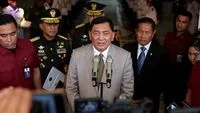
Minister of Defense of the Republic of Indonesia, Sjafrie Sjamsoeddin, conducted a comprehensive working visit to the barracks of the 840/Golok Sakti Development Territorial Infantry Battalion (Yonif TP 840/GS) located in Lebak Regency, Banten Province. During his direct inspection on Tuesday, November 3, the Minister delivered a firm directive emphasizing the strategic imperative for soldiers to continuously sharpen and expand their dual qualifications. These competencies encompass both foundational combat readiness and specialized territorial development capabilities designed to bridge the gap between military defense and civilian infrastructure support.
The visit underscores the ongoing evolution of the Indonesian National Armed Forces (TNI) under contemporary defense doctrines, which increasingly emphasize civil-military operations, regional stability, and grassroots development support. As geopolitical dynamics shift and domestic security challenges evolve, the Ministry of Defense has focused heavily on optimizing territorial units to serve as a versatile force multiplier for both national sovereignty and regional prosperity.
Dual Qualifications: Balancing Combat Readiness and Community Development
The core message delivered by Defense Minister Sjafrie Sjamsoeddin centered on the unique operational profile of the Development Territorial Infantry Battalions. Unlike conventional combat units whose primary focus remains strictly on tactical engagement and warfare, Yonif TP personnel are mandated to maintain a high level of proficiency in traditional soldiering skills while concurrently mastering functional civil engineering, agricultural, and healthcare disciplines.
According to military guidelines outlined during the briefing, the dual qualification framework requires soldiers to excel in fundamental combat domains—including marksmanship, close-quarters combat, tactical self-defense, and reconnaissance patrolling. Simultaneously, these troops must cultivate specialized expertise through dedicated functional companies specializing in agriculture, animal husbandry, public health services, and civil construction.
Minister Sjafrie noted that this multi-faceted capability is not merely an auxiliary duty, but a core operational requirement. By embedding functional expertise directly into the military structure, the state aims to create self-sufficient, highly responsive units capable of deploying rapidly to assist local governments during crises, natural disasters, or community development bottlenecks.
"The presence of the Development Territorial Infantry Battalion across all 514 regencies and municipalities in Indonesia must be optimized to actively assist local governments and alleviate the difficulties faced by the citizens surrounding your posts," Minister Sjafrie stated in an official written release detailing the inspection.
Chronology and Key Events of the Ministerial Visit
The working visit to the Yonif TP 840/Golok Sakti headquarters followed a meticulously structured itinerary designed to evaluate operational readiness, infrastructure development, and institutional coordination between the military and regional civil administration.
The day’s events commenced with a high-level strategic meeting between Minister Sjafrie Sjamsoeddin and the Regent of Lebak, M. Hasbi Jayabaya, alongside key members of the local government apparatus. This preliminary discussion focused on aligning regional development priorities with the operational deployment and civic action programs of the stationed battalion. Local government officials welcomed the collaborative approach, highlighting the potential for military engineering and agricultural units to accelerate infrastructural projects in remote or underserved areas of Lebak Regency.
Following the civil-military coordination meeting, the Defense Minister proceeded to the military base for a formal operational briefing. The Commander of Yonif TP 840/GS delivered a comprehensive presentation detailing the current status of base readiness, the availability and maintenance of tactical training facilities, and the structural organization of the battalion’s personnel.
The inspection culminated in a direct address by Minister Sjafrie to the assembled troops. During this briefing, he reinforced the constitutional mandate underpinning the establishment of territorial infantry battalions nationwide, framing the deployment not merely as an administrative expansion, but as a vital fulfillment of the state’s obligation to protect and serve the populace.
Historical Context and Strategic Rationale
The establishment of Development Territorial Infantry Battalions forms a cornerstone of Indonesia’s grand strategy for total people’s defense, known locally as Sistem Pertahanan Keamanan Rakyat Semesta (Sishankamrata). Rooted in the nation’s historical struggle for independence, this doctrine posits that national defense cannot rely solely on a standing professional military, but must involve the active participation and well-being of the entire citizenry.
In recent years, the Ministry of Defense has systematically reviewed force structures to address asymmetric threats, regional disparities in development, and the logistical challenges of securing an expansive archipelagic state. The initiative to place specialized territorial battalions across all 514 regencies and municipalities represents a structural scaling of civil-military integration.
Historically, military territorial commands have played significant roles in rural development through programs such as TNI Manunggal Membangun Desa (TMMD). However, the formalization of dedicated Development Territorial Infantry Battalions elevates these ad-hoc civic missions into permanent, institutionalized operational tasks. By stationing multifunctional troops at the regency level, the central government ensures a permanent, localized asset capable of rapid response to both security vulnerabilities and humanitarian assistance or disaster relief (HADR) requirements.
Economic and Social Implications for Regional Development
The integration of military units into local socio-economic ecosystems carries profound implications for regional development across Indonesia. Lebak Regency, characterized by a mix of developing urban centers and rugged, mountainous terrain, presents typical challenges regarding infrastructure accessibility, agricultural productivity, and localized healthcare delivery.
By deploying functional companies specialized in agriculture and animal husbandry, Yonif TP units are positioned to act as technical catalysts for rural communities. Soldiers equipped with modern farming techniques and livestock management skills can transfer knowledge to local farmers, thereby boosting regional food security and economic resilience. Furthermore, the inclusion of health and medical platoons provides an immediate safety net for communities with limited access to primary healthcare facilities.
From an infrastructure perspective, the construction companies embedded within the battalion possess the heavy equipment and engineering expertise required to open isolated regions, repair damaged roads, build bridges, and assist in post-disaster reconstruction phases without placing an immediate financial burden on local municipal budgets.
Official Responses and Directives on Infrastructure
Addressing the logistical requirements necessary to sustain these ambitious operational goals, Minister Sjafrie issued explicit instructions to accelerate the construction and modernization of training facilities at the Yonif TP 840/GS base. He emphasized that continuous, rigorous training is the bedrock of operational readiness and that substandard facilities must be upgraded immediately to meet national defense standards.
The modernization directives encompass the expansion of advanced marksmanship ranges, tactical simulation areas, and administrative support infrastructure. These enhancements are designed to ensure that troops remain perpetually prepared to transition between civil-civic duties and strategic security deployments, including rotational assignments to high-priority strategic regions and the National Capital region (IKN).
In his concluding remarks to the troops, Minister Sjafrie underscored the ethical foundation of military service in Indonesia, reminding personnel of their deep historical bond with the civilian population.
"As TNI soldiers, you are born from the people and financed by the people. Therefore, it is an absolute obligation for every soldier to repay the services that the people have rendered to you," Sjafrie asserted.
He further commanded the personnel to maintain exemplary discipline, foster national unity by looking past ethnic, regional, and religious differences, and strictly adhere to the core ethical codes of the Indonesian military—specifically the Sapta Marga (Seven Vows of the Indonesian National Armed Forces), the Sumpah Prajurit (Soldier’s Oath), and the 8 Wajib TNI (Eight Obligations of the TNI) in their daily interactions with the public.
Broader Impact on National Defense Architecture
The directives issued in Lebak reflect a broader, nationwide realignment of military posture. As Indonesia navigates complex domestic security landscapes and seeks to fortify its defensive depth, the dual-qualification model serves as a test case for modern territorial management.
By fusing combat readiness with developmental capabilities, the Ministry of Defense aims to preemptively address the root socio-economic grievances that often give rise to civil unrest or security vulnerabilities. Analysts note that while the success of this strategy will depend heavily on sustained logistical support, inter-agency coordination, and local community engagement, the structural framework provides a powerful mechanism for projecting state presence and stability to the most remote corners of the republic.
As the rollout of Development Territorial Infantry Battalions continues across the archipelago, the performance and integration of units like Yonif TP 840/Golok Sakti will serve as a critical benchmark for policymakers evaluating the efficacy of total defense doctrines in the twenty-first century.
