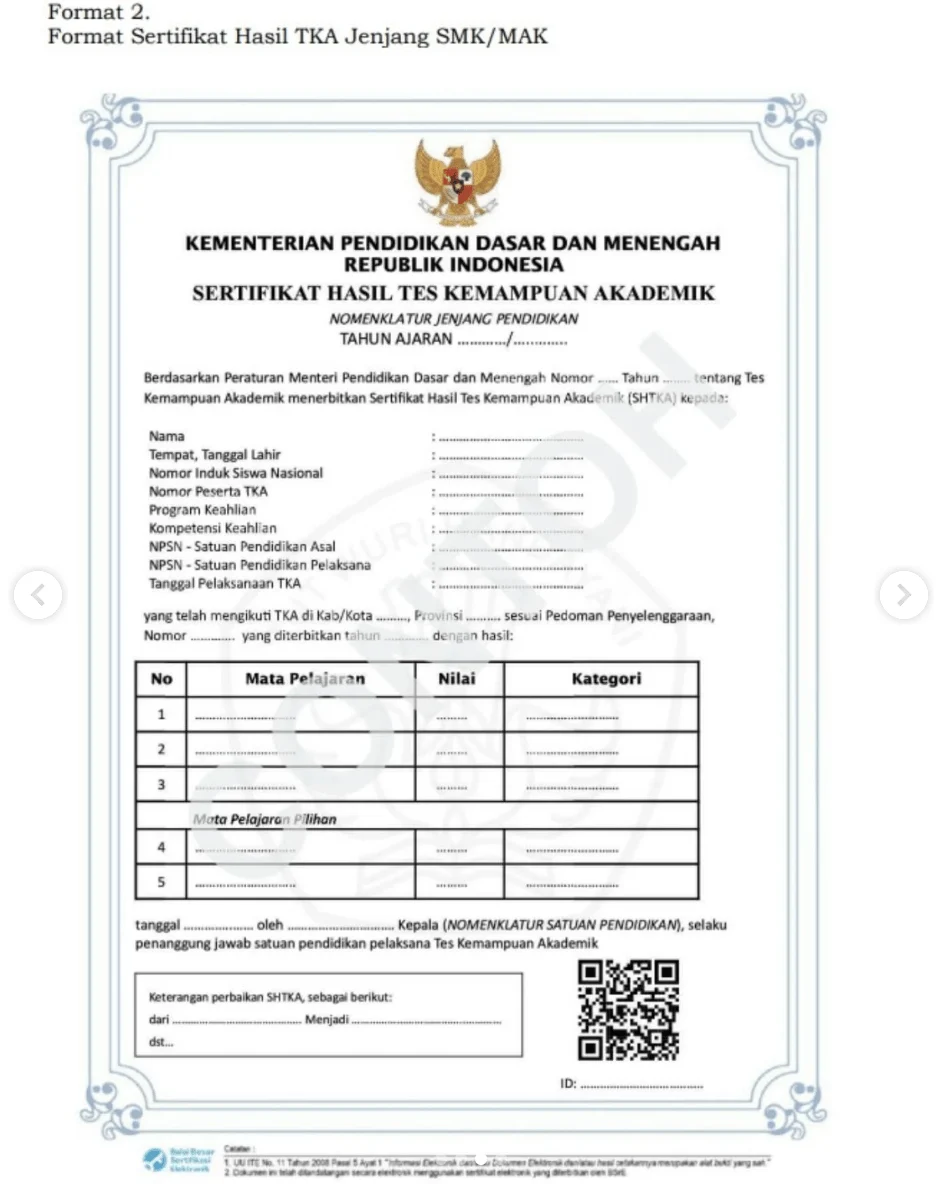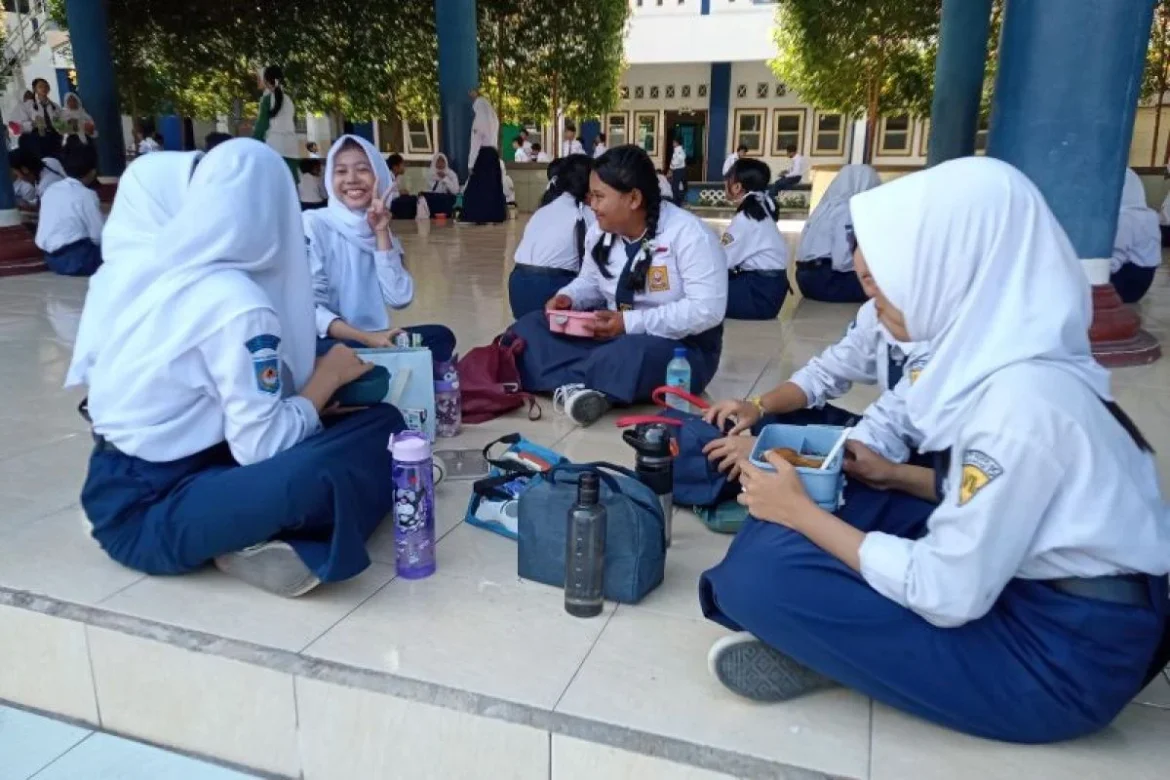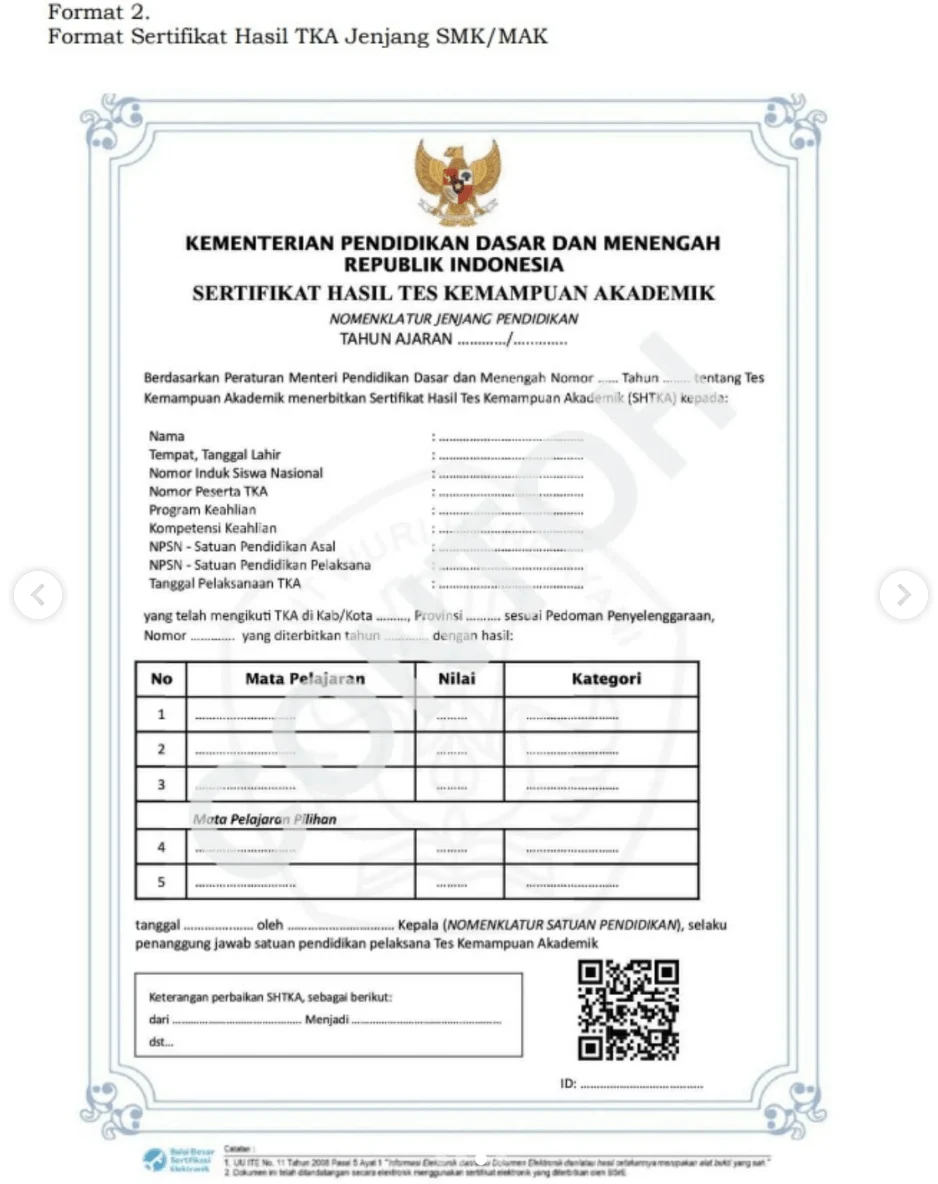
The Ministry of Primary and Secondary Education (Kemendikdasmen) has officially released the operational guidelines for the 2026 Academic Competency Test (Tes Kemampuan Akademik or TKA) for Senior High School (SMA), Vocational High School (SMK), and equivalent levels. Scheduled to take place between October and November 2026, the TKA serves as a critical instrument in the national education assessment landscape. Unlike previous standardized tests, the TKA is specifically designed to function as a validator for school-based report card grades, providing a standardized benchmark that ensures equity and objectivity in student evaluations across the Indonesian archipelago. This assessment is expected to play a pivotal role in the selection process for higher education, particularly for merit-based entry tracks that rely heavily on academic records.
The Strategic Context: Addressing Grade Inflation and Standardization
The introduction of the TKA is a response to long-standing challenges within the Indonesian education system regarding the consistency of school-based assessments. Since the abolition of the National Examination (Ujian Nasional) in 2021, the reliance on report card grades (Nilai Rapor) for university admissions has faced scrutiny. Education experts and the Ministry have noted a phenomenon often referred to as "grade inflation," where schools may inadvertently or intentionally raise student grades to improve the school’s overall performance profile or to assist students in competitive university applications.

Without a centralized benchmark, comparing a student from a high-performing urban school to one from a remote rural school becomes difficult for university admissions officers. The TKA aims to bridge this gap. By acting as a "validator," the TKA provides an objective score that can be compared alongside report card grades. If a student has a high report card average but a low TKA score, it may indicate a discrepancy in school grading standards. Conversely, a high TKA score can bolster a student’s profile, proving that their school grades are a true reflection of their academic prowess. This dual-layered evaluation system is intended to restore integrity to the National Selection Based on Merit (SNBP) and other scholarship pathways.
Chronology and Implementation Timeline
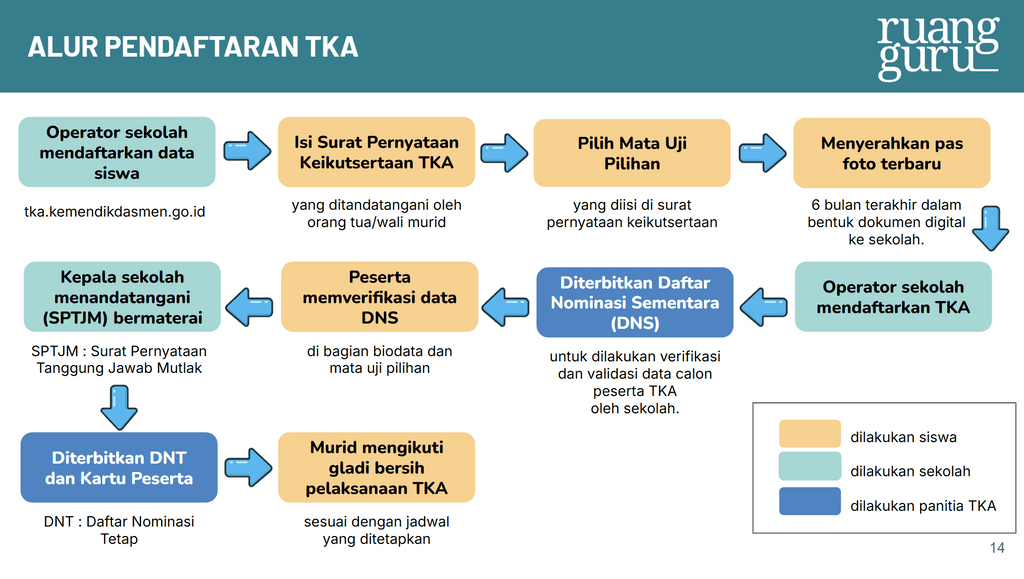
The 2026 TKA cycle is structured to allow schools and students ample time for preparation, registration, and technical rehearsals. The Ministry has outlined a systematic timeline to ensure the smooth execution of the computer-based assessment:
- Registration Phase (Commencing July 27, 2026): Schools are required to register their eligible students through the official Ministry portal. This process involves verifying student data and ensuring that all participants meet the necessary academic criteria.
- Simulation Phase (August – September 2026): Before the actual examination, the Ministry organizes simulation sessions. These are designed to familiarize students with the Computer-Based Test (CBT) interface and the logic behind higher-order thinking skill (HOTS) questions.
- Technical Rehearsal (Gladi Bersih) (Late September 2026): A full-scale rehearsal is conducted to test the infrastructure, including server stability, internet connectivity at local test centers, and the distribution of login credentials.
- Main Examination Period (October – November 2026): The TKA is administered in multiple sessions to accommodate the large volume of students nationwide.
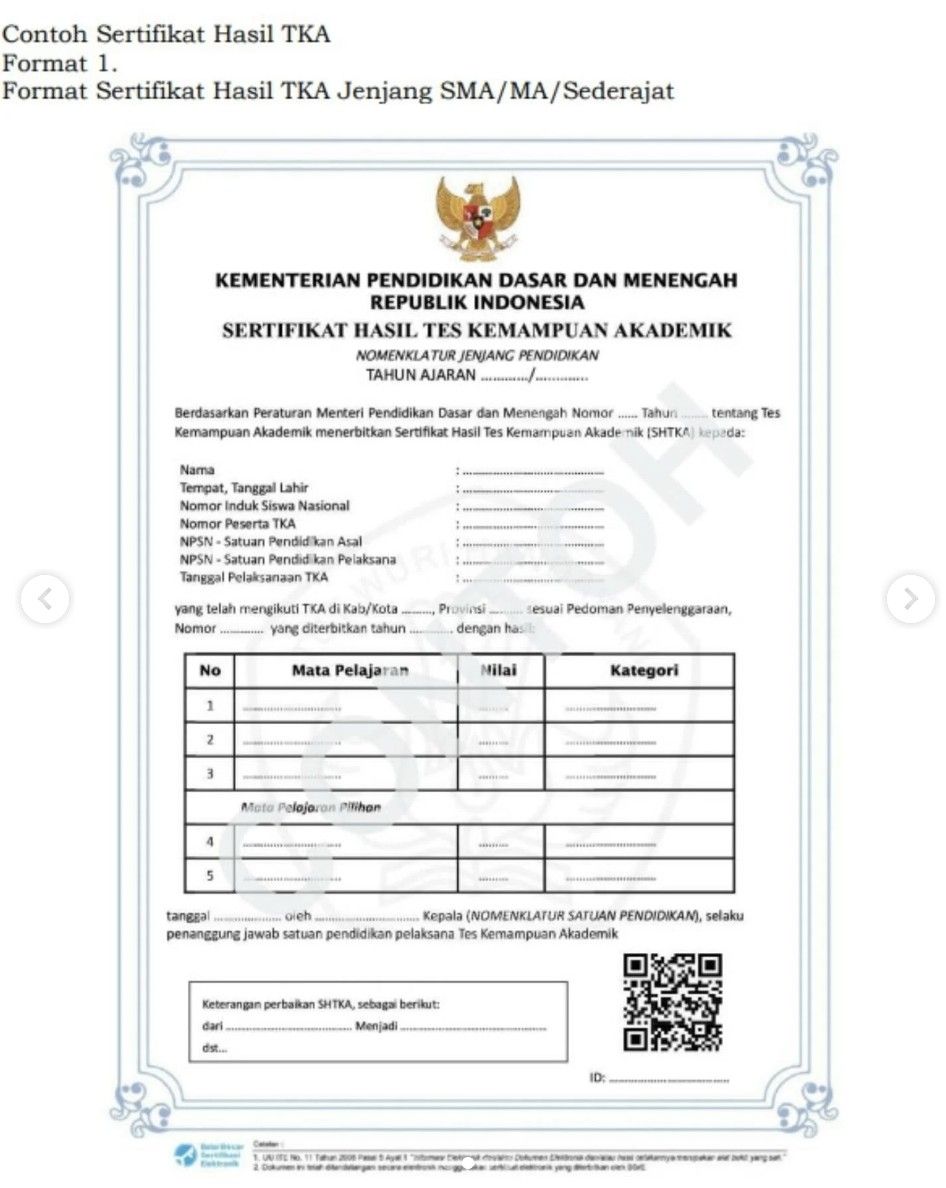
- Result Recapitulation and Certification (December 2026): Following the completion of the tests, the Ministry processes the scores using advanced statistical models, with certificates expected to be issued by the end of the year.
Eligibility and Participant Requirements
The 2026 TKA is not mandatory for all students, but it is highly recommended for those intending to pursue further education. According to the latest guidelines, the following groups are eligible to participate:
- Final Year Students: Grade 12 students in SMA, MA, SMK, and MAK, as well as students in the final year of Package C programs.
- Selected Grade 11 Students: In certain cases, Grade 11 students may be permitted to participate as part of an early assessment or "fast-track" monitoring program.
- Recent Graduates (Gap Year Students): Individuals who graduated in 2024 or 2025 but wish to use a fresh TKA score for the 2026 university admissions cycle are also eligible to register.
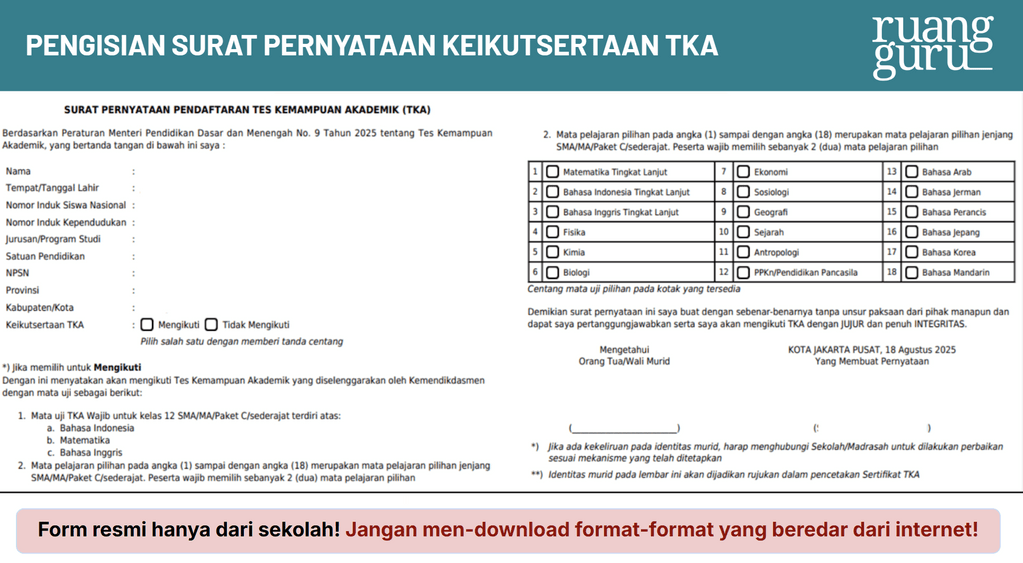
Participation requires a formal statement of intent signed by the student and their parents, acknowledging that the test results will be used for academic validation and selection purposes.
Examination Structure and Subject Breakdown
The TKA is divided into two primary categories: Mandatory Subjects and Elective Subjects. The test is conducted over a two-day period to prevent student fatigue and ensure a comprehensive assessment of various competencies.
Day 1: Mandatory Subjects (150 Minutes)
The first day focuses on foundational literacies and numeracy, which are essential for success in any higher education discipline.
- Mathematics: Focuses on quantitative reasoning, algebra, geometry, and data analysis.
- Indonesian Language: Evaluates reading comprehension, analytical writing, and the ability to synthesize information from complex texts.
- English Language: Assesses communicative competence, vocabulary in context, and global literacy.
Day 2: Elective Subjects (130 Minutes)
On the second day, students select two subjects that align with their intended university major or their high school specialization.
- Science Stream (IPA): Physics, Chemistry, and Biology.
- Social Science Stream (IPS): Economics, History, Sociology, and Geography.
- Vocational Stream (SMK): Specialized subjects tailored to the specific vocational programs, such as Engineering, Accounting, or Information Technology.
The questions are designed to be "curriculum-neutral," meaning they focus on the core competencies shared by both the 2013 Curriculum and the Merdeka Curriculum. The emphasis is placed on reasoning and problem-solving rather than rote memorization of facts.
Technical Methodology: IRT Scoring and Question Formats
The TKA 2026 utilizes Item Response Theory (IRT) for scoring, a sophisticated statistical method also used in international exams like the SAT and GRE. Unlike traditional scoring where each question has a fixed point value, IRT evaluates the difficulty of each question based on the performance of all test-takers. A student who correctly answers a difficult question (one that many others missed) receives a higher weighted score than a student who only answers easy questions correctly. This ensures a more accurate distribution of ability levels and prevents "score clustering."
The question formats are varied to test different cognitive levels:
- Ordinary Multiple Choice: Selecting one correct answer from five options.
- Complex Multiple Choice: Selecting multiple correct statements or determining "True/False" for several premises.
- Matching (Menjodohkan): Connecting related concepts across two columns.
Official Responses and Academic Implications
The Ministry of Primary and Secondary Education has emphasized that the TKA is a step toward "Deep Learning." By moving away from the high-stakes pressure of the old National Exam and focusing on validation, the Ministry hopes to foster a more genuine learning environment in schools.
Educational psychologists have reacted positively to the inclusion of elective subjects, noting that it allows students to showcase their strengths in specific fields. However, some teacher unions have expressed concerns regarding the technical readiness of schools in remote areas. In response, the Ministry has pledged to provide mobile testing units and "buffer servers" for regions with unstable internet connectivity, ensuring that no student is disadvantaged by their geographical location.
From a university perspective, the Council of Rectors of Indonesian State Universities (Majelis Rektor Perguruan Tinggi Negeri) has signaled that TKA scores will be a "highly valued component" in the 2026 selection process. It provides a reliable metric to distinguish between top-tier candidates in highly competitive programs like Medicine, Engineering, and Law.
Security and Integrity Protocols
To maintain the sanctity of the test, the Ministry has implemented rigorous proctoring rules. Participants are prohibited from bringing any electronic devices, including smartwatches and calculators, into the testing hall. The CBT software includes a "lockdown" feature that prevents users from opening other tabs or applications during the exam. Furthermore, any attempt to record or distribute exam questions is a legal offense that results in immediate disqualification and potential blacklisting from state university admissions.
Conclusion: Preparing for a New Era of Assessment
The 2026 Academic Competency Test represents a significant evolution in Indonesia’s educational assessment strategy. By serving as a bridge between school-based learning and higher education requirements, the TKA seeks to create a more transparent, fair, and meritocratic system. For students, the TKA is more than just a test; it is an opportunity to validate three years of hard work and secure a pathway to their future careers. As the registration date approaches, the Ministry urges all stakeholders—schools, parents, and students—to engage with the official guidelines and utilize the provided simulation tools to ensure success in this critical academic milestone.