
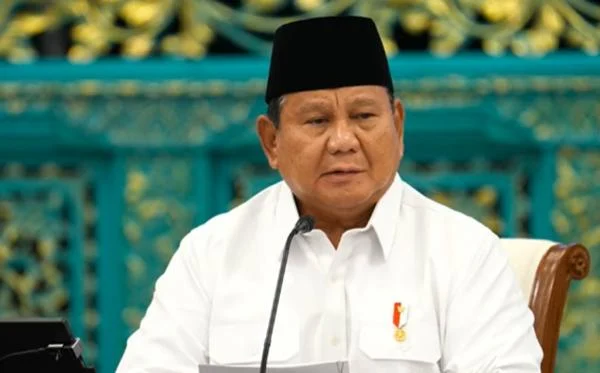
President Prabowo Subianto has announced a landmark shift in Indonesia’s economic management, revealing that the consolidation of state-owned entities under the Daya Anagata Nusantara (Danantara) super-holding agency has resulted in the dissolution of 250 state-owned enterprises (BUMBs) as of July 2026. During a Plenary Cabinet Session held at the State Palace in Jakarta on Monday, July 20, 2026, the President detailed how this massive restructuring effort is projected to save the Indonesian government approximately Rp50 trillion in annual operational expenditures. This sweeping reform marks a definitive end to the era of bloated state bureaucracies, aiming to transform Indonesia’s fragmented state assets into a lean, professional, and globally competitive sovereign wealth fund.
The President’s address highlighted the sheer scale of inefficiency that had previously plagued the state-owned sector. By eliminating redundant entities and streamlining management structures, the government has successfully cut significant "overhead" costs that contributed little to the national interest. According to President Prabowo, the Rp50 trillion saved represents capital that was previously locked in routine expenses, including the salaries of numerous boards of directors and commissioners, office rentals, electricity bills, transportation costs, and various administrative overheads associated with maintaining hundreds of separate corporate shells.
The Fiscal Impact of Structural Consolidation
The decision to shutter 250 state-owned entities is rooted in a data-driven approach to fiscal responsibility. For decades, the Indonesian government maintained a vast array of BUMBs, many of which operated with overlapping mandates or existed as "zombie" companies that relied on state injections (PMN) rather than generating profit. The consolidation into Danantara has allowed the government to identify these redundancies and liquidate or merge entities that were no longer viable or strategic.
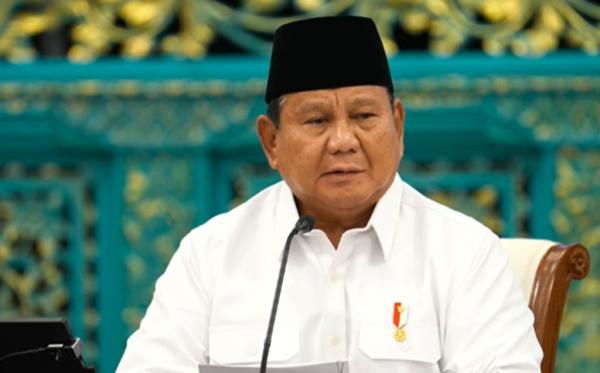
President Prabowo emphasized that the Rp50 trillion in savings is not merely a budgetary figure but a reallocation of national wealth toward more productive sectors. "There are reports that with the closure of 250 BUMBs, the overhead and routine costs that can be saved amount to Rp50 trillion," the President stated. "That Rp50 trillion includes salaries for directors, salaries for commissioners, building rentals, electricity payments, transport payments, and operational meetings. This is a significant sum that can now be utilized for the direct benefit of the people."
The savings are expected to provide additional fiscal space for the administration’s flagship social and infrastructure programs. By reducing the "leaking" of state funds into unproductive administrative costs, the government intends to redirect these resources toward human capital development, such as the Free Nutritious Meal (MBG) program, and the modernization of the agricultural sector to ensure food sovereignty.
Danantara: A New Paradigm for Asset Management
The establishment of Daya Anagata Nusantara (Danantara) represents the centerpiece of President Prabowo’s economic transformation agenda. Unlike the previous management model under the Ministry of State-Owned Enterprises, which often balanced corporate goals with political and bureaucratic pressures, Danantara is designed to operate as a world-class sovereign wealth fund (SWF). Its primary mandate is to manage the nation’s strategic assets with a high degree of professionalism, transparency, and a long-term investment horizon.
The President revealed that the total value of assets currently managed under the Danantara umbrella has surpassed the $1,000 billion (USD 1 trillion) mark. This milestone places Indonesia in the same league as major global sovereign wealth funds, such as Singapore’s Temasek Holdings or the Government of Norway’s Pension Fund Global. By consolidating assets from various sectors—including energy, telecommunications, finance, and infrastructure—Danantara gains the leverage to negotiate better international partnerships and attract high-quality foreign direct investment.
"Danantara is a sovereign fund where the savings, wealth, and assets of the state are united, consolidated, and managed neatly," Prabowo explained. He further described the fund as "energy for the future of Indonesia," serving as a strategic reserve for future generations, including the "children, grandchildren, and great-grandchildren" of the nation.
Historical Context and the Path to Reform
The journey toward this massive restructuring began shortly after President Prabowo took office, following a series of audits that exposed the inefficiencies within the Ministry of BUMN’s portfolio. For years, economists had warned that the sheer number of state-owned companies made effective oversight nearly impossible. Many smaller subsidiaries and sub-subsidiaries were found to be draining resources from their parent companies, creating a web of financial instability.

The timeline for this transformation was aggressive. Beginning in late 2024, the administration initiated a multi-phase plan to categorize BUMBs into "strategic," "commercially viable," and "redundant" groups. The 250 entities dissolved by July 2026 were largely those falling into the redundant category—companies that either provided services already covered by other state agencies or those that had failed to turn a profit for several consecutive years.
This reform also addresses long-standing grievances regarding the appointment of "political" commissioners and directors. By moving these entities under Danantara, the selection process for leadership roles has shifted toward a merit-based system, overseen by professional investment managers rather than purely political appointees. This shift is intended to depoliticize the management of state assets and ensure that every rupiah invested by the state yields a tangible return.
Addressing Economic Disparities and Resource Management
During the same cabinet session, President Prabowo expressed his continued frustration with the irony of Indonesia’s resource wealth versus its market realities. He referenced past crises, such as the scarcity of cooking oil in a nation that stands as the world’s largest producer of crude palm oil (CPO). The President characterized such occurrences as "illogical" and a symptom of poor management and rent-seeking behavior.
The consolidation of assets under Danantara is seen as a safeguard against such market failures. By having a centralized, professionally managed entity oversee strategic commodities, the government can better intervene in supply chains to ensure domestic availability and price stability. The $1 trillion asset base provides Danantara with the "firepower" to stabilize markets and invest in downstream industries that add value to raw materials before they are exported.
Furthermore, the President defended his administration’s spending on social programs, such as the Free Nutritious Meal initiative, against critics who labeled them as wasteful. He pointed out that while social spending is often scrutinized, the "evaporation" of thousands of trillions of rupiah due to corruption and mismanagement in the past rarely met with the same level of academic or political protest. The Rp50 trillion saved from BUMB restructuring serves as a direct rebuttal to critics, proving that the administration is capable of finding internal efficiencies to fund its social mandate.
Implications for the National Economy and Global Investors
The emergence of Danantara as a trillion-dollar fund has significant implications for Indonesia’s credit rating and investment climate. Global rating agencies have historically viewed the "contingent liabilities" of Indonesia’s many BUMBs as a risk factor for the country’s sovereign debt. By cleaning up the balance sheets and closing down non-performing entities, the government is effectively reducing its fiscal risk profile.
For international investors, a consolidated and professionally managed Danantara offers a more transparent entry point into the Indonesian market. Rather than navigating the complex bureaucracy of multiple ministries, investors can now partner with a single, sophisticated entity that speaks the language of global finance. This is expected to accelerate infrastructure development and the transition to renewable energy, as Danantara can provide the necessary co-investment and state guarantees required for large-scale projects.
Conclusion: A Vision for Generational Wealth
The transformation of the state-owned sector into a sovereign wealth fund model is perhaps the most significant structural change in the Indonesian economy since the 1998 reforms. By July 2026, the dissolution of 250 entities has proven that the government is willing to take bold, and sometimes difficult, steps to ensure the long-term health of the national treasury.
President Prabowo Subianto’s vision for Danantara extends beyond mere bookkeeping. It is an attempt to build an institutional fortress that protects Indonesia’s wealth from the volatility of global markets and the inefficiencies of domestic politics. As the fund continues to grow and professionalize, the Rp50 trillion in annual savings will likely be remembered as the first dividend of a new era of Indonesian economic sovereignty.
The administration’s focus now shifts to the remaining state-owned giants, ensuring that they operate at peak efficiency under the Danantara umbrella. With a trillion-dollar asset base and a mandate for reform, the Indonesian government is signaling to the world that it is no longer content with just being a resource-rich nation; it intends to become a global financial powerhouse, securing the prosperity of its citizens for generations to come.
