
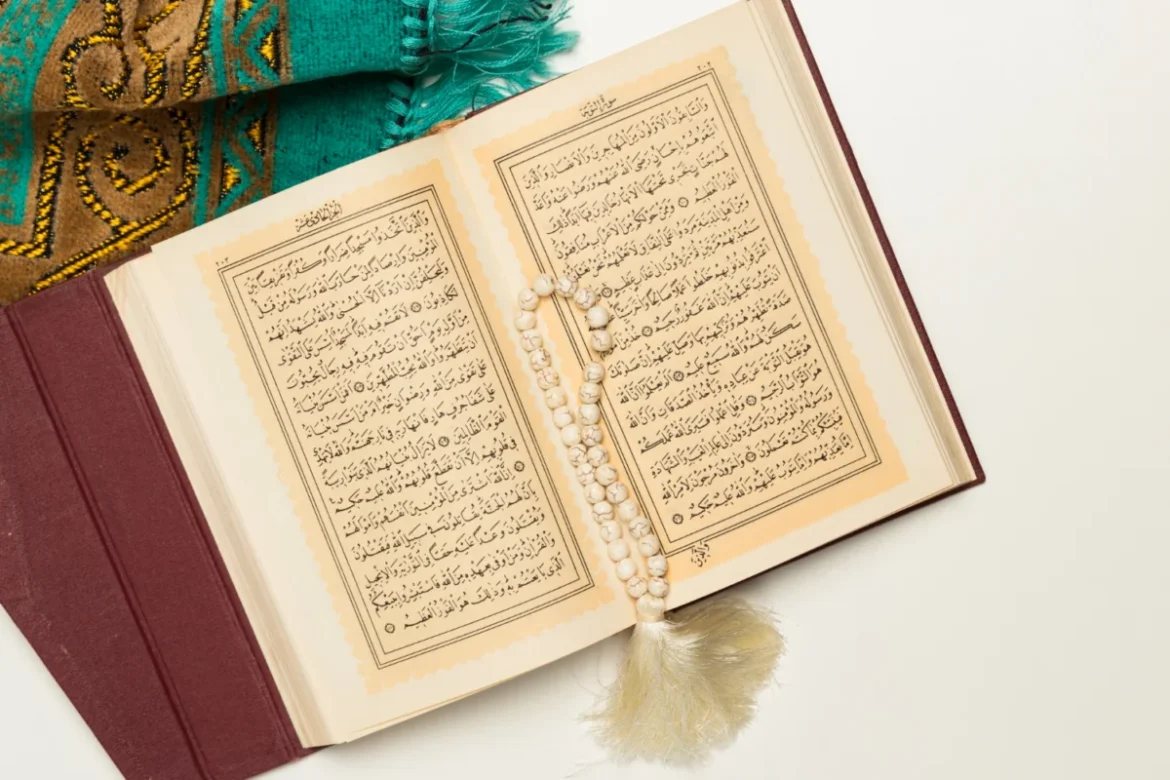
The practice of reciting the Holy Quran holds a central place in the devotional lives of Muslims worldwide, serving as a profound act of worship and a means of spiritual connection. However, questions frequently arise within the Muslim community regarding the prerequisites for engaging with this sacred text, particularly concerning ritual purity. One of the most common inquiries pertains to the necessity of performing wudhu (ablution) before reading the Quran or handling a physical copy of the mushaf (the written text of the Quran). This article delves into the well-established Islamic jurisprudential rulings on these matters, drawing upon the consensus of leading scholars and the foundational texts of Islamic law, while also exploring the nuances and implications for contemporary Muslim practice, especially in the digital age.
The Foundation of Purity: Understanding Wudhu and Hadas
At the heart of Islamic worship lies the concept of tahara, or ritual purity. This state of cleanliness is paramount for many acts of devotion, most notably prayer (salat) and circumambulation of the Kaaba (tawaf). Wudhu is the prescribed ritual washing performed to achieve this state of minor ritual purity, removing hadas asghar (minor impurity). The process of wudhu involves washing specific parts of the body in a prescribed order: the face, the hands and arms up to the elbows, wiping the head, and washing the feet up to the ankles. Each step is accompanied by specific intentions and supplications, transforming a physical act of cleaning into a spiritual purification.
A person is considered to be in a state of hadas asghar if they have relieved themselves (urination, defecation, passing wind), slept deeply, or experienced any other event that invalidates wudhu. For certain acts of worship, being free from hadas asghar is a strict prerequisite. The Quran itself emphasizes purity, stating in Surah Al-Baqarah (2:222), "Indeed, Allah loves those who constantly repent and loves those who purify themselves." This verse, among others, underpins the deep spiritual significance attached to cleanliness and purity in Islam, making wudhu not merely a physical cleansing but a preparation of the soul for communion with the Divine.
Recitation Without Physical Contact: Flexibility in Worship
A significant point of clarification from Islamic jurisprudence is the distinction between verbally reciting the Quran and physically touching the mushaf. The consensus among the vast majority of Sunni scholars from the four prominent schools of thought—Hanafi, Maliki, Shafi’i, and Hanbali—is that it is permissible to recite the Quran without having performed wudhu, provided one does not directly touch the physical mushaf.
This ruling offers considerable flexibility for Muslims to engage with the Quran in various everyday situations. For instance, individuals memorizing the Quran (huffaz) can review their verses from memory at any time, whether they are at work, traveling, or simply resting at home, without needing to perform wudhu. Similarly, those who wish to follow along with a murattal (recitation) playing from an audio device, or read verses displayed on a smartphone, tablet, or computer screen, are permitted to do so without first performing ablution. The essence of this permissibility lies in the understanding that the act of recitation itself, whether from memory or a digital display, does not constitute "touching" the sacred text in the physical sense that requires ritual purity.
Leading contemporary scholars have affirmed this stance. For example, Sheikh Dr. Ali Jum’ah, the former Grand Mufti of Egypt, explicitly stated: "There is no religious impediment to reciting the Quran without wudhu as long as one does not touch the mushaf, based on the words of Allah Ta’ala: ‘None shall touch it except the purified.’ (QS. Al-Waqi’ah: 79)."
The verse from Surah Al-Waqi’ah (56:79), "None shall touch it except the purified" (لَا يَمَسُّهُ إِلَّا الْمُطَهَّرُونَ), is central to this discussion. While some classical interpretations understand "the purified" to refer to angels in the heavenly realm who guard the preserved tablet (Al-Lawh Al-Mahfuzh) from which the Quran descended, many jurists also apply it to human beings in relation to the physical mushaf. They interpret "touching" in this context as directly handling the physical book. This dual interpretation allows for the spiritual reverence for the Quran’s divine origin while providing practical ease for its recitation by believers in various states of ritual purity, as long as physical contact with the mushaf is avoided. The flexibility afforded by this interpretation encourages constant engagement with the Quran, fostering a deeper connection to its message regardless of immediate ritual status. This ease ensures that the Quran remains accessible for reflection, memorization, and spiritual solace throughout the day.
The Sanctity of the Mushaf: A Strict Requirement for Purity
In stark contrast to mere recitation, the act of physically touching or carrying the mushaf carries a more stringent requirement for ritual purity. The overwhelming consensus among Islamic scholars is that a person must be in a state of tahara (purity, achieved through wudhu for minor impurity or ghusl for major impurity) before touching or carrying a physical copy of the Quran. This ruling is rooted in profound reverence for the Word of God and aims to uphold the sanctity and honor of the Holy Book.

Habib Salim bin Abdullah Al-Hadhrami, a renowned Yemeni scholar, articulated this clearly in his seminal work, Safinatun Najah, stating: "A person whose wudhu has been invalidated is prohibited from performing four things: prayer, tawaf (circumambulation of the Kaaba), touching the mushaf, and carrying the mushaf." This statement encapsulates the traditional understanding, placing the physical interaction with the mushaf on par with other major acts of worship that demand ritual purity.
The prohibition against touching the mushaf without wudhu is not intended to create hardship but rather to instill a sense of awe and respect for the divine revelation. The Quran is considered the direct speech of Allah, and handling its written form is thus an act imbued with immense spiritual significance. To approach it in a state of ritual impurity would be seen as a lack of reverence. This ruling applies to all parts of the mushaf, including the pages, cover, and even the margins where the verses are printed. The only exceptions typically considered are cases of necessity, such as moving the mushaf to a safe place if it is in danger of desecration, or if one is teaching or learning and has no other way to access the text. However, even in such cases, scholars advise minimizing direct contact as much as possible, perhaps by using a barrier.
Furthermore, the prohibition extends to carrying the mushaf. This means that one cannot simply pick up and transport the physical book if one is not in a state of wudhu. This reinforces the idea that the entire physical entity of the Quran, when in its complete form, is sanctified and requires respectful handling. This adherence to purity ensures that Muslims approach the physical manifestation of God’s word with the utmost respect and veneration, reflecting its sublime status in Islam.
The Question of Incomplete Ablution: When is Purity Attained?
A frequently posed question, often stemming from practical scenarios, concerns the status of ritual purity when wudhu is in progress but not yet completed. For instance, if someone has washed their face, hands, and wiped their head, but has not yet washed their feet—the final obligatory step—are they then permitted to touch the mushaf?
The majority of Islamic jurists firmly state that the state of hadas asghar (minor impurity) is only fully removed once all the obligatory steps (fara’id) of wudhu have been completed. Until then, the individual is still considered to be in a state of impurity for the purposes of acts that require tahara, such as touching the mushaf.
This principle is clearly outlined in authoritative jurisprudential texts. Al-Mausu’ah Al-Fiqhiyyah Al-Kuwaitiyyah (The Kuwaiti Encyclopedia of Islamic Jurisprudence), a comprehensive and widely respected compilation of Islamic legal opinions, elaborates on this point: "One who is in a state of minor impurity is not permitted to touch the mushaf except after completing their purification. If one has only washed some parts of their wudhu, they are not permitted to touch the mushaf until they have completed their wudhu."
The rationale behind this ruling is that wudhu is a holistic act of purification. Each step is an integral part of a larger ritual, and the spiritual effect of removing impurity is not achieved until the entire sequence is performed correctly and completely. Therefore, a partial wudhu does not confer the state of purity required for handling the mushaf. The individual remains in a state of hadas until the final limb, the feet, has been washed according to the prescribed method.
It is worth noting that Al-Mausu’ah Al-Fiqhiyyah Al-Kuwaitiyyah also mentions a minority opinion within the Hanafi school, which suggests that one might be permitted to touch the mushaf with the specific limbs that have already been washed, even if the entire wudhu is not yet complete. However, this remains a minority view, and the predominant and safer opinion, upheld by the majority of scholars across the four schools, is to refrain from touching the mushaf until wudhu is entirely concluded. This cautious approach ensures that the sanctity of the Quran is fully respected and that believers are in a state of complete ritual purity when interacting with its physical form.
Historical Context and Juridical Development
The rulings surrounding wudhu and the Quran are not arbitrary but are deeply rooted in the historical development of Islamic jurisprudence (fiqh). These principles have been meticulously debated, analyzed, and codified by generations of Islamic scholars, drawing primarily from the Quran and the Sunnah (the traditions and practices of Prophet Muhammad, peace be upon him). The consensus (ijma’) of scholars on these matters has been a powerful force in shaping these widely accepted norms.

The companions of the Prophet, and subsequently the early generations of Muslims, demonstrated profound respect for the Quran. Narrations from the companions indicate their carefulness in handling the sacred text. Over centuries, as Islamic scholarship flourished, jurists from various regions established the major schools of thought—Hanafi, Maliki, Shafi’i, and Hanbali. While these schools sometimes differ on minor points of law, they largely converge on fundamental issues like the necessity of wudhu for touching the mushaf. This widespread agreement across diverse juridical traditions underscores the strength and consistency of these rulings.
The interpretive process involved not only understanding the literal meaning of Quranic verses like Al-Waqi’ah 56:79 but also examining the Prophet’s practices, his sayings (hadith), and the general spirit of Islamic law regarding sacred objects. The emphasis on tahara for acts of worship and interaction with divine texts is a recurring theme in Islamic teachings, signifying respect, humility, and readiness for a sacred encounter. The development of fiqh provided systematic frameworks for addressing such questions, ensuring that religious practices were guided by well-reasoned and authoritative interpretations derived from primary Islamic sources.
The Digital Age: Adapting Fiqh to Modernity
The advent of digital technology has introduced new dimensions to the discussion of Quranic interaction. With the widespread use of smartphones, tablets, and computers, Muslims now frequently access the Quran through applications and websites. This has naturally led to questions about whether the same wudhu requirements apply to digital displays of the Quran.
The general consensus among contemporary scholars is that digital screens displaying Quranic text are not considered a mushaf in the traditional jurisprudential sense. A mushaf refers to the physical book where the Quranic text is printed and bound. A digital device, even when displaying the entire Quran, is primarily a medium for data storage and display. The text itself is not physically imprinted on the screen in a permanent form; it is merely a transient display of light. Therefore, the strict requirement of wudhu for touching the mushaf typically does not extend to touching the screen of a device that displays the Quran.
This distinction is crucial for modern Muslim life. It allows for greater accessibility and ease of engaging with the Quran for people on the go, in situations where performing wudhu might be inconvenient or impractical. Whether in transit, at work, or during a quick break, Muslims can still read, reflect upon, and memorize the Quran using their digital devices without needing to perform ablution. This flexibility highlights the adaptability of Islamic jurisprudence, which seeks to provide guidance that is both faithful to its sacred principles and responsive to the changing realities of human existence. While the physical mushaf retains its unique sanctity and specific rules of engagement, digital versions offer an important and permissible alternative for continuous spiritual connection.
Implications for Muslim Devotion and Practice
The detailed rulings on wudhu in relation to Quran recitation and handling the mushaf carry significant implications for Muslim devotion and daily practice. They strike a harmonious balance between facilitating widespread access to the divine word and upholding its profound sanctity.
On one hand, the permissibility of reciting the Quran from memory or digital devices without wudhu encourages continuous engagement with the sacred text. This flexibility supports the spiritual growth of individuals, allowing them to integrate Quranic reflection into their busy lives without undue burden. It removes barriers that might otherwise deter regular recitation, ensuring that the Quran remains a living guide and source of solace for believers. This ease of access is particularly beneficial for students of the Quran, memorizers, and those seeking comfort and guidance throughout their day.
On the other hand, the strict requirement of wudhu for physically touching and carrying the mushaf instills a deep sense of reverence and respect for the printed Word of God. This rule serves as a constant reminder of the Quran’s divine origin and its elevated status in Islam. It encourages Muslims to approach the mushaf with a mindful and purified state, thereby enhancing the spiritual quality of their interaction with the book. This distinction also helps to educate Muslims about the different levels of sacredness associated with the Quran’s content versus its physical form, promoting a nuanced understanding of ritual purity.
In essence, these jurisprudential guidelines facilitate a vibrant and accessible relationship with the Quran while simultaneously reinforcing the foundational Islamic values of purity, respect, and reverence for divine revelation. They ensure that Muslims can draw spiritual nourishment from the Quran in ways that are both practical and spiritually profound, fostering a continuous and respectful connection to the Word of Allah. The clarity provided by scholars on these matters helps to navigate common queries, allowing Muslims to fulfill their religious obligations and aspirations with confidence and devotion.
