
A Strategic Vision for the Future of HMI
The publication of "HMI in The Future: Gagasan, Arah Baru, dan Peran Strategis HMI di Indonesia Masa Depan" represents a departure from traditional campaign methods often characterized by internal factionalism. By anchoring his candidacy in a substantive intellectual framework, Rifyan Ridwan Saleh aims to pivot the discourse of the upcoming congress toward structural reform and long-term institutional sustainability.
The core of Rifyan’s argument lies in the necessity for HMI—the largest and arguably most influential Islamic student organization in Indonesia—to adapt to the rapid technological and socio-political shifts defining the 21st century. The book proposes a roadmap for the organization to reclaim its role as a "cradle of leaders" while navigating the complexities of the digital economy and global governance.
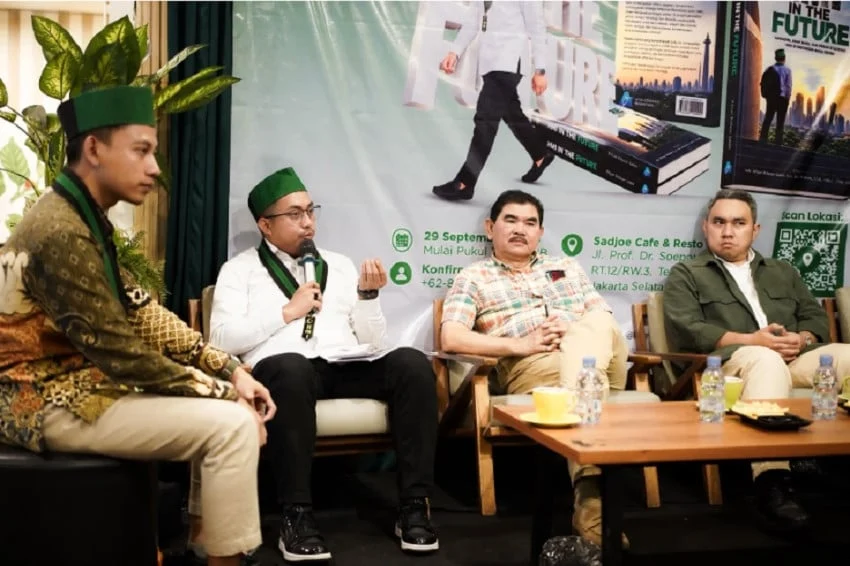
The Launch Event: An Intellectual Forum
The launch event was structured as a roundtable discussion, reflecting the author’s desire to foster a culture of critical thinking within the HMI ranks. The panel of discussants was carefully curated to bridge the gap between academic theory, legal practice, and public policy:
- Ilham Akbar Mustafa, Staf Khusus to the Minister of Migrant Worker Protection (P2MI) for Digital Transformation and Public Service Strengthening, provided insights on the importance of digital literacy in organizational management.
- Juanda, a Professor of Constitutional Law at Esa Unggul University, analyzed the legal implications of HMI’s role in influencing national policy and its historical alignment with the Indonesian constitutional framework.
- Ojak Situmeang, Managing Partner and Co-Founder of OS Law Partnership, brought a practitioner’s perspective, focusing on the professionalization of student governance and ethical leadership.
This assembly of experts highlighted the shift in expectations for student leaders, who are now required to possess not only oratorical skills but also deep-seated knowledge in law, digital policy, and state administration.
Contextualizing the 33rd HMI Congress
The 33rd HMI Congress in Lampung is widely expected to be a watershed moment for the organization. As Indonesia approaches its 2029 political cycle, HMI’s internal leadership transition will be closely watched by national political stakeholders. Historically, the PB HMI chairmanship is often seen as a springboard for national-level political participation.
With the event set for November 2026, the current pre-congress period is characterized by the emergence of several "intellectual candidacies." Other figures, such as Nur Latuconsina—who has championed the concept of "HMI Resilience"—are also positioning themselves to lead the organization. This competitive landscape suggests that the 33rd Congress will prioritize thematic platform-based debates over traditional bloc-based voting.
Rifyan’s Declaration: A Call to Institutional Service
During the event on Wednesday, September 30, 2026, Rifyan formally declared his candidacy for the PB HMI chairmanship for the 2027–2029 term. His statement was framed by a philosophy of "servant leadership."
"I do not wish for the ideas within this book to remain mere ink on paper," Rifyan remarked. "I am choosing to fight for them. I am declaring myself a candidate for the General Chair of PB HMI for the 2027–2029 term because I want to dedicate my life, my intellect, my experiences, my time, and all the capabilities I possess to the benefit of the community and the nation through HMI."
Rifyan emphasized that the position of Chairman should not be viewed as an end-goal or a prestige-driven role. Instead, he argued that the mandate is a tool for systemic change. He posited that the primary objective of any HMI leader should be the cultivation of individuals who are not only intellectually competent but also possess high integrity and a profound sense of civic responsibility.
The Role of Digital Transformation in Student Movements
A significant portion of the discourse at the launch focused on the digital transformation of student movements. Ilham Akbar Mustafa lauded Rifyan’s initiative, noting that the organization must move beyond traditional street-level advocacy to embrace data-driven policy recommendations.
The digital age presents a unique paradox for organizations like HMI. While social media provides a platform for rapid mobilization, it also fosters fragmented discourse. Rifyan’s book argues for a "New Direction" (Arah Baru) that utilizes digital tools to create a more inclusive, transparent, and efficient organizational hierarchy. This includes modernizing member databases, creating centralized knowledge repositories, and professionalizing the advocacy process through rigorous research.
Analytical Perspective: Challenges and Implications
The path toward the 33rd Congress is fraught with structural challenges. HMI, like many civil society organizations in Indonesia, faces the persistent struggle of maintaining independence while engaging with the political establishment.
- Institutional Reform: The primary challenge for any incoming leadership will be the decentralization of power. There has been a long-standing debate regarding the balance of power between the central board (PB HMI) and the local chapters (Badko and Cabang).
- Resource Sustainability: In an era where funding sources for student movements are under increasing scrutiny, the ability to build sustainable, independent funding models—as hinted at in Rifyan’s work—will be critical.
- Policy Advocacy: The expectation for HMI to act as a "watchdog" for government policy remains high. The organization must reconcile its role as a critical partner of the state with its need to remain an independent incubator for student talent.
The launch of this book signals that Rifyan is attempting to build a narrative of "technocratic leadership." By aligning himself with experts in digital transformation and law, he is signaling to the voting delegates of the congress that his administration would be one of professional management rather than populist rhetoric.
The Broader Impact on Indonesian Student Politics
The HMI remains a significant barometer for the health of Indonesian democracy. As the country moves closer to the 2029 general elections, the internal dynamics of student organizations provide a glimpse into the next generation of Indonesian policymakers.
Observers have noted that the current trend of candidates launching books—rather than just campaign posters—is a positive development. It suggests a return to the "intellectual roots" of the organization, which was founded in 1947 with a dual mission of defending the state and fostering the development of Islamic student intellectualism.
If the 33rd Congress successfully pivots toward the substantive debate outlined in Rifyan’s manifesto, it may set a new precedent for student organizations nationwide. The shift from "who will lead" to "what we should do" represents a maturation of the student movement that could have long-term positive effects on the quality of public discourse in Indonesia.
Conclusion
Rifyan Ridwan Saleh’s declaration and the launch of his book, HMI in The Future, mark the opening of a critical chapter in the history of the Himpunan Mahasiswa Islam. As the organization prepares for the 33rd Congress in Lampung, the focus will remain on whether these proposed "new directions" can withstand the pressures of internal politics and external expectations.
For the delegates who will cast their votes in 2026, the challenge will be to determine which vision—be it "HMI Resilience," "Arah Baru," or other emerging platforms—best serves the interests of a modernizing Indonesia. Rifyan’s campaign, characterized by his stated desire to "give himself" to the organization, positions him as a candidate who is betting on the intellectual capacity of his peers to choose substance over status.
As the countdown to the November 2026 congress continues, the academic and political community will be watching closely. Whether this intellectual approach will translate into an electoral victory remains to be seen, but the contribution to the literature of student governance is already a noteworthy milestone in the ongoing evolution of Indonesia’s democratic landscape.
