
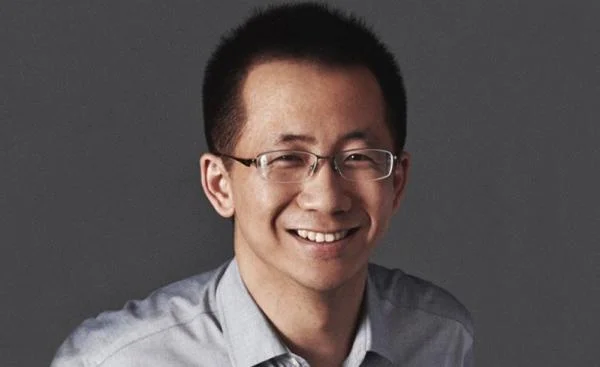
The landscape of extreme wealth in Asia has undergone a significant transformation as Zhang Yiming, the visionary founder of ByteDance, officially ascended to the top spot on the list of the continent’s wealthiest individuals. According to the Bloomberg Billionaires Index, Zhang’s net worth has surged to an estimated 105 billion dollars, effectively pushing aside Indian industrialist Gautam Adani, who now holds the second position with a net worth of 104.8 billion dollars. This shift not only marks a personal milestone for the 43-year-old technology entrepreneur but also signals a broader trend in the global economy, where wealth generation is increasingly driven by algorithmic dominance and the integration of artificial intelligence into mass-market consumer platforms.
The Meteoric Rise of ByteDance and Zhang Yiming
Zhang Yiming’s rise to the summit of Asian wealth is fundamentally tethered to the explosive success of ByteDance, the Beijing-based tech conglomerate that changed the way the world consumes digital content. ByteDance is the parent company of TikTok, the short-form video platform that has achieved unparalleled global penetration, and its Chinese counterpart, Douyin.
The trajectory of Zhang’s wealth is nothing short of extraordinary. Industry analysts note that as recently as March 2019, Zhang’s net worth was estimated at approximately 13 billion dollars. Over the subsequent five years, his wealth has increased by nearly eightfold. This growth is not merely a byproduct of market speculation but a reflection of the company’s relentless expansion. Despite geopolitical tensions, regulatory scrutiny in the United States, and intense competition from legacy social media platforms, ByteDance has maintained a dominant grip on user engagement metrics, effectively leveraging proprietary AI algorithms to keep its billions of users glued to their screens.
A Comparative Look at the Titans of Asian Wealth
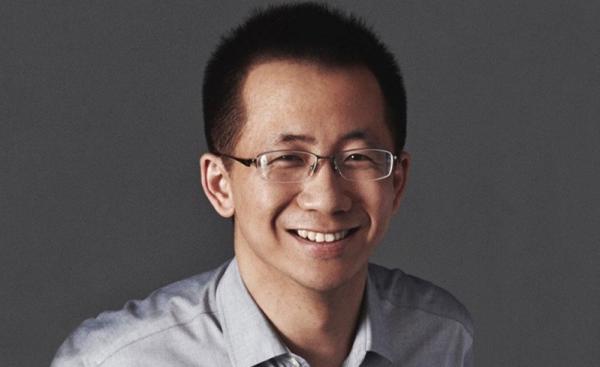
While Zhang Yiming’s ascent is the primary headline, the current hierarchy of Asia’s ultra-wealthy highlights the diverse engines driving the continent’s economy. Following Zhang and Gautam Adani, the list features stalwarts of traditional industry and retail. Mukesh Ambani, the chairman of Reliance Industries, currently holds the third position. Ambani’s conglomerate spans oil, gas, telecommunications, and retail, representing a traditional model of industrial diversification that has long defined Indian wealth.
The fourth position is occupied by Tadashi Yanai, the architect of Fast Retailing—the parent company of the global clothing giant Uniqlo. Yanai’s wealth is a testament to the resilience of the global retail market and the efficacy of Japanese supply chain management. Rounding out the top five is Zhong Shanshan, the founder of the beverage giant Nongfu Spring, whose wealth is derived from China’s massive consumer market for bottled water and healthy beverages.
The shift at the top, however, highlights a divergence: while Adani and Ambani have built their empires on physical infrastructure, energy, and commodities, Zhang Yiming’s wealth is built on intangible assets, data, and machine learning. This transition reflects the increasing importance of the "attention economy" in determining who holds the greatest economic influence in the 21st century.
The Role of Artificial Intelligence as a Wealth Multiplier
Industry insiders and financial analysts attribute a significant portion of the recent surge in Zhang’s valuation to ByteDance’s aggressive pivot toward artificial intelligence. While TikTok made the company a household name, its underlying strength lies in its AI infrastructure, which is considered among the most advanced in the world.

ByteDance has been investing heavily in large language models (LLMs) and generative AI, seeking to integrate these technologies into its suite of applications. This focus on AI has bolstered investor confidence in the company’s future revenue streams, particularly as ByteDance looks to expand beyond social media into areas such as e-commerce, cloud computing, and enterprise software. By prioritizing AI, Zhang has positioned ByteDance not just as a content platform, but as a foundational tech utility, making the company indispensable to advertisers and creators alike.
Contextualizing the Market Dynamics
To understand the scale of this change, one must look at the volatility that has defined the global market for the ultra-wealthy over the past 24 months. Gautam Adani, who has frequently topped the Asian list, saw his wealth fluctuate significantly following high-profile short-seller reports and subsequent market corrections. His ability to maintain a position just shy of Zhang Yiming’s 105 billion dollar mark underscores the sheer scale of the Reliance and Adani empires, which are deeply integrated into the structural development of the Indian economy.
Conversely, Zhang’s path has been characterized by the unique challenges of operating a Chinese technology firm in a globalized world. Despite the threat of bans and divestment orders in key markets like the United States, ByteDance’s valuation has remained remarkably resilient. Financial experts suggest that the company’s ability to remain profitable while aggressively funding R&D projects has insulated it from the typical pressures that cause massive, rapid devaluations in tech stocks.
Implications for the Global Tech Sector
The ascension of an AI-focused founder to the top of the Asian wealth hierarchy is a bellwether for the global tech industry. It underscores a shift where the value of a company is no longer determined by its physical footprint, but by its capacity to process data and predict human behavior.

For the global economy, this development brings both opportunity and concern. On one hand, it highlights the immense potential for growth within the AI sector, likely leading to a new wave of investment in startups and infrastructure. On the other hand, it raises questions about the concentration of influence held by a handful of individuals who control the algorithms that shape public discourse and information consumption. Regulatory bodies in both the East and the West are increasingly wary of this concentration of power, and while it has not yet impeded the growth of ByteDance, it remains a critical factor in the long-term outlook for Zhang’s empire.
Chronology of Influence: From Start-up to Global Giant
- 2012: Zhang Yiming founds ByteDance in Beijing.
- 2016: The company launches Douyin, which eventually evolves into the global sensation TikTok.
- 2019: Zhang’s net worth is estimated at 13 billion dollars.
- 2021: ByteDance achieves massive global scale, with TikTok surpassing 1 billion monthly active users.
- 2023-2024: The company intensifies its focus on generative AI and large language models, leading to a significant re-evaluation of its market value by private investors.
- September 2024: Zhang Yiming officially overtakes Gautam Adani to become the richest person in Asia.
The Path Forward
As Zhang Yiming assumes his new role as the wealthiest individual in Asia, the focus will likely turn toward the sustainability of his business model. The challenge for ByteDance moving forward will be to navigate the increasingly complex regulatory landscape in international markets while continuing to innovate at a pace that keeps competitors at bay.
The transition at the top of the Bloomberg Billionaires Index is more than just a change in rank; it is a signal of the changing nature of wealth in the digital age. As the world continues to integrate AI into every facet of daily life, those who own the platforms and the algorithms behind this integration are poised to remain at the pinnacle of the economic hierarchy. For now, Zhang Yiming stands at the forefront of this digital revolution, representing a new breed of industrialist whose power is measured not in tons of steel or barrels of oil, but in terabytes of data and seconds of user attention.
Whether he can maintain this position will depend on his ability to navigate the geopolitical tensions that continue to loom over ByteDance. However, given the company’s track record of rapid adaptation and technical ingenuity, most analysts expect Zhang to remain a dominant force in the global economy for the foreseeable future. The story of Zhang Yiming is a quintessential example of modern success: a mix of technological foresight, aggressive scaling, and the ability to capture the attention of a global audience in a way that few in history have ever managed.
