
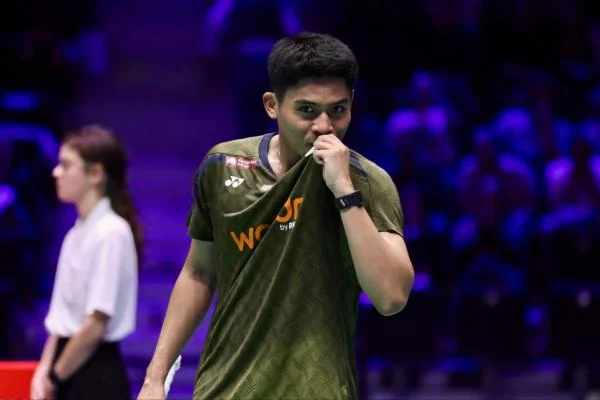
The upcoming Korea Open 2026, scheduled to take place in Yeosu, South Korea, from November 3 to 8, serves as a high-stakes proving ground for Indonesia’s burgeoning badminton talents, Moh. Zaki Ubaidillah and Richie Duta Richardo. As the BWF World Tour circuit enters its final stages for the 2026 season, these two young men stand at the precipice of international recognition, carrying the momentum of recent domestic and continental successes into one of the sport’s most challenging environments.
The Rising Stars: Current Form and Trajectory
Moh. Zaki Ubaidillah, affectionately known as "Ubed," arrives in Yeosu riding a wave of significant personal achievement. His recent performance at the French Open 2026, where he secured the runner-up position, signaled his arrival as a legitimate threat to the world’s elite. The French Open, a prestigious stop on the tour, demanded high levels of endurance and tactical discipline, attributes Ubed displayed throughout the week.
In tandem, Richie Duta Richardo represents the depth of the current Indonesian pipeline. His triumph at the POLYTRON Kudus Indonesia Masters 2026 Super 100 was not merely a victory of home-court advantage but a showcase of resilience and technical proficiency against a competitive field. Both players are now tasked with translating these domestic and continental successes onto the global stage in South Korea.
The Logistical Challenge of Elite Badminton
The life of a professional badminton player is defined by unrelenting travel and minimal recovery time. For Ubed, the transition from the European circuit to East Asia has proven particularly demanding. Following his grueling campaign in France, the travel schedule left him with only two days of effective training in Jakarta before departing for South Korea.
"It is, quite frankly, a very tight preparation window," Ubed acknowledged in a recent briefing. "Coming back from Europe and having only two days to recalibrate in Jakarta is far from ideal. It is not an easy situation, but I am driven by the memory of my previous experience here. Last year, I failed to clear the qualifying rounds. My objective is significantly higher this time around."
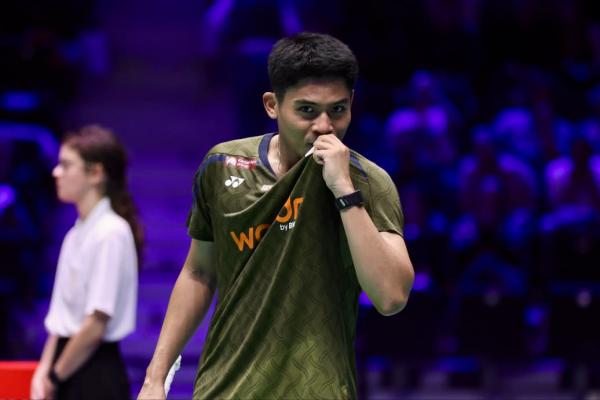
This candid admission highlights the physical and mental toll of the modern BWF calendar. Athletes are often expected to perform at peak capacity despite jet lag, climate shifts, and the accumulation of fatigue. Ubed’s focus on the psychological aspect—maintaining mental fortitude despite physical depletion—will be the defining factor in his potential advancement in the tournament.
Historical Context of the Korea Open
The Korea Open has long been regarded as a prestigious BWF Super 500 level tournament, often attracting a dense field of the world’s top-ranked players. Traditionally held in Seoul or Yeosu, the tournament is known for its fast courts and demanding atmosphere. For young players like Ubed and Richie, the tournament represents a steep learning curve.
Historically, the Indonesian men’s singles contingent has enjoyed success in Korea, though the modern era has seen a shift toward increased parity among global nations. The 2026 edition is particularly critical as players look to secure ranking points to qualify for the prestigious season-ending BWF World Tour Finals. With the 2026 season drawing to a close, every point earned in Yeosu carries weight, potentially deciding the seeding for next year’s major championships.
Tactical Analysis and Technical Expectations
Experts in the sport note that both Ubed and Richie possess distinct styles that may serve them well on the Korean surface. Ubed, known for his patient build-up and explosive net play, will need to be wary of the aggressive, high-speed attacking styles favored by local South Korean players. Richie, conversely, has built a reputation on defensive solidity and counter-attacking prowess—a style that is often effective against players who rely solely on raw power.
The coaching staff accompanying the Indonesian contingent has emphasized that technical execution will be secondary to physical management. The team’s approach is centered on "recovery-first" training, ensuring that the athletes arrive at the Yeosu court with fresh legs. For these young players, the challenge is not just beating the opponent across the net; it is defeating the limitations of their own tired bodies.
Broader Implications for Indonesian Badminton
The rise of Ubed and Richie comes at a pivotal time for Indonesian badminton. With established icons nearing the ends of their careers, the federation is looking toward a new generation to maintain the nation’s status as a global powerhouse. The performance of these two individuals at the Korea Open will serve as a barometer for the success of the national training center’s recent development programs.

If Ubed or Richie can secure a podium finish in Yeosu, it would confirm that the current training methodologies are successfully producing players capable of winning in high-pressure, international environments. Conversely, a premature exit would provide valuable data on the physical conditioning and tactical gaps that need to be addressed before the next season commences.
Expert Perspectives on Future Potential
Industry observers suggest that the upcoming week will reveal much about the long-term sustainability of the duo’s current form. "What we are seeing with Ubed and Richie is a maturation of talent," says one sport analyst specializing in Southeast Asian badminton. "The challenge now is consistency. It is one thing to have a breakthrough tournament; it is another to perform week-in and week-out on the world circuit. Korea will be a litmus test for their professional longevity."
Furthermore, the support system around these players—including medical staff, nutritionists, and technical analysts—will be under as much pressure as the players themselves. The ability to monitor recovery metrics and adjust training loads in real-time is what separates the top ten players in the world from the rest of the pack.
Looking Ahead: The Road to the Podium
As the draws for the Korea Open 2026 are finalized, the focus shifts to the court. The atmosphere in Yeosu is expected to be electric, with local fans providing a passionate backdrop for the competition. For Moh. Zaki Ubaidillah and Richie Duta Richardo, the journey is not just about the trophy, but about establishing a legacy.
The transition from junior success to senior stardom is fraught with obstacles, but both players have shown the grit necessary to navigate these challenges. Whether they can overcome the physical fatigue of the European-to-Asian transition will remain the primary narrative of their campaign.
Ultimately, the Korea Open 2026 serves as more than just a tournament; it is a critical juncture in the careers of two young athletes aiming to define the next era of Indonesian badminton. Their performance will be closely scrutinized by fans, pundits, and the national federation, all of whom are waiting to see if the momentum of the past few weeks can be sustained through the rigors of international competition. As they step onto the court in Yeosu, the expectations are high, but the determination of these two young stars appears to be higher still. The sport moves forward, and in the heat of the competition in South Korea, the next chapter of their professional journey will be written.
