
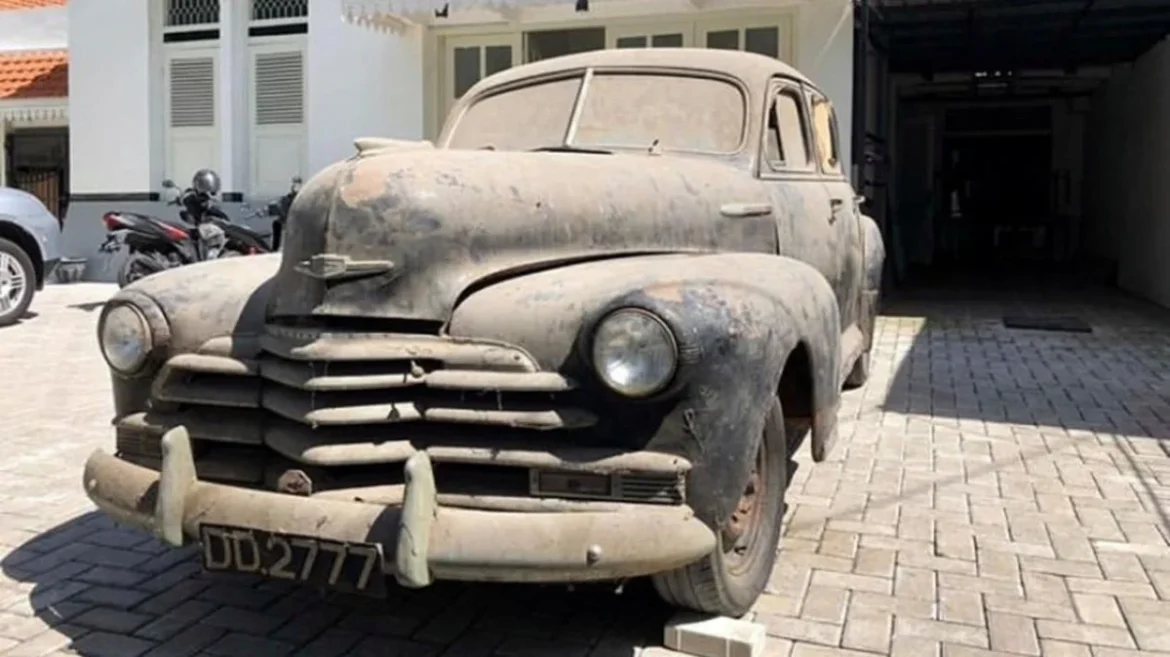
The automotive world is bracing for a historic liquidation event as the legendary Born Family Estate Collection prepares to go under the hammer. Scheduled for September 19, 2026, in Eaton, Colorado, the massive auction managed by VanDerBrink Auctions will feature approximately 300 classic vehicles, vintage pickup trucks, rare restoration projects, and an extensive assortment of automotive memorabilia. Compiled meticulously across three generations of the Born family, the sheer scale of the inventory has captured the attention of collectors, restorers, and automotive historians globally. Adding to the widespread fascination is the revelation that several distinct auction lots will open with a starting bid of a mere 50 cents, translating to roughly IDR 8,000, presenting a unique entry point for enthusiasts eager to acquire a piece of motoring history.
Main Facts of the Auction Event
The upcoming auction represents a monumental shift in ownership for a collection that has spent decades quietly accumulating in rural Colorado. The catalog boasts an eclectic mix of American automotive heritage, featuring passenger cars, commercial haulers, incomplete project shells, and rare parts.
While the headline-grabbing 50-cent opening bids have generated viral attention across digital platforms, auction organizers emphasize that these figures represent starting bids rather than guaranteed final sale prices. Competitive bidding on the auction floor and via digital platforms is expected to drive final values up based on market demand. Furthermore, successful bidders will be subject to a buyer’s premium—set at 8 percent for attendees participating in person and 10 percent for those bidding remotely through online channels.
Among the standout vehicles featured in the massive lineup is a pristine 1912 Ford Model T Touring, representing the pioneering era of mass-produced motoring. The catalog is heavily anchored by iconic Ford models spanning several decades, including numerous Ford Model A variants, vehicles from the 1930s and 1940s, and a heavily sought-after 1932 Ford Roadster that has received custom modifications.
Chevrolet enthusiasts will find an equally compelling array of machinery. The inventory includes a 1931 Chevrolet sedan, a utility-focused 1933 Chevrolet truck, a 1934 coupe project waiting for restoration, a rugged 1955 Chevrolet NAPCO Pickup equipped with advanced four-wheel-drive capabilities of its era, and a classic 1964 Chevrolet Bel Air two-door hardtop.
Beyond Ford and General Motors, the collection showcases a diverse cross-section of defunct and historic American automotive marques. Vehicles hailing from Pontiac, Oldsmobile, Dodge, Plymouth, Buick, DeSoto, Willys, Packard, International Harvester, and even lesser-known nameplates like Henry J are heavily represented. Highlights from these brands include a striking 1957 Pontiac Super Chief Wagon, a luxurious 1961 Oldsmobile 98 two-door coupe, and a sporty 1974 Pontiac Firebird Esprit.
Background Context and Multigenerational Legacy
The origins of the Born Family Estate Collection trace back nearly a century, rooted in a deep, generational passion for American automotive culture. The assembly of these 300 vehicles was not the work of a single enthusiast, but rather the cumulative effort of a three-generation lineage. Doug Born, alongside his father and grandfather, dedicated decades to preserving automotive history.
Operating largely away from the public eye, the family became fixtures at estate sales, farm auctions, and private property clearances across the United States. Their methodology was simple yet tireless: rescuing abandoned, neglected, or forgotten vehicles from barns, fields, and garages before they succumbed entirely to the elements. While some cars were successfully restored to running condition, many remained stored as long-term projects, serving as a rolling archive of mid-20th-century engineering and design.
The decision to disperse this monumental collection comes in the wake of the passing of Doug Born. Faced with the daunting task of managing hundreds of vehicles, the surviving members of the Born family evaluated the long-term future of the estate. Recognizing that maintaining the sheer volume of metal required resources beyond individual capacity, the family elected to work with VanDerBrink Auctions. The goal was to transition the vehicles into the hands of new caretakers who possess the time, capital, and passion to either restore them to their former glory or utilize them for vital spare parts to keep other classics on the road.
Chronology of the Liquidation Process
The planning and execution of an estate auction of this magnitude require meticulous logistical coordination. The timeline leading up to the September 19, 2026 event began months prior, following initial family consultations and estate evaluations.
VanDerBrink Auctions, a firm renowned for handling massive, barn-find style liquidations across North America, was chosen to catalog the property. Over several weeks, auction specialists inventoried approximately 300 vehicles, documenting their vehicle identification numbers, current physical conditions, and historical provenance.
Public previews are scheduled immediately preceding the auction date, allowing registered bidders to inspect the sprawling Eaton, Colorado property. Potential buyers can examine the rusted panels of un-restored project cars alongside the solid frames of more complete automobiles. The live auction event kicks off on September 19, utilizing a hybrid format that accommodates both local bidders on-site and an international audience participating via the internet. Following the fall of the final hammer, a strict removal window will be enforced to clear the property, marking the end of an era for the Eaton homestead.
Analysis of Market Implications and Restorer Economics
The Born Family Estate auction highlights broader economic and cultural trends within the classic car hobby. In recent years, the market for "barn finds" and raw project cars has undergone a significant transformation. While pristine, numbers-matching concours restorations continue to command high six- and seven-figure sums at elite venues like Monterey or Scottsdale, the grassroots sector of the hobby faces unique economic headwinds.
Offering vehicles with a symbolic 50-cent opening bid is an increasingly popular strategy for estate liquidators dealing with high-volume, lower-tier inventory. It guarantees high engagement, draws large crowds, and ensures that clearing costs are met while preventing historically significant steel from heading straight to the scrap yard. For emerging restorers, younger enthusiasts, and hobbyist fabricators priced out of the turnkey classic car market, these auctions provide an affordable gateway into the hobby.
However, industry analysts offer a note of financial pragmatism regarding ultra-low opening bids. While securing a 1930s coupe or a 1950s wagon for a nominal initial bid is entirely possible, the true cost of automotive restoration frequently exceeds the ultimate market value of the finished vehicle. Sourcing rare trim pieces, rebuilding vintage powerplants, addressing structural rust, and executing professional paint and interior work require substantial financial investment and specialized labor. Consequently, many vehicles from the Born collection will likely serve as parts donors or long-term multi-year projects for dedicated hobbyists rather than quick-flip investments.
Official Responses and Industry Perspectives
Representatives from VanDerBrink Auctions have emphasized the emotional weight and historical significance of the event. Auction organizers noted that managing a collection built across three generations carries a profound responsibility to honor the collecting philosophy of the Born family. Rather than viewing the vehicles merely as commodities, the auction house has positioned the event as a celebration of American automotive preservation.
Commentary from automotive historians and enthusiast communities has been overwhelmingly positive. Online forums and club directories dedicated to marques like Ford, Chevrolet, and Pontiac have circulated the auction catalog widely. Many veteran restorers have praised the family’s decision to keep the collection intact until liquidation, noting that keeping hundreds of vintage vehicles housed regionally—even in weathered condition—saved them from premature destruction.
Broader Impact on the Collector Car Community
The dispersal of the Born Family Estate Collection serves as a reminder of an aging demographic within the classic car community. As pioneering collectors from the mid-to-late 20th century pass away, families are increasingly tasked with managing vast accumulations of automotive heritage. The success of the Eaton, Colorado auction will likely serve as a case study for future estate liquidations, demonstrating how hybrid digital bidding platforms can connect rural barn-find inventories with global buyer bases.
Ultimately, the September 19 auction is more than a simple commercial transaction; it is a redistribution of automotive history. By lowering the financial barrier of entry through nominal opening bids, the event breathes new life into vehicles that might otherwise have been lost to history. Whether these 300 machines emerge from garages in the coming years as gleaming concours contenders, rugged rat rods, or carefully preserved time capsules, their journey forward ensures that the multi-generational collecting legacy of the Born family will endure on highways and showfields for decades to come.

