
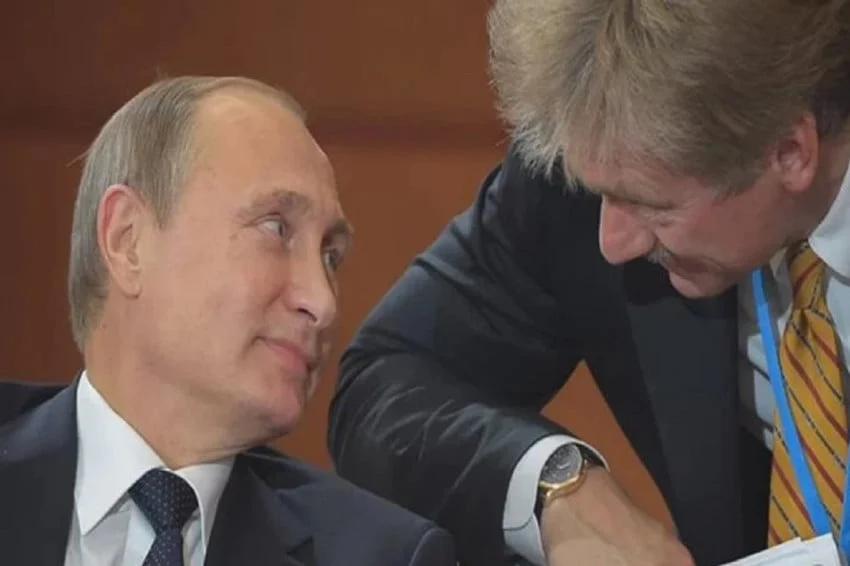
President Vladimir Putin has categorically dismissed allegations that the Russian Federation is mobilizing for a direct military conflict against European nations, characterizing such narratives as deliberate fabrications designed to sustain public support for the ongoing war in Ukraine. Speaking at the 12th United Cultures Forum in St. Petersburg, the Russian leader framed the warnings emanating from Western capitals not as genuine security assessments, but as a political strategy to justify increased military spending and sustained geopolitical containment of Moscow.
The denial comes at a time of heightened friction between the Kremlin and the North Atlantic Treaty Organization (NATO), with several European leaders and defense officials increasingly vocal about the potential for a spillover of the conflict beyond Ukrainian borders. By labeling these claims as "complete nonsense," Putin sought to portray Russia as a victim of a coordinated disinformation campaign, arguing that European political elites are utilizing the "Russian threat" to manage internal economic anxieties and justify the redirection of public funds toward the defense industrial base.
The Evolution of the Rhetoric: A Chronology of Rising Tensions
To understand the current impasse, one must examine the progression of the discourse between Moscow and Brussels over the past thirty months. Since the escalation of the conflict in February 2022, the European Union and NATO member states have consistently characterized Russian military actions as an existential threat to the European security architecture.
- February 2022: The launch of Russia’s "Special Military Operation" leads to an immediate severance of diplomatic and economic ties between Russia and the West.
- Late 2023: Several high-ranking officials in the Baltic states and Poland begin expressing concern that a "frozen" conflict in Ukraine could provide Moscow with the necessary time to regroup and eventually challenge the sovereignty of NATO’s eastern flank.
- Early 2024: Intelligence reports from various European defense ministries suggest that Russia’s economy has successfully transitioned to a "war footing," leading to concerns about long-term military industrial capacity.
- September 2026: In his St. Petersburg address, President Putin explicitly attacks the credibility of figures like Estonian Defense Minister Hanno Pevkur, whose statements regarding the necessity of a "preemptive defense" against Russia have drawn the ire of the Kremlin.
This timeline reflects a hardening of positions on both sides. Where once there was a focus on the territorial integrity of Ukraine, the discourse has now shifted toward the stability of the European continent as a whole.
Examining the "Cannon Fodder" Narrative
During his appearance at the St. Petersburg forum, Putin employed stark language, accusing European "aggressive groups" of using Ukraine as "cannon fodder." This rhetoric is a cornerstone of the Kremlin’s current domestic and international communications strategy. By suggesting that Kyiv is merely an instrument of Western interests, Moscow seeks to delegitimize the Ukrainian government’s agency and paint the conflict as a proxy war led by the United States and its European allies.
The Russian President’s specific disdain for the "clownish" remarks regarding preemptive strikes against Russia highlights a significant psychological dimension to the current tensions. By mocking Western officials—referencing the departure of a "circus" while the "clowns" remain—Putin is signaling to his domestic audience that the West is incapable of coherent strategic planning. This serves to bolster the narrative that Russia is a stable, rational actor, while its adversaries are erratic and reactionary.
Statistical Context: Military Spending and Defense Realities
The debate over an impending invasion of Europe is deeply intertwined with the reality of military expenditures. According to the Stockholm International Peace Research Institute (SIPRI), global military spending reached record highs in 2025, driven largely by the conflict in Ukraine and the subsequent rearmament programs in Europe.
- European Defense Spending: NATO members in Europe have collectively increased their defense budgets by approximately 15% year-over-year since 2023. This is largely a response to the perceived instability in the east.
- Russian Economic Indicators: While Russia has significantly ramped up the production of munitions and armored vehicles, analysts suggest that a large percentage of this output is being consumed by the immediate demands of the front lines in Ukraine. The logistical burden of sustaining an offensive operation in Ukraine currently consumes a substantial portion of the Russian federal budget, which many defense analysts argue would make a simultaneous campaign against a well-defended NATO territory logistically improbable, if not impossible, in the near term.
The dissonance between the political rhetoric in European capitals—which warns of a broad-scale conflict—and the logistical realities of the Russian military-industrial complex creates a complex environment for policymakers. While European leaders argue that they must prepare for any eventuality, the Kremlin insists that these preparations are merely a cover for the continued financial support of the Kyiv regime.
Official Responses and the Stance of Allied Nations
The European reaction to Putin’s recent statements has been one of skepticism. NATO representatives have consistently maintained that their posture is purely defensive. In response to the claims made in St. Petersburg, spokespersons from several Eastern European ministries reiterated that their warnings regarding Russian aggression are based on the observed behavior of the Russian military, rather than on ideological bias.
"The best way for Russia to alleviate these concerns," stated a representative from a Baltic defense department, "is to adhere to international borders and cease the ongoing destabilization of its neighbors." This sentiment underscores the fundamental lack of trust that currently defines the relationship between Moscow and the EU. For the West, the rhetoric is a matter of deterrence; for Putin, it is a matter of perceived provocation.
Broader Implications for Global Geopolitics
The implications of this rhetorical escalation are profound. First, the hardening of positions makes any near-term diplomatic breakthrough increasingly unlikely. When President Putin notes that future negotiations with Kyiv will be based solely on "Russia’s interests," he is signaling that the baseline for peace talks has shifted significantly in favor of Moscow’s current territorial gains.
Second, the discourse around the "Russian threat" has become a central feature of domestic politics within EU member states. In countries like Germany, France, and Poland, the debate over defense spending and support for Ukraine has become a wedge issue. By dismissing these concerns as "nonsense," Putin is also attempting to influence European public opinion, hoping to encourage the rise of political factions that favor a return to business-as-usual relations with Moscow.
Finally, the international community remains concerned about the risks of miscalculation. When two sides of a geopolitical divide view each other as existential threats, the probability of a localized incident escalating into a broader confrontation increases. The use of inflammatory language—such as "clowns" and "cannon fodder"—serves to strip away the diplomatic nuance required to manage such a volatile situation.
Conclusion: A Path Forward or Further Entrenchment?
As the 12th United Cultures Forum concludes, the takeaway from Vladimir Putin’s address is clear: Russia intends to maintain its current trajectory in Ukraine while vigorously rejecting the notion that it harbors imperial ambitions toward the rest of Europe. However, given the deep-seated mistrust and the ongoing military support for Ukraine from European nations, it is unlikely that these denials will result in a de-escalation of tensions.
The international community is now observing a state of "armed peace," where both sides are heavily invested in military infrastructure and public mobilization. While the risk of a conventional, state-on-state war in Europe may be lower than the rhetoric suggests, the potential for accidental escalation or continued "grey zone" warfare remains high. For now, the narrative battle continues, with each side accusing the other of manipulating the truth to secure their respective strategic objectives. Whether this discourse will lead to a change in policy or merely prolong the current period of instability remains the defining question of European security for the coming years.
