
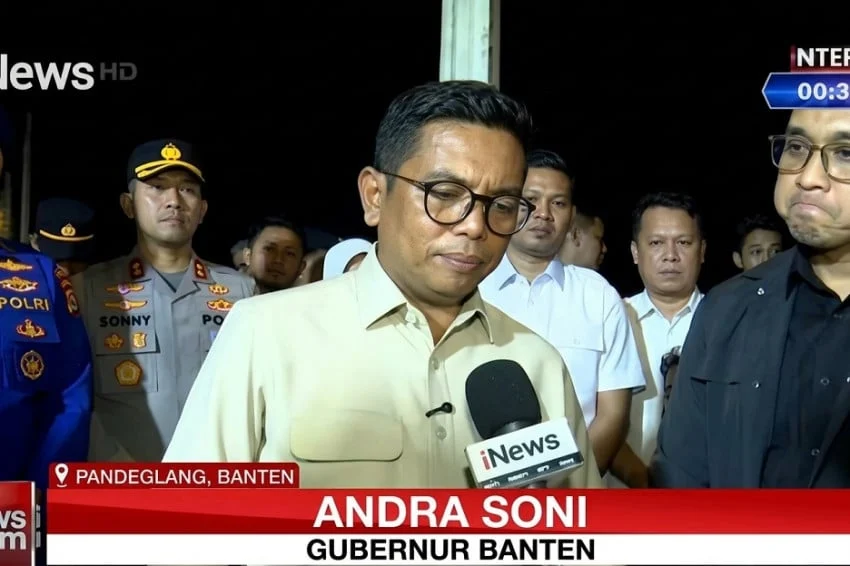
The formal termination of search and rescue operations for five journalists and three crew members missing in the turbulent waters surrounding the Anak Krakatau volcano in the Sunda Strait has left a profound sense of grief across the region, most notably for Banten Governor Andra Soni. What began as a routine monitoring mission evolved into an unforgettable tragedy, highlighted by the realization that the governor had engaged in a direct, face-to-face dialogue with the victims less than 24 hours before they vanished.
The incident, which unfolded in early September 2026, has brought renewed attention to the inherent dangers faced by frontline media workers covering environmental hazards, maritime incidents, and volatile geological phenomena. As families, colleagues, and government officials come to terms with the cessation of active rescue efforts, the collective focus has shifted toward honoring the dedication of those lost while examining the rigorous conditions under which modern journalism operates in disaster-prone regions of Indonesia.
The Final Encounter at Pos Pantau Pasauran
The tragedy gained a deeply personal dimension for Governor Andra Soni, who reflected on his final interaction with the missing news professionals during an exclusive interview. The encounter took place at the Pasauran Monitoring Post (Pos Pantau Pasauran) located in the Serang Regency of Banten Province. At the time of the meeting, the atmosphere was focused on regional observation and public safety regarding the activity of the nearby Anak Krakatau volcanic complex.
"It feels deeply personal to me because, less than 24 hours before they were declared missing, those five journalist friends had spent time discussing matters with me at the Pasauran Monitoring Post in Serang Regency," Andra Soni stated during his interview.
While formal introductions and the exchange of names were brief amid the demanding pace of field operations, the governor noted that the brief interaction left a lasting impression. He recalled witnessing firsthand the palpable enthusiasm, professional integrity, and personal commitment exhibited by the reporters as they gathered information on the ground.
"We discussed many things, and although we did not have the opportunity to learn each other’s names in depth, I could clearly see their passion, their dedication, and the sheer sincerity they brought to their journalistic work," the governor added, underscoring the vital role reporters play in bridging the gap between remote natural phenomena and public awareness.
Chronology of Events: From Monitoring Post to the Sunda Strait
The sequence of events leading to the declaration of the missing persons and the subsequent closure of the search operation forms a sobering timeline of maritime hazard and emergency response efforts.
On Sunday, September 6, 2026, the group of five journalists, accompanied by three boat crew members (ABK), embarked on a maritime reporting assignment. Their objective was to document conditions around the Anak Krakatau archipelago, a notoriously active volcanic island situated in the waters of the Sunda Strait between the islands of Java and Sumatra. Prior to setting sail, the team had visited regional observation posts, including the Pasauran facility where they conferred with local authorities and Governor Andra Soni.
By Monday, September 7, 2026, concern grew when the vessel failed to check in at scheduled intervals and did not return from the designated waters. Initial reports triggered localized alerts, prompting maritime authorities to coordinate with regional disaster management agencies.
By Tuesday, September 8, 2026, a joint search and rescue (SAR) operation was officially launched. The mobilization involved units from the National Search and Rescue Agency (Basarnas), the Indonesian Navy (TNI AL), the Water Police (Polairud), alongside local volunteers and fishing communities who scoured the maritime boundaries surrounding the volcano.
For over a week, rescue teams battled challenging oceanic conditions, unpredictable weather patterns, and strong currents characteristic of the Sunda Strait. Despite deploying specialized vessels, rubber boats, and aerial reconnaissance assets, the extensive sweeps failed to locate the vessel or any definitive traces of the eight individuals on board.
On Thursday, September 17, 2026, following exhaustive protocols that exceeded standard search durations for open-water maritime incidents—and facing diminishing probabilities of survival given the harsh marine environment—authorities officially announced the cessation of active search operations.
Contextualizing the Hazards of the Sunda Strait and Anak Krakatau
The location of the incident, the Sunda Strait and the Anak Krakatau complex, is historically recognized as one of the most dynamic and hazardous maritime zones in the Indonesian archipelago. Anak Krakatau, which translates to "Child of Krakatoa," emerged from the caldera of the infamous 1883 eruption of Krakatoa and has remained continuously active, characterized by frequent Strombolian eruptions, ash explosions, and occasional flank collapses that can generate localized tsunamis.
Navigating the waters surrounding the volcano requires precise seamanship and continuous monitoring of maritime weather advisories. The strait connects the Java Sea to the Indian Ocean, resulting in complex tidal currents, sudden squalls, and high wave activities that can overwhelm small or medium-sized vessels. For journalists covering geological events, obtaining real-time footage or data often necessitates venturing into these high-risk zones, balancing the public’s right to information against severe physical dangers.
Safety experts note that maritime journalism in volcanic zones presents compounded risks. Not only must reporters contend with unpredictable surface weather, but they also face atmospheric hazards such as toxic volcanic gases, floating pumice rafts that can clog engine intakes, and sudden underwater seismic activity capable of producing abrupt sea surges.
Official Responses and Institutional Support
The closure of the SAR operation has prompted widespread expressions of condolence from media organizations, press freedom advocates, and government institutions across Indonesia.
The Alliance of Independent Journalists (AJI) and the Indonesian Journalists Association (PWI) issued statements expressing deep sorrow over the loss of their colleagues. Representatives emphasized the immense sacrifices made by field reporters who routinely place themselves in harm’s way to document natural disasters and public safety issues. Industry leaders have reiterated calls for enhanced safety protocols, mandatory maritime survival training, and stricter adherence to weather and navigation warnings for media personnel undertaking assignments in high-risk environments.
Governor Andra Soni, speaking on behalf of the provincial government of Banten, extended his deepest sympathies to the families of the missing journalists and crew members. He assured the public that the regional administration would provide necessary administrative assistance and psychosocial support to the bereaved families during this difficult transition.
"Our thoughts and prayers remain with the families of the journalists and the boat crew members. Their dedication to informing the public will not be forgotten, and this tragedy serves as a solemn reminder of the immense risks our media workers shoulder every single day," Andra Soni remarked.
Broader Implications for Safety and Media Operations
The tragic disappearance of the five journalists and three crew members in the Sunda Strait is expected to catalyze a thorough review of safety standards governing field journalism in Indonesia. As climate change increases the frequency of extreme weather events and geological activity remains a constant threat along the Pacific Ring of Fire, media houses are under mounting pressure to institutionalize rigorous risk-assessment procedures.
Key areas currently under discussion among media management and safety coordinators include:
- Mandatory Pre-Deployment Briefings: Ensuring all reporting teams comprehensively understand local maritime and geological hazards before embarking on field assignments.
- Enhanced Communication Protocols: Requiring satellite communication devices or real-time GPS tracking for teams operating in remote or open-water environments where cellular signals fail.
- Collaboration with Authorities: Strengthening information-sharing networks between newsrooms, local disaster mitigation agencies (BPBD), and search and rescue coordinators to ensure rapid emergency response triggers.
While active search operations have formally ceased, the legacy of the missing journalists—marked by their final hours of earnest discussion and commitment to their craft at the Pasauran Monitoring Post—remains etched in the collective memory of the Banten administration and the broader Indonesian press community.
