
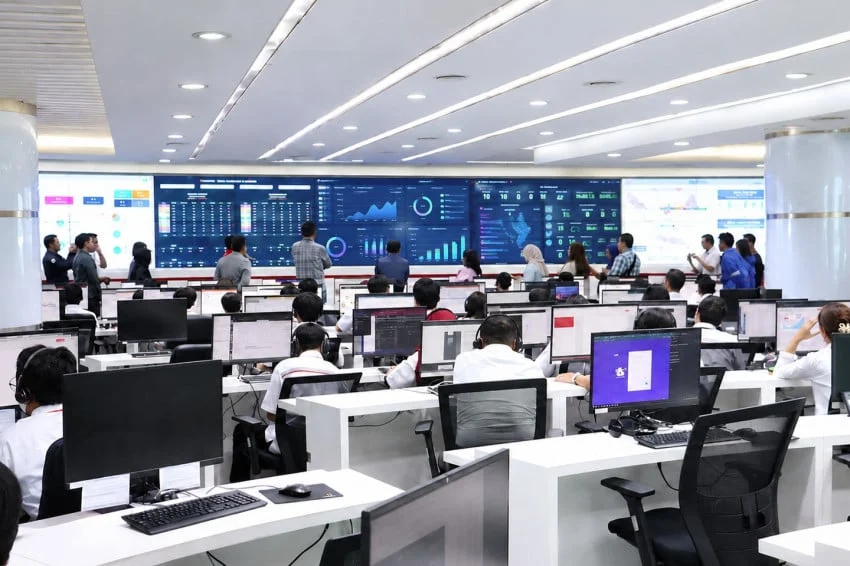
The landscape of Indonesia’s digital business process outsourcing (BPO) sector is undergoing a profound transformation, driven by the rapid adoption of advanced artificial intelligence technologies. PT Infomedia Nusantara, a prominent subsidiary of the Telkom Indonesia Group, has officially been named the 2026 Company of the Year for the Indonesian Digital BPO category by Frost & Sullivan. This prestigious recognition highlights Infomedia’s strategic integration of smart automation and agentic AI across its extensive operational network, which now spans 14 strategic locations across nine major cities throughout the archipelago.
As corporate entities across Southeast Asia’s largest economy increasingly demand hyper-efficient, scalable, and cost-effective operational frameworks, the deployment of agentic AI marks a critical departure from traditional, labor-intensive outsourcing models. By embedding autonomous, goal-directed AI systems directly into client workflows, service providers are no longer merely offering customer support or back-office execution; they are fundamentally reshaping how enterprise operations are managed, monitored, and optimized.
The Evolution of BPO in Indonesia: From Labor Arbitrage to Intelligent Automation
For decades, the Indonesian BPO industry thrived primarily on labor arbitrage—offering large corporations a cost-effective solution to manage high-volume customer service interactions, data entry, and routine administrative tasks. However, mounting pressures related to operational scaling, rising labor costs, and the escalating complexity of consumer expectations have exposed the limitations of traditional outsourcing frameworks.
In recent years, digital transformation initiatives spearheaded by both private enterprises and state-owned enterprises have accelerated. The transition toward smart automation represents the next logical phase in this evolution. Unlike traditional rule-based software or basic chatbots, agentic AI possesses the capability to autonomously plan, execute, and adapt complex sequences of tasks to achieve specific business objectives. This shift enables outsourcing providers to manage end-to-end business processes with minimal human intervention for routine steps, thereby dramatically reducing error rates and operational friction.
Infomedia’s strategic pivot encapsulates this broader market shift. Operating a sophisticated network across nine cities—including key economic hubs such as Jakarta, Surabaya, Bandung, and Medan—the company has successfully transitioned from a conventional service provider to an intelligent ecosystem orchestrator. This operational footprint allows Infomedia to provide localized redundancy, robust disaster recovery capabilities, and seamless service delivery for enterprise clients operating in sectors ranging from telecommunications and banking to e-commerce and retail.
Frost & Sullivan Recognition and Industry Analysis
The rationale behind Frost & Sullivan’s decision to award Infomedia the 2026 Company of the Year title lies in the company’s holistic and integrated approach to technology deployment. According to Krishna Baidya, Vice President of ICT Practice at Frost & Sullivan, Infomedia’s methodology distinguishes itself significantly from competitors who merely resell standalone software licenses or fragmented technology platforms.
Baidya emphasized that the true value of Infomedia’s current service portfolio stems from the systemic integration of AI directly into active, managed operational workflows. Rather than confining artificial intelligence to isolated, experimental proof-of-concept (PoC) projects—a common pitfall that limits technology return on investment—Infomedia has woven smart automation into the daily fabric of enterprise operations.
The firm’s approach combines proprietary technological architecture, smart automation, advanced business analytics, operational consulting, and fully managed services. This multi-layered strategy allows corporate clients to achieve quantifiable business outcomes, most notably a structural reduction in their overall cost-to-serve. Furthermore, by embedding compliance and performance monitoring into the AI-driven workflows, Infomedia helps client organizations strengthen their corporate governance frameworks and maintain rigorous regulatory compliance.
The Mechanics of Agentic AI in Modern BPO Operations
To understand the magnitude of Infomedia’s operational transformation, it is essential to examine the underlying mechanics of agentic AI within a BPO context. Traditional automation tools operate on strict, pre-programmed conditional logic: if a specific input occurs, execute a predetermined output. If an exception arises, the process stalls and requires human intervention.
Agentic AI, by contrast, introduces autonomous agency. These advanced systems are designed to understand high-level operational goals, break them down into actionable steps, utilize various software tools or databases to gather necessary information, and execute multi-step workflows independently. If an unexpected obstacle is encountered, agentic AI models can dynamically evaluate alternative pathways, troubleshoot minor errors, and escalate complex anomalies to human supervisors with comprehensive context already attached.
Within Infomedia’s digital BPO infrastructure, this technology is deployed across multiple service vectors:
Customer Experience (CX) Management: Beyond handling standard inquiries, agentic AI agents manage complex customer journeys, including multi-product billing disputes, technical troubleshooting, and personalized retention workflows, while analyzing sentiment in real-time to guide human agents when live escalation is necessary.
Back-Office Processing: Financial reconciliation, claims processing, and supply chain documentation—traditionally prone to bottlenecks—are streamlined through intelligent document processing and automated validation pipelines.
Operational Analytics and Quality Assurance: AI systems continuously monitor 100% of interactions across voice, chat, and digital channels, providing deep diagnostic insights that operational consultants use to refine client workflows proactively.
Integration with the Telkom Indonesia Ecosystem
Infomedia’s ability to scale these advanced digital BPO solutions is heavily supported by its parent organization, the Telkom Indonesia Group. As the nation’s leading telecommunications and digital infrastructure provider, Telkom furnishes the robust cloud computing architecture, high-speed connectivity, and enterprise security frameworks required to process massive volumes of sensitive corporate data.
This synergy allows Infomedia to offer enterprise-grade data sovereignty and cybersecurity compliance, which are paramount concerns for banking, financial services, and insurance (BFSI) clients, as well as government agencies. By leveraging Telkom’s extensive data center networks and national fiber-optic backbone, Infomedia ensures ultra-low latency and high availability for its AI-driven BPO deployments across all 14 operating locations.
Broader Market Implications and Economic Impact
The mainstreaming of agentic AI within Indonesia’s BPO sector carries significant macroeconomic and labor market implications. As enterprises increasingly demand real-time responsiveness and cost optimization, service providers that fail to adopt smart automation risk obsolescence.
Conversely, the large-scale integration of AI into BPO operations does not necessarily signal the wholesale elimination of human labor, but rather its evolution. Industry analysts observe that routine, repetitive tasks are increasingly absorbed by autonomous systems, shifting human workers toward higher-value roles that require emotional intelligence, complex problem-solving, strategic negotiation, and creative oversight. For Infomedia, upskilling its workforce to manage, supervise, and refine AI-driven workflows has become a core operational priority.
Moreover, the expansion of digital BPO hubs across nine secondary and tertiary cities outside Jakarta illustrates a broader trend toward decentralized economic growth. By establishing technologically advanced operational centers in regional urban areas, companies like Infomedia contribute to regional digital talent development and infrastructure enhancement, aligning with national economic inclusivity goals.
Future Outlook for Indonesia’s Digital BPO Landscape
Looking ahead, the recognition by Frost & Sullivan serves as both a milestone and a benchmark for the Indonesian outsourcing industry. As agentic AI capabilities mature, industry observers anticipate that BPO providers will increasingly compete on the sophistication of their cognitive architectures rather than simply headcount or pricing models.
For Infomedia Nusantara, the strategic roadmap for the coming years involves deepening the cognitive capabilities of its AI agents, expanding predictive analytics offerings, and scaling its footprint to capture the burgeoning demand for digital transformation among small-and-medium enterprises (SMEs) alongside large conglomerates. By successfully proving that agentic AI can be deployed at scale with measurable financial and operational returns, Infomedia has set a new operational standard for the Indonesian digital economy, cementing its position as a regional leader in the intelligent business process outsourcing domain.
