
The highly anticipated live-action adaptation of the popular manga series Wind Breaker has officially made its debut in Indonesian cinemas, beginning its nationwide theatrical run on Wednesday, April 15, 2026. This cinematic release brings to life the vibrant and high-octane world of Satoru Nii’s original work, which has garnered a massive international following since its serialization began. Distributed across major cinema chains in Indonesia, the film represents a significant milestone in the ongoing trend of Japanese "yankee" or delinquent-genre media finding a robust audience in Southeast Asia. Directed by the seasoned Takafumi Hatano, the film seeks to balance intense martial arts choreography with a poignant coming-of-age narrative, centered on a protagonist who finds a sense of belonging through conflict and community service.
The Narrative Core: From Outcast to Protector
At the heart of Wind Breaker is Haruka Sakura, portrayed by the rising Japanese star Koshi Mizukami. Haruka is characterized as a social pariah, a young man who has spent his life being judged and alienated due to his unconventional physical appearance—most notably his bi-colored hair and heterochromatic eyes. This ostracization has molded him into a cynical loner who believes that his only value lies in his physical strength. Haruka’s journey begins when he enrolls at Furin High School, an institution notorious for housing the most volatile and dangerous delinquents in the region. His initial objective is singular and aggressive: he intends to fight his way to the top of the school’s hierarchy, proving himself as the strongest individual in a "survival of the fittest" environment.
However, upon his arrival in the neighborhood of Makochi, Haruka discovers that the reputation of Furin High has undergone a radical transformation. The students, once feared as mindless thugs, have organized themselves into a group known as "Bofurin," or the Wind Breakers. Rather than terrorizing the local population, the Bofurin serve as the town’s unofficial guardians. They patrol the streets, assist the elderly, and protect small business owners from external threats. This ideological shift creates a profound internal conflict for Haruka. He enters the school looking for enemies to crush but finds a brotherhood dedicated to altruism. The film follows his gradual integration into this group as he learns that true strength is not found in solitary dominance, but in the collective effort to protect something greater than oneself.
The Antagonistic Force: The Shishitoren Conflict
The plot escalates with the introduction of the Shishitoren, a rival delinquent gang that serves as the primary antagonist in this live-action adaptation. Unlike the Bofurin, who have embraced a protective role, the Shishitoren adhere to a philosophy of "absolute power." They operate on a rigid meritocracy where only the strongest survive, and weakness is punished with expulsion or violence. The tension between the two groups reaches a breaking point when the Shishitoren begin targeting Makochi Town, directly challenging the Bofurin’s authority and Haruka’s newfound sense of purpose.
This conflict provides the backdrop for the film’s elaborate action sequences. The production team utilized extensive stunt coordination to translate the stylized combat of the manga into a realistic, visceral format. The clash between the Bofurin and Shishitoren is not merely a physical confrontation but a battle of ideologies—one side fighting for the community and the other for personal glory. This thematic depth is what has historically set Wind Breaker apart from other delinquent-themed stories, and the film leans heavily into these emotional stakes.
A High-Profile Production Team and Ensemble Cast
The success of a live-action adaptation often hinges on the synergy between its creative leads and the authenticity of its cast. Director Takafumi Hatano, known for his work on high-stakes dramas and action-heavy projects like SP: The Motion Picture, brings a cinematic scale to the streets of Makochi. The screenplay was penned by Yosuke Masaike, who previously earned acclaim for his work on Anime Supremacy! (Haken Anime!), ensuring that the script maintains the spirit of the source material while optimizing the pacing for a feature-film format. Yoshitaka Kamo serves as the lead producer, overseeing the intricate logistics of bringing a high-school-based epic to the big screen.
The casting of the film was a subject of intense speculation among fans, and the final lineup features some of the most prominent young talents in the Japanese film industry:
- Koshi Mizukami as Haruka Sakura: Formerly known as Kenshi Okada, Mizukami has transitioned from a breakout television star to a respected film actor. His portrayal of Haruka captures the character’s defensive exterior and underlying vulnerability.
- Taisei Kido as Akihiko Nirei: Kido, who gained international recognition for his role in the Netflix series First Love, brings a necessary levity and heart to the role of Nirei, the information-gathering enthusiast who becomes Haruka’s first real friend.
- Keito Tsuna as Hayato Suo: Tsuna portrays the calm and sophisticated Suo, a character whose martial arts prowess is matched only by his mysterious and polite demeanor.
- Junon Ikegame as Kyotaro Sugishita: As the stoic and fiercely loyal Sugishita, Ikegame embodies the raw power and dedication of the Bofurin’s front-line fighters.
- Motoki Nakazawa as Toma Hiragi: Nakazawa plays the role of the stressed but capable leader within the Bofurin hierarchy, providing a bridge between the freshmen and the senior leadership.
- Shuhei Uesugi as Hajime Umemiya: Uesugi takes on the role of the charismatic and formidable leader of the Bofurin. His performance is central to establishing the "big brother" atmosphere that defines the school’s culture.
Historical Context and the Evolution of the "Yankee" Genre
The release of Wind Breaker in 2026 comes at a time when the Japanese "yankee" genre is experiencing a global renaissance. Historically, stories about Japanese delinquents—characterized by their pompadour hairstyles, modified school uniforms, and strict codes of honor—were largely confined to domestic consumption. Titles like Crows, Worst, and Be-Bop High School laid the groundwork in the 1980s and 90s. However, the international success of Tokyo Revengers in the early 2020s proved that the themes of loyalty, redemption, and youthful rebellion have universal appeal.
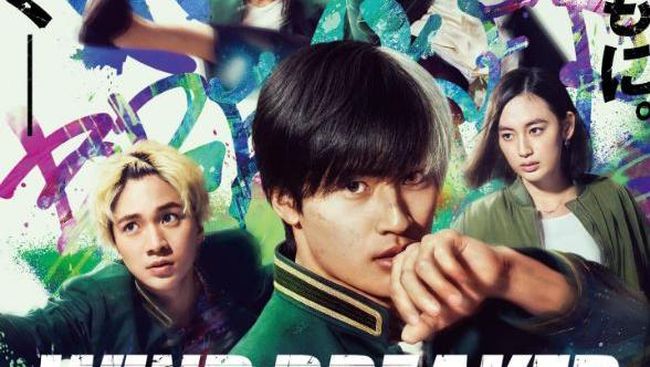
Wind Breaker represents the modern evolution of this genre. It strips away some of the more traditional "thug" tropes in favor of a "neighborhood hero" narrative. This shift reflects changing societal values in Japan and abroad, where the concept of a "good delinquent" has become a popular archetype. By focusing on community service and mental health—specifically Haruka’s struggle with self-worth—the franchise has managed to attract a diverse demographic, including female viewers and international audiences who might have previously found the genre too niche.
Chronology of the Wind Breaker Franchise
The journey of Wind Breaker from a digital manga to a major motion picture in Indonesia has been relatively swift, driven by explosive popularity.
- January 2021: Satoru Nii began serializing the manga on Kodansha’s Magazine Pocket app. It quickly became one of the platform’s top-ranking titles.
- 2022-2023: The manga surpassed several million copies in circulation, prompting the announcement of an anime adaptation.
- April 2024: The first season of the Wind Breaker anime, produced by CloverWorks, premiered to critical acclaim. The anime’s high production quality significantly boosted the franchise’s global profile, particularly in Indonesia, where it trended on various streaming platforms.
- Mid-2025: Production for the live-action film was officially greenlit, with filming taking place across various urban locations in Japan to recreate the fictional Makochi Town.
- April 15, 2026: The film officially opens in Indonesian theaters, following a successful domestic launch in Japan.
Cultural and Economic Impact in Indonesia
The decision to release Wind Breaker in Indonesia on the same day as several other major regional markets underscores the country’s importance as a consumer of Japanese intellectual property. Indonesia has one of the largest fanbases for Japanese pop culture in the world, with frequent anime conventions and a high demand for licensed merchandise.
Local film analysts suggest that the live-action Wind Breaker is poised to perform well at the Indonesian box office for several reasons. First, the "school-based action" genre has a long history of success in the country, reminiscent of local hits that deal with high school rivalries. Second, the casting of Taisei Kido and Koshi Mizukami taps into a dedicated fan following of Japanese dramas (J-Dramas) in the region.
"The arrival of Wind Breaker is a testament to the narrowing gap between Japanese domestic releases and their availability in the Indonesian market," noted a local film distributor. "We are seeing a trend where ‘day-and-date’ or near-simultaneous releases are becoming the standard for major Japanese franchises, which helps combat piracy and builds significant opening-weekend momentum."
Critical Analysis of the Live-Action Transition
Adapting a manga like Wind Breaker presents unique challenges, particularly regarding the "superhuman" nature of the fight scenes. In the manga and anime, characters perform feats of agility and strength that push the boundaries of physics. Director Takafumi Hatano’s approach in the live-action version appears to be grounded in "hyper-realism." While the fights are spectacular, they emphasize the physical toll on the characters, highlighting their endurance and grit.
Furthermore, the film must compress dozens of manga chapters into a two-hour runtime. The decision to focus on the Shishitoren arc is viewed by critics as a strategic move, as it provides a clear antagonistic force and a satisfying emotional arc for Haruka Sakura. By the end of the film, the audience witnesses a definitive transformation in Haruka—from a boy who fights to be seen, to a young man who fights to protect.
Final Outlook
As Wind Breaker begins its theatrical run, it serves as more than just a seasonal blockbuster. It is a cultural bridge that showcases the enduring appeal of Japanese storytelling. With a sequel already rumored to be in the early stages of discussion based on the manga’s ongoing success, the 2026 live-action film is likely the beginning of a long-running cinematic franchise. For Indonesian audiences, it offers a blend of high-energy entertainment and a heartfelt message about finding one’s place in the world, proving that even those who consider themselves "broken" can become the strongest shields for their community.