
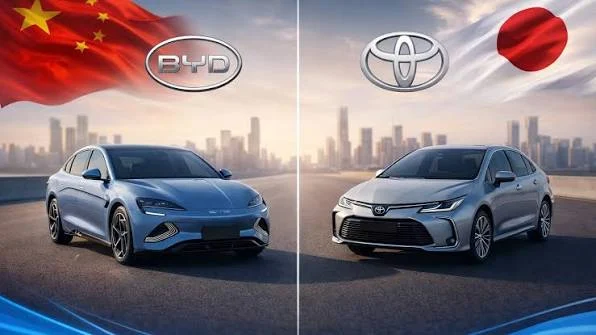
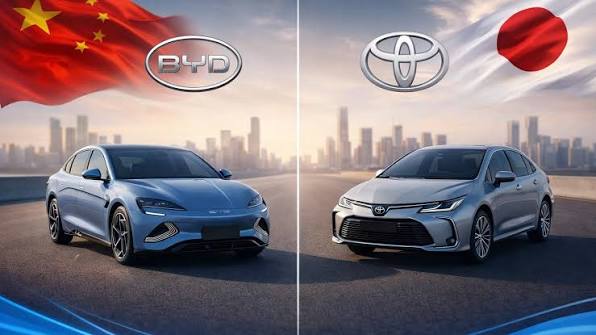
The Gaikindo Indonesia International Auto Show (GIIAS) 2026 has concluded as a defining moment for the automotive industry in Southeast Asia’s largest economy, signaling a permanent shift in consumer behavior. Data gathered from the Surat Pemesanan Kendaraan (SPK) or vehicle booking reports as of August 20, 2026, highlights that electrified vehicles—encompassing both hybrids and Battery Electric Vehicles (BEVs)—have moved from being niche offerings to the primary drivers of sales for major manufacturers. While traditional internal combustion engine (ICE) vehicles remain part of the landscape, the market’s trajectory has clearly pivoted toward sustainable mobility.
A Changing Guard: The Dominance of Electrification
Toyota, historically the undisputed leader in the Indonesian market, maintained its position at the top of the leaderboard with 6,175 units booked during the exhibition. However, a deeper analysis of these figures reveals a striking transformation within the brand’s portfolio. The success of the Toyota booth was heavily anchored by electrified models, specifically the Innova Zenix Hybrid and the Veloz Hybrid.
The data indicates that 56% of Toyota’s total sales in 2026 came from xEV (electrified) models, a massive jump from just 27% in 2024 and 34% in 2025. This suggests that while brand loyalty keeps Toyota as the volume leader, the Indonesian consumer is increasingly demanding the efficiency and technology associated with hybrid and electric drivetrains.
The Chinese Onslaught and the New Market Dynamic
Perhaps the most significant development at GIIAS 2026 is the collective performance of Chinese manufacturers. If the booking figures for BYD, Chery, Wuling, Geely, GAC Aion, Changan, MG Motor, Jetour, iCar, DFSK, BAIC, and GWM are aggregated, the total surpasses 21,000 units. This collective volume is more than three times that of Toyota’s individual performance, underscoring a dramatic erosion of the traditional Japanese hegemony that has defined the Indonesian automotive market for over five decades.
BYD, a global leader in electric mobility, secured the second spot overall with over 4,000 units, largely propelled by the popularity of the BYD M6. Chery followed closely with 3,500 units, with roughly half of its volume attributed to the Chery Q, an electric vehicle positioned in the affordable mass-market segment. Wuling, a pioneer in the local EV space, saw a massive 68% of its 3,290 total bookings come from the Aira EV. Similar trends were observed with Geely, where 70% of their 3,033 bookings were for the EX2 model.
Chronology of Market Shifts: From Fossil Fuels to Electrons
To understand the gravity of these results, one must look at the recent historical context of GIIAS:
- 2023: The market began showing interest in hybrids, but pure BEVs were largely viewed as luxury or experimental products. Toyota maintained strong dominance with near-total reliance on ICE and basic hybrids.
- 2024: The "Electric Wave" began to materialize. Manufacturers started introducing more localized, affordable EV models. Toyota’s share of electrified sales hovered at 27%.
- 2025: Government incentives and the entry of new Chinese players created a competitive price war. The transition toward electrification accelerated as hybrid models became standard, not optional, for mid-range buyers.
- 2026: The current year marks the "tipping point." Electrified models are no longer considered an alternative; they are the standard for any new vehicle launch that aims to capture significant market share.
Statistical Breakdown of GIIAS 2026 Bookings
The breadth of the shift is evidenced by the performance of various manufacturers during the show:
| Manufacturer | Total SPK (Bookings) | Key Driver |
|---|---|---|
| Toyota | 6,175 | Innova Zenix Hybrid |
| BYD | 4,000+ | BYD M6 |
| Chery | 3,500 | Chery Q |
| Wuling | 3,290 | Aira EV |
| Mitsubishi | 3,212 | Xforce Hybrid |
| Geely | 3,033 | Geely EX2 |
| GAC Aion | 2,170 | Aion V |
| Suzuki | 1,336 | – |
| Isuzu | 1,180 | – |
| Changan | 1,120 | – |
| MG Motor | 1,088 | – |
| Jetour | 1,038 | – |
Implications for Industry Leaders
The stagnation of Toyota’s total growth—which has hovered between 5,700 and 6,200 units over the past four years—stands in stark contrast to the explosive growth of newer entrants. While Toyota remains the "safe choice" for the average Indonesian household, the data suggests that its growth is essentially flat. The primary reason it retains the lead is its successful pivot toward hybrids; however, market analysts suggest that hybrid technology is viewed by many as a transitional phase.
If the industry moves toward a pure battery-electric future, Toyota’s lack of an aggressive, affordable, and fully electric lineup could present a significant risk. The Chinese brands have successfully utilized a "triple-threat" strategy: aggressive pricing, cutting-edge technology, and modern, futuristic design. This combination has effectively dismantled the perception that Japanese engineering is the only reliable path for Indonesian motorists.
Broader Economic and Environmental Impact
The success of these models at GIIAS 2026 is not merely a win for individual companies but a reflection of the national industrial policy. The Indonesian government has been pushing for a transition to an EV-based economy to utilize its vast nickel reserves and create a domestic battery supply chain. The high SPK numbers for the Wuling Aira EV and Chery Q suggest that these government-backed initiatives are finally reaching the consumer level.
Furthermore, the surge in demand for these vehicles will likely lead to an increase in the deployment of charging infrastructure. As more EVs hit the roads, the pressure on the government and private sector to standardize charging stations—much like the exclusive EV parking initiatives recently launched in areas like Bekasi—will intensify.
Conclusion: A New Era of Competition
The 2026 edition of GIIAS has served as a wake-up call for the established automotive order. The era of internal combustion engine dominance is effectively waning, replaced by a competitive landscape where innovation and sustainability dictate market success.
For the Japanese incumbents, the mandate is clear: the status quo is no longer a viable long-term strategy. To maintain relevance in the coming decade, manufacturers must accelerate their electrification roadmaps. Meanwhile, the rapid rise of brands like BYD, Chery, and Wuling proves that Indonesian consumers are increasingly open to new technology, provided it is accessible and reliable. As the market enters this new chapter, the winners will be those who can best balance the transition from fossil fuels to the electric future, while maintaining the affordability that continues to drive the heartbeat of the Indonesian economy.
