
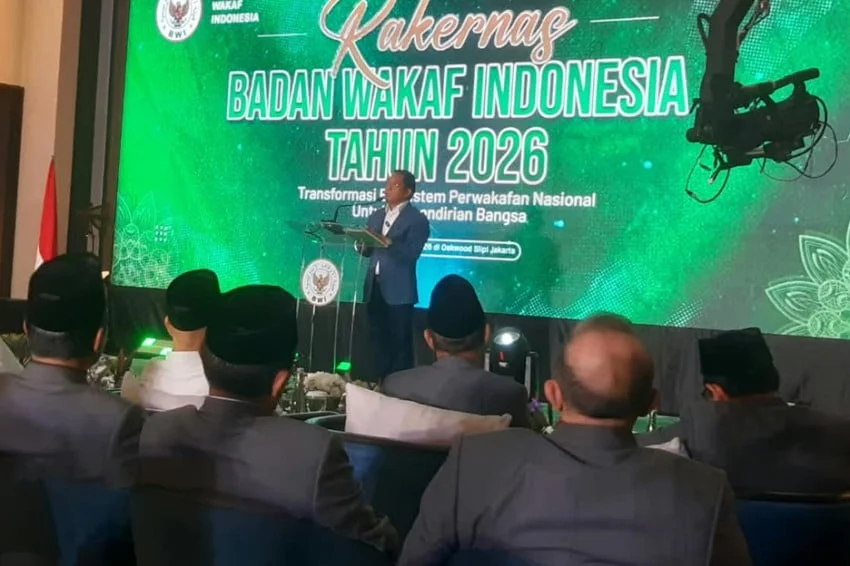
The Indonesian Waqf Board (Badan Wakaf Indonesia, or BWI) has officially escalated its legislative agenda, aggressively pushing for a comprehensive revision of Law Number 41 of 2004 concerning Waqf. This strategic policy push aims to fundamentally modernize, professionalize, and scale up the management of waqf assets across the archipelago, ensuring they transition from traditional, static religious endowments into dynamic, productive economic drivers capable of substantially alleviating poverty and boosting community welfare.
The announcement took center stage during the opening sessions of the prestigious BWI National Working Meeting (Rakernas) held in Jakarta. Speaking before policymakers, religious leaders, institutional stakeholders, and economic experts, BWI Chairman Kamaruddin Amin outlined the urgent necessity of regulatory reform. He stressed that the current legislative framework, enacted over two decades ago, no longer adequately addresses the modern complexities, immense financial scale, and developmental potentials of contemporary Islamic philanthropy.
With Indonesia sitting atop a staggering potential of trillions of rupiah in potential waqf assets—ranging from vast tracts of land to cash waqf instruments—the current limitations in regulatory authority pose a bottleneck. BWI’s leadership is determined to break through these administrative and legal barriers by securing a coveted spot for the revision bill within the National Legislation Program (Prolegnas) for the year 2027.
Legislative Objectives and the Core Demands for Reform
At the heart of BWI’s legislative push is the transformation of its institutional architecture and statutory powers. Under the existing framework of Law No. 41/2004, BWI operates under structural constraints that limit its overarching regulatory reach, supervisory execution, and capacity to directly manage massive economic portfolios. Kamaruddin Amin underscored that empowering BWI with expanded statutory authority is not merely an institutional ego trip, but a vital societal necessity designed to safeguard vulnerable populations and eradicate systemic poverty.
"One of the most critical points of this proposed revision is how BWI can evolve into a robust institution equipped with broader, more decisive authority. The ultimate objective is clear: to systematically assist vulnerable communities and impoverished populations through scalable economic empowerment," Kamaruddin stated during the Jakarta Rakernas.
For years, local and national nazhrs (waqf managers) have struggled with fragmented governance, limited capital injection, and legal gray areas surrounding commercial utilization of endowment lands. By upgrading the legal framework, BWI aims to streamline the certification of waqf lands, resolve legal disputes concerning inherited or unrecorded endowment properties, and enforce standardized transparency and accountability measures across all nazhr organizations operating nationwide.
Furthermore, the envisioned legal amendments seek to institutionalize modern financial instruments, such as Cash Waqf Linked Sukuk (CWLS) and corporate waqf models, integrating them seamlessly into the national financial grid. This integration would bridge the gap between Islamic social finance and national economic development agendas, creating a formal bridge where private philanthropic capital directly funds public infrastructure, healthcare facilities, and educational institutions.
Envisioning a State-Backed Nazhr Model
One of the most profound paradigm shifts proposed by the BWI leadership is the conceptualization of the board as a formidable state-backed nazhr. Historically, waqf management in Indonesia has been decentralized, predominantly handled by independent community foundations, local religious figures, or traditional boarding schools (pesantren). While this grassroots approach preserved traditional religious endowments, it frequently suffered from a lack of professional asset management, insufficient commercial capital, and vulnerability to legal encroachment.
Kamaruddin painted a visionary picture of a future where BWI leverages state backing, comprehensive capital mobilization, and vast consolidated land portfolios to operate as a premier institutional nazhr. Under this model, state involvement does not imply bureaucratic suffocation, but rather institutional endorsement, risk mitigation, and strategic alignment with national development priorities.
By functioning as a state-backed nazhr, BWI could unlock dormant or underutilized plots of land—which currently comprise the vast majority of Indonesia’s estimated billions of square meters of waqf property—and convert them into productive commercial enterprises. These could range from modern agricultural estates, logistics hubs, and commercial real estate to healthcare complexes and renewable energy installations. The yields generated from these productive units would then be systematically channeled into poverty alleviation programs, scholarship funds, and subsidized healthcare services for the underprivileged.
This professionalization model mirrors successful sovereign endowment models observed in other progressive Muslim-majority jurisdictions, where religious endowments function as significant macroeconomic stabilizers rather than passive, localized charitable trusts.
Contextual Background and the Chronology of Modern Waqf Reform
To understand the weight of BWI’s current legislative campaign, one must examine the evolutionary trajectory of waqf governance in modern Indonesia. Prior to the enactment of Law Number 41 of 2004, waqf administration was largely governed by a patchwork of colonial-era regulations, customary laws (adat), and basic ministerial decrees. These older frameworks were overwhelmingly focused on traditional philanthropic practices, such as dedicating land exclusively for the construction of mosques, cemeteries, and Islamic boarding schools (madrasah or pesantren).
While these traditional uses remain culturally and religiously invaluable, they historically failed to generate sustainable economic returns, often leaving waqf lands trapped in a state of economic stagnation—widely summarized by the traditional Indonesian religious axiom dictating that waqf assets must be preserved (ainul-mauquf), but often misinterpreted as a prohibition against commercial development.
The passage of Law No. 41/2004 marked a watershed moment by legally introducing the concept of productive waqf (wakaf produktif), which explicitly permitted the investment, cultivation, and commercial utilization of endowment assets provided the principal asset’s integrity was preserved. The law also mandated the creation of the Indonesian Waqf Board (BWI) as an independent state-affiliated body tasked with overseeing and developing national waqf affairs.
However, two decades after its inception, the implementation of the 2004 law has encountered severe institutional growing pains. The rapid evolution of Islamic financial technology, the emergence of cash waqf as a massive retail investment instrument, and the complex legal battles surrounding urban waqf properties exposed structural vulnerabilities in BWI’s mandate. Recognizing these deficiencies, academic institutions, Islamic economists, and civil society organizations began calling for legislative modernization as early as the late 2010s.
The formalization of the push toward the 2027 Prolegnas represents a coordinated, multi-year lobbying effort by BWI, the Ministry of Religious Affairs, and aligned parliamentary factions. By staging high-profile strategic discussions at the 2026 Rakernas, BWI leadership has clearly signaled its intention to build a broad coalition of stakeholders before the formal legislative drafting process commences in the House of Representatives (DPR RI).
Statistical Realities and the Untapped Potential of Indonesian Waqf
The urgency behind BWI’s legislative demands is powerfully underpinned by compelling national statistics regarding Indonesia’s vast endowment landscape. According to official data from the Ministry of Religious Affairs and BWI, Indonesia possesses hundreds of thousands of hectares of registered waqf land spread across millions of individual plots. Conservative estimates place the total surface area of waqf land in the country at well over 50,000 hectares—an area roughly equivalent to the size of entire metropolitan districts, much of it strategically located in high-value urban and suburban corridors.
Despite this immense physical footprint, economic analysts estimate that a staggering majority of these properties remain economically unproductive. Many plots lack formal land certificates (sertifikat tanah wakaf), leaving them perpetually vulnerable to land mafias, legal disputes with heirs of the original donors, or urban encroachment. Furthermore, millions of plots are tied to low-yield traditional structures that generate virtually zero financial returns to support the surrounding communities.
In parallel, the potential for Cash Waqf (Wakaf Uang) represents an entirely separate frontier of economic mobilization. Financial regulators and Islamic banking institutions estimate that Indonesia’s cash waqf potential reaches into the hundreds of trillions of rupiah annually, driven by the country’s expanding Muslim middle class and the widespread adoption of digital philanthropic platforms.
When integrated through instruments such as the Cash Waqf Linked Sukuk (CWLS)—a state-issued sovereign bond where the investment returns are directly channeled into social projects while the principal is preserved—waqf transforms from a localized charity mechanism into a powerful macroeconomic instrument for national infrastructure and human capital development. However, realizing this potential requires a legal framework robust enough to guarantee investor confidence, streamline regulatory oversight, and protect funds from administrative mismanagement.
Stakeholder Reactions and Institutional Perspectives
The initiative to revise Law No. 41/2004 has generated widespread discussion across Indonesia’s legal, religious, and economic sectors. Scholars specializing in Islamic economics have largely welcomed the move, arguing that modernizing waqf governance is long overdue if Indonesia wishes to capitalize on its demographic dividend and position itself as the global hub for Islamic social finance.
"The traditional mindset that views waqf purely as static charity is outdated," noted Dr. Fauzi Rahman, a researcher in Islamic socio-economic development at a prominent Jakarta-based think tank. "Waqf is essentially Islamic venture capital for the public good. By granting BWI stronger regulatory and executive teeth, the state is effectively institutionalizing a parallel welfare system that can cushion economic shocks, fund public healthcare, and build educational infrastructure without relying exclusively on state budgets or foreign debt."
Meanwhile, representatives from various nazhr organizations and Islamic community foundations have expressed cautious optimism, tempered by a desire for structural safeguards. While major religious organizations recognize the necessity of professionalization, they have emphasized the importance of preserving the autonomy of local nazhrs and ensuring that grassroots community endowments are not swallowed by overly centralized bureaucratic entities.
Industry insiders suggest that the legislative debates leading up to 2027 will heavily focus on striking a delicate balance between central regulatory authority and decentralized community participation. Lawmakers are expected to scrutinize clauses related to asset transfer mechanisms, dispute resolution protocols, and the auditing powers of BWI over private and corporate nazhrs.
Broader Economic Implications and Future Outlook
The implications of successfully revising the Waqf Law and empowering BWI extend far beyond the administrative realms of religious bureaucracy. In a global economic climate fraught with inflationary pressures, supply chain disruptions, and widening wealth gaps, nations are increasingly looking toward innovative, values-based economic models to ensure sustainable growth and social resilience.
For Indonesia, successfully unlocking the trillion-rupiah waqf economy could provide a transformative boost to the national agenda of poverty eradication and equitable development. Productive waqf projects—when managed with corporate efficiency and strict transparency—can create millions of jobs, stimulate regional economies through agro-industrial complexes, and fund high-quality educational and medical facilities for marginalized populations.
As the legislative roadmap unfolds toward the 2027 Prolegnas target, all eyes will remain fixed on BWI and its legislative partners in Jakarta. The coming months will require intense diplomatic engagement, rigorous academic research, and broad-based public consultation to draft a bill that is both legally sound and practically enforceable. If executed successfully, the modernization of Indonesia’s waqf laws will not only redefine the nation’s domestic philanthropic landscape but also offer a pioneering global blueprint for harnessing Islamic endowments in the twenty-first century.
