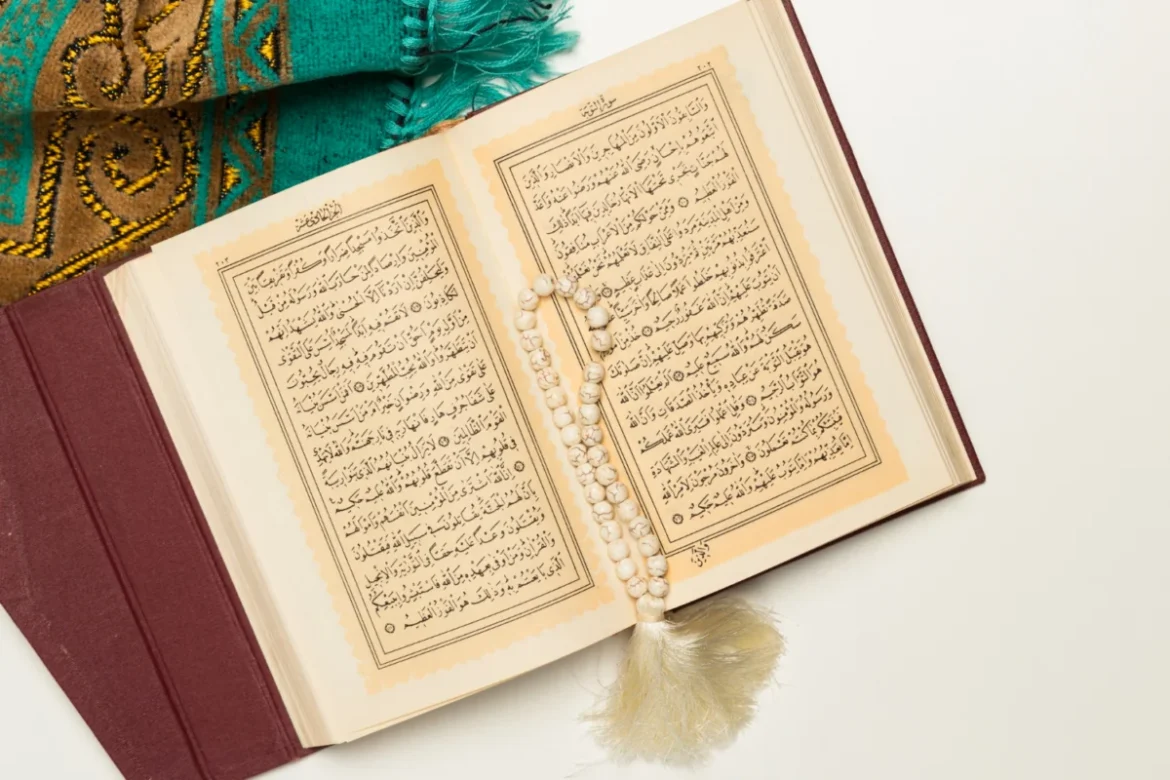
The question of whether one needs to perform ablution (wudhu) before reading or touching the Holy Quran is a recurrent query among Muslims worldwide, underscoring the deep reverence held for Islam’s sacred text and the importance of ritual purity (tahara) in its practice. This inquiry delves into the nuances of Islamic jurisprudence (fiqh), particularly concerning minor ritual impurity (hadas asghar), and its implications for daily devotional acts. While the act of reciting the Quran is universally encouraged as a profound act of worship, the specific conditions surrounding its physical interaction, especially with the mushaf (the physical copy of the Quran), have been meticulously outlined by Islamic scholars across centuries.
The Sacred Status of the Quran and the Concept of Purity
At the heart of Islamic faith lies the Holy Quran, considered the literal word of God (Allah) revealed to Prophet Muhammad (peace be upon him). Its recitation, study, and memorization are highly meritorious acts, promising immense spiritual rewards. Consequently, Muslims are taught to approach the Quran with the utmost respect and reverence. This reverence extends to physical purity, manifesting in the practice of tahara, or ritual purification.
Tahara is a fundamental concept in Islam, signifying cleanliness and purity from both physical dirt (najasa) and ritual impurity (hadas). Hadas is categorized into minor (hadas asghar) and major (hadas akbar) impurities. Minor impurity, which can result from acts like passing gas, sleep, or using the restroom, necessitates wudhu (ablution) for certain acts of worship. Major impurity, arising from events such as post-sexual intercourse or menstruation, requires ghusl (full ritual bath). The discussion surrounding Quran recitation and touching primarily concerns hadas asghar and the requirement of wudhu.
Historically, the emphasis on purity stems from various Quranic verses and prophetic traditions (hadith) that highlight the sacredness of divine communication. While the Quran encourages constant remembrance of Allah and recitation of His words, specific rulings have been developed to ensure that acts involving direct physical contact with the revelation maintain a high standard of respect. This careful delineation reflects the meticulous nature of Islamic law, aiming to provide clear guidance for believers in their spiritual journey.
Reciting the Quran Without Wudhu: A Permissible Practice
A central point of consensus among the vast majority of Islamic scholars from the four Sunni schools of thought—Hanafi, Maliki, Shafi’i, and Hanbali—is that a Muslim may recite the Quran from memory or by looking at it without physically touching a mushaf, even if they are in a state of minor impurity (i.e., without wudhu). This ruling provides significant flexibility and ease for believers to engage with the Quran throughout their day.
For instance, an individual at their office, commuting, or simply taking a break can recite verses they have memorized or listen to a recitation. Similarly, those engaged in memorizing the Quran (hifz) often repeat verses mentally or orally for extended periods; requiring wudhu for every instance would impose an undue burden. This practical approach acknowledges the constant need for spiritual nourishment and the Quran’s role in it, without making physical purity a prerequisite for mere vocalization or mental recall.
This permissibility is rooted in the understanding that the state of hadas asghar primarily restricts specific acts of worship that involve physical contact with sacred objects or places, such as prayer (salat) or circumambulating the Kaaba (tawaf), and crucially, touching the mushaf. The act of reciting itself, whether silently or aloud, is not inherently tied to the physical state of wudhu, provided one is not in a state of major impurity. Eminent contemporary scholars like Sheikh Dr. Ali Jum’ah, the former Grand Mufti of Egypt, have reiterated this position clearly. He stated, "There is no hindrance in Islamic law to reciting the Quran without ablution, as long as one does not touch the mushaf, based on the verse from Allah Ta’ala: ‘None shall touch it except the purified’ (QS. Al-Waqi’ah: 79)."
This interpretation highlights a key distinction: the sanctity of the words of the Quran when recited, versus the sanctity of the physical embodiment of those words in a mushaf. The reverence for the words is always paramount, but the ritual purity requirement is specifically linked to the physical handling of the divine text. This distinction allows for continuous engagement with the Quran’s message, fostering a deeper connection for believers in various daily situations.

The Strict Requirement for Touching the Mushaf: An Explanatory Overview
In stark contrast to mere recitation, the consensus among the four major Sunni schools of Islamic jurisprudence is that one must be in a state of ritual purity (having performed wudhu) to physically touch or carry a mushaf. This ruling is primarily derived from Quranic verse 79 of Surah Al-Waqi’ah:
"لا يَمَسُّهُ إِلَّا الْمُطَهَّرُونَ" (Lā yamassuhū illā al-muṭahharūn)
Meaning: "None shall touch it except the purified." (QS. Al-Waqi’ah [56]: 79).
The interpretation of "al-muṭahharūn" (the purified ones) has been a subject of scholarly discussion. While some early interpretations suggested it referred to angels in the celestial realm touching the Preserved Tablet (Al-Lawh Al-Mahfuz), the overwhelming majority of classical and contemporary jurists have applied this verse to human beings touching the physical mushaf. They interpret "al-muṭahharūn" as those who are ritually pure, free from hadas asghar (requiring wudhu) and hadas akbar (requiring ghusl).
This interpretation is further supported by numerous prophetic traditions, including a letter reportedly sent by Prophet Muhammad to Amr ibn Hazm, which contained the instruction, "No one should touch the Quran except one who is pure." While the authenticity of this specific hadith has been debated by some scholars, the widespread acceptance and application of the ruling among the companions and subsequent generations of jurists have solidified its position as a foundational principle in Islamic law.
Habib Salim bin Abdullah Al-Hadhrami, in his renowned jurisprudential primer Safinatun Najah, succinctly enumerates the actions prohibited for a person in a state of minor impurity: "Orang yang batal wudhunya haram melakukan empat perkara: shalat, thawaf, menyentuh mushaf, dan membawa mushaf." (A person whose wudhu is invalidated is prohibited from performing four things: prayer, circumambulation, touching the mushaf, and carrying the mushaf.) This statement clearly articulates the prohibition, underscoring the gravity with which the physical mushaf is to be treated.
The rationale behind this strict requirement is to maintain the utmost reverence and sanctity for the divine word. The mushaf is not merely a book; it is a physical manifestation of God’s direct revelation, and as such, it warrants a heightened state of respect and purity when handled. This ruling serves as a constant reminder of the Quran’s unique status in Islam, distinguishing it from other religious texts or ordinary books.
The Status of Incomplete Wudhu and Mushaf Handling
A common practical scenario arises when an individual begins performing wudhu but has not yet completed all its obligatory steps (pillars or arkan). For example, someone might have washed their face, arms, and wiped their head, but has not yet washed their feet. The question then is: can they touch the mushaf at this intermediate stage?
The consensus among the majority of scholars is unequivocally no. Ritual purity, specifically for the purpose of removing hadas asghar, is only achieved once all the obligatory components of wudhu have been completed. Until the final obligatory step (washing the feet) is performed, the individual remains in a state of minor impurity. Therefore, touching the mushaf at any point before the wudhu is fully concluded is impermissible according to the prevailing view.
The comprehensive Islamic legal encyclopedia, Al-Mausu’ah Al-Fiqhiyyah Al-Kuwaitiyyah, clarifies this point: "The one in a state of hadas is not permitted to touch the mushaf except after completing their purification. If they have only washed some of the limbs of ablution, it is not permissible for them to touch the mushaf before completing their ablution." This definitive statement reinforces the principle that purity is an all-or-nothing state concerning wudhu; it is not partially effective.

While Al-Mausu’ah Al-Fiqhiyyah Al-Kuwaitiyyah does mention a minority opinion within the Hanafi school that suggests one might touch the mushaf with the specific limb that has already been washed, this view is not widely adopted or relied upon. The dominant and safer position, endorsed by the majority of jurists across schools, emphasizes the completion of the entire wudhu process to attain the state of purity required for handling the mushaf. This ensures that the sacredness of the Quran is upheld without compromise, and worshippers are encouraged to complete their acts of purification thoroughly.
Modern Challenges and Digital Quran Platforms
The advent of digital technology has introduced new dimensions to the discussion of Quranic engagement and purity. With the proliferation of smartphones, tablets, and dedicated digital Quran devices, Muslims now frequently access the Quran in electronic formats. This raises the critical question: do the rulings regarding wudhu and touching the mushaf apply to digital screens displaying Quranic text?
The prevailing scholarly opinion among contemporary jurists is that touching a screen displaying the Quran (e.g., on a smartphone, tablet, or computer) does not require wudhu. This distinction is based on the understanding that the digital display is not a "mushaf" in the traditional sense of a physical object with ink on paper. The words on a screen are essentially light pixels, ephemeral and not permanently affixed to the physical substrate of the device. The device itself, which houses the digital text, is not exclusively a Quran; it is a multi-purpose electronic gadget.
Therefore, for the purpose of recitation or viewing, one is generally permitted to hold and interact with these digital devices without having performed wudhu. This offers immense convenience for Muslims, allowing them to carry the Quran’s words with them everywhere and access them readily, even in situations where performing wudhu might be impractical or difficult (e.g., during travel, in public transport, or at work).
However, it is important to note that while the strict fiqh requirement for wudhu may be relaxed for digital platforms, the spirit of reverence and respect for the Quran should always be maintained. Muslims are still encouraged to approach the digital Quran with a sense of awe and spiritual preparedness, even if formal ablution is not mandatory. Avoiding touching the screen with impure hands (e.g., after using the restroom without washing hands) or placing the device in inappropriate locations are still considered good etiquette. Some scholars also distinguish between a general-purpose device (like a smartphone) and a device solely dedicated to displaying the Quran, with the latter potentially invoking a higher degree of reverence akin to a physical mushaf for some. Nevertheless, the majority view emphasizes the nature of the display itself rather than the device.
Broader Implications and Encouragement for Quranic Engagement
The nuanced rulings regarding wudhu for Quran recitation and touching the mushaf have profound implications for daily Muslim practice. They reflect a balance between upholding the sanctity of divine revelation and providing practical ease for believers to engage with their faith.
The permissibility of reciting the Quran without wudhu, as long as one does not physically touch the mushaf, fosters continuous spiritual connection. It removes a potential barrier to frequent recitation, especially for those with busy schedules, who are traveling, or who are memorizing the Quran. This flexibility ensures that the Quran remains accessible as a constant source of guidance and solace, rather than an exclusive text only to be approached under specific ritual conditions. It encourages Muslims to integrate Quranic recitation into their daily lives, whether through mental recall, vocal repetition, or listening to audio recitations.
Conversely, the strict requirement for wudhu when touching the physical mushaf serves as a powerful reminder of the Quran’s unparalleled status. It instills a deep sense of reverence and reinforces the importance of ritual purity in handling sacred objects. This practice elevates the act of engaging with the physical text, transforming it into a more conscious and deliberate act of worship. It also underscores the discipline inherent in Islamic practice, where spiritual devotion is often intertwined with physical acts of purification and respect.
Ultimately, these rulings highlight the comprehensive nature of Islamic jurisprudence, which addresses both the spiritual and practical dimensions of a Muslim’s life. While the core message of the Quran is to be internalized and acted upon, the manner of its interaction, both audibly and physically, is guided by principles designed to maximize reverence and spiritual benefit. Muslims are encouraged to engage with the Quran frequently, whether through recitation from memory, digital platforms, or by physically touching the mushaf after performing ablution, always striving for khushu’ (devotion) and tadabbur (reflection) to truly grasp its profound wisdom.