
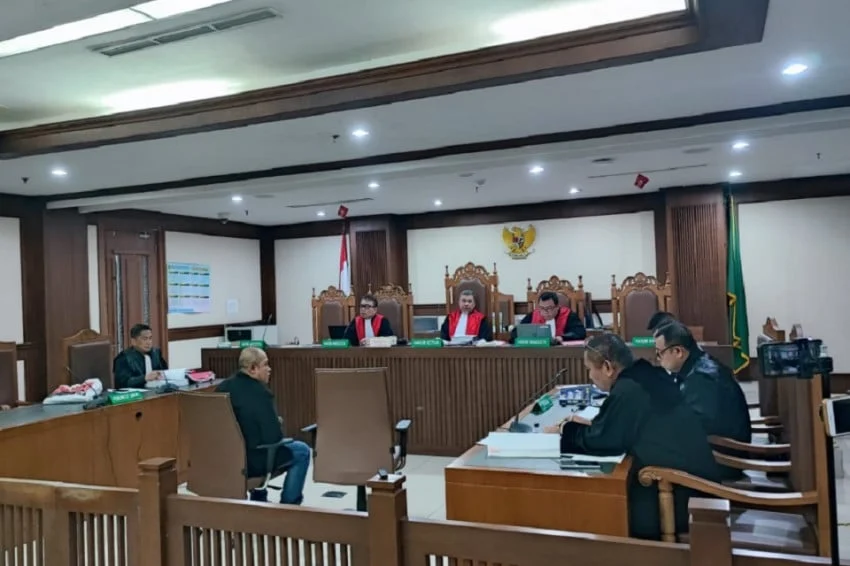
The Central Jakarta District Court recently convened a high-profile courtroom session regarding an ongoing trial centered on allegations of extortion and criminal intimidation. Presided over by a panel of judges, the proceedings brought forth critical testimonies designed to untangle the complex web of evidence, police procedures, and procedural legality surrounding the defendant, Bangun Paulus Tudungta (BPT). As the judicial process moves forward, the case has drawn significant public and legal scrutiny, particularly concerning the methodologies applied by law enforcement during the investigative phase.
During the latest court hearing, the Jaksa Penuntut Umum (JPU)—the Public Prosecutor’s Office—orchestrated a strategic presentation of testimonies by summoning two pivotal figures: Bripka Eko Haryanto, a seasoned investigator attached to the Central Jakarta Metro Police, and Professor Mudzakkir, a respected expert in criminal law. The introduction of a verbal-lisan witness, combined with academic and statutory interpretations from a legal scholar, marks a critical juncture in the trial. The session aimed to shed light on disputed aspects of the police investigation, the handling of physical evidence, and the contested refusal of a financial restitution offer made during the preliminary stages of the case.
Main Facts of the Judicial Proceeding
The core of the legal battle revolves around charges brought against Bangun Paulus Tudungta, who stands accused of orchestrating acts of extortion and issuing severe threats. The prosecution’s case relies heavily on establishing a definitive chain of events that links the defendant directly to the alleged coercive activities. However, the defense has consistently challenged the procedural integrity of the police investigation, prompting the prosecution to call Bripka Eko Haryanto to the stand to defend the methods utilized by law enforcement.
Bripka Eko, who boasts a career spanning 23 years as an investigator within the Central Jakarta Metro Police jurisdiction, faced rigorous questioning from both the prosecution and the defense counsel. His testimony was intended to provide a transparent, step-by-step account of how the police transitioned from the initial intake of the report to the formal preliminary investigation, subsequent deep-dive investigation, and the ultimate naming of the defendant as a suspect.
Concurrently, the inclusion of Professor Mudzakkir as an expert witness provided the court with an objective framework regarding criminal law provisions. The academic analysis focused heavily on the legal definitions of extortion, the legitimate acquisition and presentation of evidence, and the legal implications of rejecting or accepting returned funds during a police investigation.
Chronology and Background Context of the Investigation
To fully comprehend the gravity of the statements delivered in the courtroom, it is essential to examine the chronological progression of the case. The legal saga began when victims filed formal complaints alleging that the defendant, Bangun Paulus Tudungta, had subjected them to intense psychological pressure and financial demands amounting to extortion and illegal threats.
Upon receiving the reports, the Central Jakarta Metro Police initiated a formal inquiry. Investigators gathered preliminary evidence, interviewed witnesses, and mapped out the alleged communication channels utilized during the commission of the alleged offense. As the evidentiary threshold was met, the status of the investigation was elevated, leading to the formal designation of BPT as a suspect.
Throughout the investigative timeline, friction developed between the defense and the investigating unit. A primary point of contention involved a proposed financial settlement or the return of funds amounting to IDR 50 million. The defense argued that efforts to return funds should have altered the trajectory or the severity of the charges, while the investigative unit maintained strict adherence to procedural boundaries regarding the handling of assets linked to potential criminal enterprises.
The Confrontation Over Restitution and Evidence Handling
The courtroom proceedings reached a notable peak during a direct exchange between the defendant and the verbal-lisan witness, Bripka Eko Haryanto. The defendant aggressively questioned the rationale behind the investigator’s decision to reject the proposed return of IDR 50 million during the investigative phase.
"Why did the investigator reject the return of the 50 million rupiah, why was it refused?" the defendant asked during the session.
In response, Bripka Eko provided a detailed explanation rooted in criminal procedure and asset handling protocols. He clarified that the refusal was based on the legal status of the funds as suspected proceeds of a crime. According to the investigator, accepting the funds without formal, legally compliant forfeiture or acknowledgment by the rightful owners—such as the defendant’s relative, identified in proceedings as Cuaca—would compromise the integrity of the evidence.
"Your question pertains to why the investigator refused the return. Now, if that return were to be formalized by your father, Mr. Cuaca, stating that the money had been returned to the investigator, and I were to seize it, but he objected and said, ‘Do not seize this,’ that creates a legal contradiction," Bripka Eko testified. He further elaborated that treating the money as proceeds of a crime requires explicit acknowledgment of its illicit origin. Because the relevant party allegedly rejected the formal classification of the funds as crime proceeds during the initial discussions, the police could not arbitrarily accept or log the money into custody under contested terms.
Furthermore, the defense raised concerns regarding procedural transparency, specifically questioning why certain physical items or monetary evidence were not explicitly displayed during the compilation of the Berita Acara Pemeriksaan (BAP)—the official police interrogation report. This line of questioning aimed to suggest potential procedural flaws or oversights in how the documentation was assembled.
Expert Legal Analysis and Statutory Implications
To contextualize the debate over evidence and police discretion, Professor Mudzakkir provided crucial legal insights. As a criminal law expert, Professor Mudzakkir evaluated the administrative and substantive duties of investigators under the Indonesian Criminal Procedure Code (KUHAP).
According to legal scholars, an investigator is vested with the authority to gather evidence, examine witnesses, and secure items believed to be connected to a criminal act. However, this authority must be balanced against strict requirements for transparency and accountability. The expert’s testimony helped the panel of judges weigh whether the procedural steps taken by Bripka Eko aligned with statutory mandates or if they drifted into administrative grey areas.
The analysis of the IDR 50 million return offer also carried significant weight from a sentencing and restitution perspective. In many Indonesian criminal cases, attempts to return money or compensate victims prior to trial are often scrutinized to determine whether they constitute an admission of guilt, an effort to obstruct justice, or a genuine attempt at restorative reconciliation. Professor Mudzakkir’s insights provided the judges with a theoretical and statutory benchmark to evaluate the legitimacy of both the police actions and the defense’s tactical maneuvers.
Official Responses and Legal Strategies
Legal representatives from both sides have maintained distinct postures as the trial progresses toward its closing stages. The Public Prosecutor’s Office remains confident that the testimony of Bripka Eko Haryanto successfully dismantled allegations of procedural abuse. By demonstrating that the police acted in accordance with standard operating procedures and statutory guidelines, the prosecution aims to reinforce the credibility of the evidence dossier presented to the court.
Conversely, the defense team continues to leverage the testimonies of the verbal-lisan witness and the expert to highlight perceived inconsistencies. By focusing on the handling of the disputed funds and the physical presentation of evidence during BAP drafting, the defense seeks to cast reasonable doubt on the thoroughness and fairness of the initial police investigation. They argue that any procedural missteps or ambiguities should weigh in favor of the defendant, potentially mitigating the severity of the charges or undermining the foundation of the prosecution’s case.
Broader Impact and Implications for Law Enforcement
The ongoing trial at the Central Jakarta District Court serves as a wider reflection of the complex dynamics governing criminal investigations and judicial scrutiny in Indonesia. Cases involving allegations of extortion and intimidation frequently test the boundaries of investigative discretion, particularly when negotiations, financial restitution offers, and formal police actions intersect before a case reaches the judiciary.
For the Indonesian National Police, particularly the Metro Jakarta Pusat jurisdiction, the proceedings highlight the critical importance of meticulous documentation and transparent asset handling. The practice of presenting verbal-lisan witnesses—investigators who must account for their field decisions directly in a court of law—acts as an institutional safeguard, ensuring accountability and adherence to the rule of law. It underscores the reality that investigative methodologies are subject to rigorous judicial audits, where every administrative choice, refusal of funds, and evidentiary notation can become the focal point of a courtroom battle.
As the trial moves closer to the final stages of deliberation, the panel of judges faces the formidable task of synthesizing the factual accounts provided by the police investigator, the theoretical framework offered by the criminal law expert, and the conflicting arguments of the prosecution and defense. The final verdict will not only determine the legal fate of Bangun Paulus Tudungta but will also serve as a significant judicial reference point regarding the legal parameters of police discretion, asset seizure, and procedural compliance in extortion cases within the capital city.
