
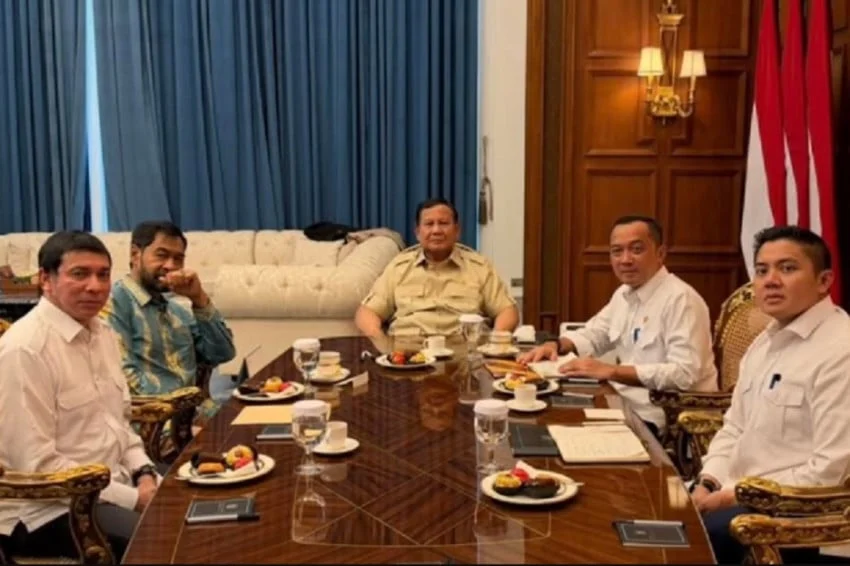
The political landscape of Indonesia recently witnessed a significant high-level dialogue concerning regional governance and the long-standing peace agreements in Sumatra as Aceh Governor Muzakir Manaf, popularly known as Mualem, traveled to Jakarta for an official audience with President Prabowo Subianto. The strategic meeting took place at the State Palace, serving as a crucial platform for the provincial leadership to advocate for key regulatory frameworks, economic continuities, and historical properties integral to the identity and development of Aceh.
The discussion, held on Wednesday, November 4, 2026, brought to the forefront several delicate and pressing matters that have defined the socio-political discourse in the westernmost province of Indonesia for decades. Among the primary agenda items were the extension and sustainability of the Special Autonomy Fund (Dana Otonomi Khusus), the long-awaited legal certainty regarding the official Aceh regional flag, and the definitive legal resolution concerning the status of the historic Blang Padang waqf land.
This high-stakes meeting underscores the ongoing dialogue between the central government in Jakarta and regional authorities in Banda Aceh, highlighting a collaborative approach to addressing post-conflict governance under the framework of the Helsinki Peace Agreement and the Law on the Governing of Aceh (LoGA).
High-Level Attendees and Diplomatic Context
The meeting at the State Palace was attended by key figures from both the executive branch of the central government and the regional administration of Aceh. Governor Muzakir Manaf was accompanied by the Special Staff to the Governor of Aceh, Teuku Irsyadi, who has been instrumental in facilitating policy coordination between Banda Aceh and the national capital.
On the other side of the table, President Prabowo Subianto was flanked by core members of his administration, including Minister of State Secretariat (Mensesneg) Prasetyo Hadi and Cabinet Secretary (Seskab) Indra Wijaya. The presence of these high-ranking officials indicates the seriousness with which the central government is approaching the regional concerns brought forward by the Acehnese leadership.
The dialogue builds upon a foundation of established rapport between President Prabowo and Governor Mualem. Notably, relations between the two leaders have previously been underscored by swift central intervention in times of crisis. Earlier in the gubernatorial term, President Prabowo made headlines by personally deploying a private helicopter to assist Governor Mualem in managing severe natural disaster recovery efforts across remote regions of Aceh. This established goodwill provided a conducive backdrop for a constructive, albeit intense, policy discussion at the State Palace.
Core Agenda Item One: The Sustainability of the Special Autonomy Fund
At the very heart of the discussions between Governor Mualem and President Prabowo was the critical issue of the Special Autonomy Fund for Aceh. Established in the aftermath of the devastating 2004 Indian Ocean tsunami and the signing of the 2005 Helsinki Memorandum of Understanding (MoU) between the Government of Indonesia and the Free Aceh Movement (GAM), the Special Autonomy Fund was designed to accelerate regional development, improve public infrastructure, eradicate poverty, and fund education and health initiatives in a region recovering from decades of armed conflict.
For years, regional leaders in Aceh have advocated for the extension and optimization of these special financial allocations. While the funds have significantly transformed the infrastructural landscape of the province—leading to the construction of roads, bridges, public facilities, and religious institutions—questions regarding the tapering off of funding percentages and long-term fiscal sustainability have remained a central concern for local administrations.
Governor Mualem’s presentation to President Prabowo emphasized that continued central backing through fiscal decentralization and special financial support is vital for maintaining economic momentum and ensuring that the peace dividend reaches all segments of Acehnese society. The administration in Banda Aceh argues that prolonged structural challenges, coupled with the need for industrial diversification and enhanced human resource development, necessitate a prolonged framework for special autonomy financing.
Core Agenda Item Two: The Legal Certainty of the Aceh Regional Flag
Perhaps one of the most culturally and politically sensitive topics raised during the meeting was the pursuit of definitive legal certainty regarding the official Aceh regional flag. The issue of symbols of regional identity has remained a point of debate and negotiation ever since the passage of the Law on the Governing of Aceh (UU No. 11 Tahun 2006), which legally formalized various aspects of the 2005 peace accord.

Under the peace agreement and subsequent local legislative processes, the design of the Aceh regional flag—often associated with the historical standard of the former independence movement—has been a subject of contention between local aspirations for cultural expression and national regulations concerning regional symbols. National laws stipulate that regional flags and emblems must not replicate symbols associated with separatist movements or past armed struggles against the Republic of Indonesia.
During the meeting at the State Palace, Governor Mualem pressed for a constructive resolution that harmonizes local cultural aspirations with national legal frameworks. Achieving legal clarity on the flag is viewed by many local leaders as an essential step toward complete psychological reconciliation and the full implementation of the Helsinki MoU. By bringing this directly to President Prabowo, the Aceh administration hopes to navigate the bureaucratic and legislative hurdles required to establish a mutually agreeable resolution that respects both national sovereignty and regional identity.
Core Agenda Item Three: The Resolution of the Blang Padang Waqf Land Status
In addition to broad fiscal and symbolic policies, the meeting addressed a specific, highly symbolic local property dispute: the legal status of the Blang Padang land. Situated in the heart of Banda Aceh, Blang Padang is a historic public square and multi-purpose field spanning nearly 10 hectares. Beyond its utility as a venue for sports, public gatherings, and national celebrations, the land holds deep religious and historical significance as a waqf (endowment) property intended for the welfare and benefit of the Acehnese community.
Over the years, the management and precise ownership status of Blang Padang have been subjects of complex administrative and legal discussions, often involving historical claims by military institutions and local religious endowments. For the people and government of Aceh, securing absolute legal certainty and rightful management rights over Blang Padang is a matter of cultural preservation and community pride.
Governor Mualem utilized the audience with the President to advocate for a swift and equitable resolution to the status of the land, requesting central administrative support to clarify property titles and ensure that the historic space remains permanently dedicated to public and religious use under local stewardship.
Broader Implications for National-Regional Relations
The meeting between President Prabowo Subianto and Governor Muzakir Manaf carries profound implications for the ongoing consolidation of peace, democracy, and development in Aceh. Two decades after the historic peace accord ended a thirty-year conflict, the relationship between Jakarta and Banda Aceh has evolved from one of suspicion and military confrontation to a pragmatic partnership focused on administrative integration and economic progress.
Political analysts note that the willingness of President Prabowo to directly engage with regional leaders on contentious issues such as autonomy funding, symbols, and land rights reflects a commitment to political dialogue and conflict prevention through institutional channels. By addressing these legacy issues head-on, the central government aims to foster long-term stability in a strategically vital region situated along major international shipping lanes in the Malacca Strait.
Furthermore, the outcome of these discussions is expected to set a precedent for how the central government handles regional autonomy claims across other parts of the archipelago. As decentralization policies continue to mature in Indonesia, the delicate balance between national unity and regional self-governance remains a cornerstone of the nation’s political stability.
Next Steps and Expected Outcomes
Following the conclusion of the meeting at the State Palace, both the central administration and the regional government of Aceh are expected to initiate follow-up inter-ministerial coordination meetings. Technical teams comprising representatives from the Ministry of Home Affairs, the Ministry of State Secretariat, the Ministry of Finance, and the Aceh Government will likely be tasked with drafting policy frameworks to address the financial structures of the Special Autonomy Fund, reviewing legislative pathways for the regional flag, and resolving the property administration of Blang Padang.
Governor Mualem expressed optimism following the discussions, noting that the central government demonstrated a receptive and understanding attitude toward the unique historical and legal status of Aceh. As these policy deliberations move from the presidential desk to implementation agencies, the people of Aceh await concrete regulatory developments that will shape the province’s trajectory for years to come.
