
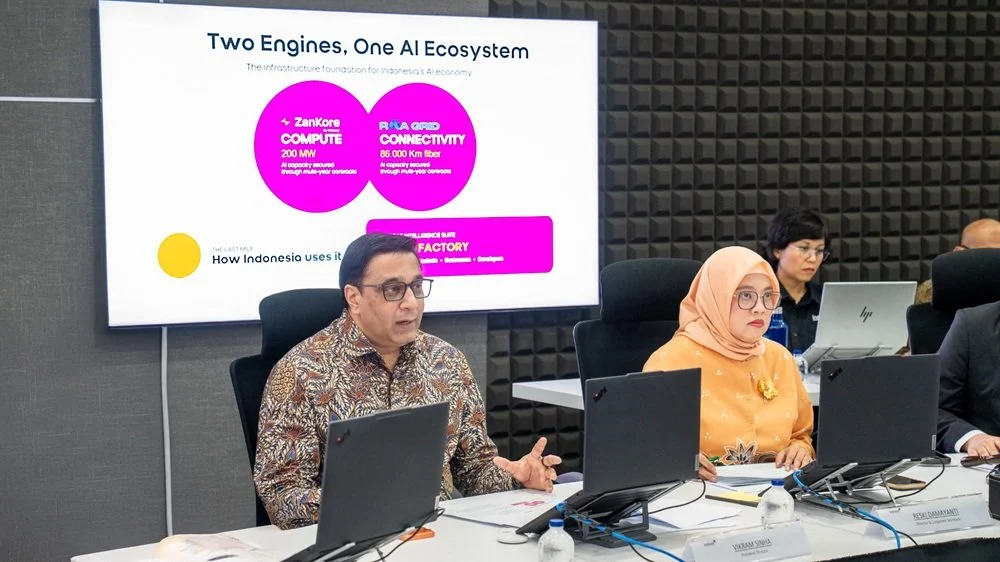
Indosat Ooredoo Hutchison (Indosat) has officially confirmed the reappointment of Vikram Sinha as President Director and Chief Executive Officer following a formal resolution passed during the Extraordinary General Meeting of Shareholders (EGMS) held on September 29, 2026. This pivotal decision provides the company with leadership continuity as it accelerates its ambitious AI North Star strategy, a comprehensive framework designed to pivot the telecommunications giant into a digital powerhouse capable of anchoring Indonesia’s burgeoning AI economy.
The confirmation of Sinha’s leadership comes as the culmination of a process initiated earlier in July 2026, when the company first indicated its intention to extend his tenure. The formal ratification by shareholders serves as a vote of confidence in the management’s direction over the past several years, particularly in navigating the complexities of post-merger integration and the subsequent digital transformation phase. Alongside the leadership extension, the EGMS also addressed governance adjustments, most notably the resignation of Seppalga Ahmad from the Board of Commissioners. The company expressed its gratitude for Ahmad’s service, marking a transition period as Indosat seeks to align its oversight structure with its long-term strategic objectives.
Strategic Continuity and the AI North Star Mandate
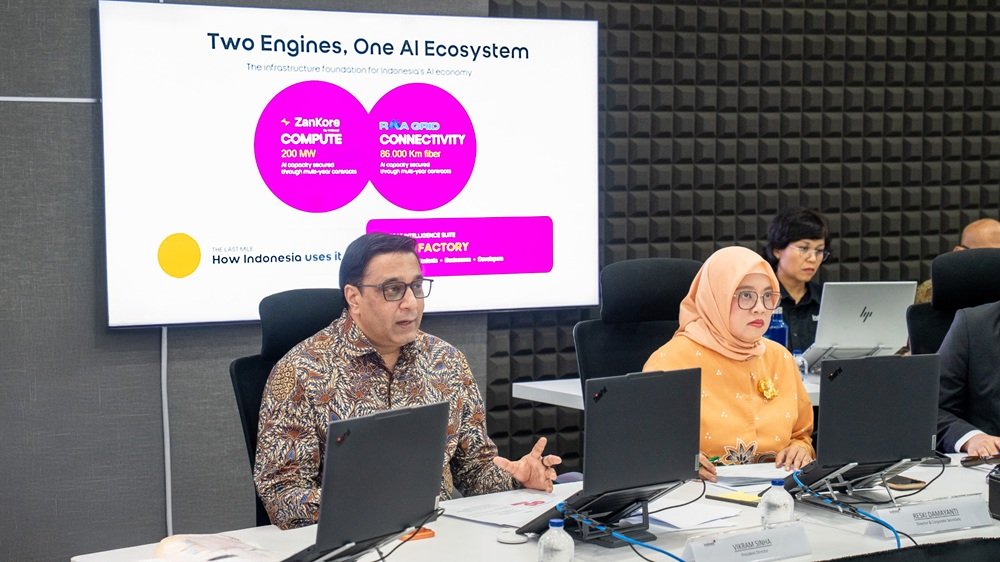
Reski Damayanti, Corporate Secretary, Director, and Chief Legal and Regulatory Officer at Indosat Ooredoo Hutchison, underscored that the decision to maintain the current leadership team is fundamentally linked to the execution of the AI North Star strategy. "We are entering a new chapter for Indosat, characterized by strong momentum and expanding growth opportunities," Damayanti stated. "By leveraging the solid foundations we have already established, we are prepared to scale the implementation of our AI North Star initiative, deepen our commitment to ‘Customer Love,’ and foster a digital future that is both sustainable and inclusive for all Indonesians."
The AI North Star strategy represents a departure from traditional telecommunications models. Instead of focusing solely on connectivity, Indosat is positioning itself as a provider of "AI-as-a-Service," building an ecosystem that integrates compute, cloud, and AI platform solutions. This multi-layered approach is designed to provide the necessary technological backbone for the nation’s digital sector, ranging from local startups and small-to-medium enterprises (SMEs) to large-scale industrial players.
Infrastructure Expansion: The Pillars of Zankore and RAIA Grid
Central to the realization of this strategy is the massive expansion of physical and virtual infrastructure. Indosat has recognized that the power demands of Artificial Intelligence require a new generation of data centers and high-capacity connectivity. To this end, the company has solidified its position through the development of the Zankore project. By securing a long-term contract with a power capacity of 200 MW, Indosat is ensuring that its "AI Factory" has the necessary energy density to support high-performance computing workloads. This level of power infrastructure is critical for the intensive processing requirements of large language models and other AI-driven analytical tools.
Complementing this compute capacity is the RAIA Grid, a massive deployment of fiber optic infrastructure spanning 86,000 kilometers. This network acts as the connective tissue between Indosat’s data centers and the end-users. By creating a high-bandwidth, low-latency environment, the RAIA Grid enables seamless data movement, which is essential for real-time AI applications. Analysts observe that by controlling both the compute (via Zankore) and the transport (via RAIA Grid), Indosat is effectively creating a vertical monopoly on AI infrastructure in the Indonesian market, insulating its operations from third-party bottlenecks.
Empowering the Digital Workforce: The 2 Million Talent Goal
Recognizing that infrastructure is only as effective as the people who operate and build upon it, Indosat has set an ambitious goal to cultivate 2 million digital talents by 2030. This initiative is not merely a corporate social responsibility project but a strategic necessity. The global shortage of AI-literate professionals poses a significant barrier to the adoption of these technologies within the Indonesian economy.
Indosat’s human capital strategy involves a tri-sectoral collaboration between academia, government bodies, and global technology partners. By integrating AI research and development into curricula and offering vocational training, the company intends to build a pipeline of developers, data scientists, and AI engineers. This, in turn, creates a self-sustaining ecosystem where the talent pool is equipped to utilize Indosat’s AI platforms, thereby increasing the company’s long-term enterprise value and customer stickiness.
Operational Efficiency: The AI-RAN Innovation
The integration of AI extends beyond external service offerings into the core of Indosat’s network operations. A notable technological development currently undergoing testing is the AI-RAN (Artificial Intelligence Radio Access Network). This technology utilizes AI algorithms to optimize the performance of radio access networks, which have traditionally been static and energy-intensive.
By deploying AI-RAN, Indosat aims to achieve a 20% reduction in energy consumption. In an era where ESG (Environmental, Social, and Governance) performance is heavily scrutinized by investors, this efficiency gain is significant. It demonstrates that the company’s AI-centric transformation is not only focused on revenue growth but also on operational sustainability and cost management. As electricity costs remain a substantial portion of OPEX for telcos, such advancements in network intelligence provide a competitive edge in pricing and service quality.
Market Implications and Future Outlook
The market’s reception to the news of Vikram Sinha’s reappointment and the focus on the AI North Star strategy has been cautiously optimistic. Financial analysts suggest that the company’s shift from a connectivity-focused firm to an "AI-first" infrastructure provider aligns with global trends among major telecommunications carriers, such as those seen in the United States and Europe.
However, the transition is not without challenges. The capital expenditure required for 200 MW of power capacity and an 86,000 km fiber network is substantial. Indosat will need to balance these heavy investments with the need to maintain dividend stability and debt management. Furthermore, the success of the AI Factory model will depend heavily on the rate of AI adoption among Indonesian enterprises. If the demand for domestic AI compute falls short of expectations, Indosat may face an oversupply of infrastructure capacity.
Nevertheless, the strategic alignment between the board and executive management provides a stable platform for these risks to be managed. The departure of Seppalga Ahmad and the subsequent board reorganization is widely viewed as a move to streamline decision-making, allowing for more agile responses to the rapidly evolving technological landscape.
Conclusion
The events of September 29, 2026, mark a significant milestone for Indosat Ooredoo Hutchison. By formalizing its commitment to the AI North Star strategy under the continued leadership of Vikram Sinha, the company is signaling to the market that it is ready to transition into the next generation of digital services. Through the successful synthesis of heavy infrastructure—such as the Zankore project and the RAIA Grid—and the development of a localized, massive-scale talent ecosystem, Indosat is attempting to redefine the role of a telecommunications company in a developing nation.
As the company moves forward, the focus will shift from strategic planning to execution. The ability to lower operational costs through AI-RAN while simultaneously driving digital transformation across Indonesian industries will be the primary metrics of success. For now, the leadership has provided a clear roadmap: one that prioritizes technological sovereignty, infrastructure-led growth, and a deeply integrated digital future. With the backing of its shareholders, Indosat appears poised to navigate the coming years as a critical player in the digital transformation of the Indonesian archipelago.
