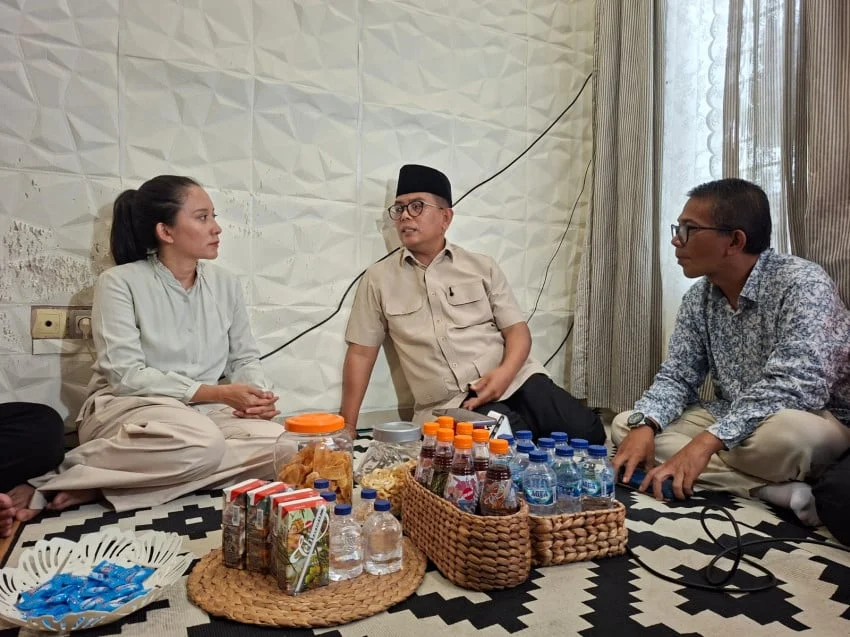
Banten Governor Andra Soni paid a compassionate visit to the family residence of missing iNews journalist Yudistiro Pranoto, located in the Nuansa Asri residential complex in Cinangka, Sawangan, Depok, West Java, on Friday afternoon, September 25, 2026. Arriving at approximately 13.30 Western Indonesia Time (WIB), the Governor sought to provide direct moral support, strength, and encouragement to the grieving and anxious family members who have endured an agonizing period of uncertainty following the sudden disappearance of the prominent reporter.
The high-profile visit underscores the deep bonds within the professional and public service communities, highlighting the profound emotional toll that operational risks in journalism impose on families. Governor Andra Soni was accompanied by several key regional officials from the Banten Provincial Government, including the Head of the Administrative Bureau for Leadership (Adpim) Arif Agus Rakhman, Head of the Social Service Office (Dinsos) Lukman, Chief Executive of the Regional Disaster Management Agency (BPBD) Lutfi Mujahidin, and the Head of the Education and Culture Office (Dindikbud) Jamaludin.
Upon arrival, the gubernatorial entourage was warmly received by Head of News Gathering for iNews Media Group Lukman Hanafi, alongside Yudis’s steadfast wife, Rodiyah Nasution, and their two young sons, Kenzie Hafizan Pranoto and Karel Hamizan Pranoto. The delegation spent over an hour engaging in heartfelt conversations with the family, offering prayers for Yudistiro Pranoto’s safe return and reassuring his wife and children that the broader community, state apparatus, and media industry stand firmly beside them during this unprecedented crisis.
Context and Chronology of the Disappearance
The disappearance of Yudistiro Pranoto has gripped both the national media landscape and regional authorities since reports first emerged regarding his sudden loss of contact while on assignment. As an experienced field journalist for iNews, Yudis has long been known for his dedication to covering challenging stories, often venturing into remote or high-risk locations to deliver accurate reporting to the public. However, the nature of his latest assignment took a harrowing turn, leading to an extensive search and rescue (SAR) operation that has mobilized various state agencies, private entities, and grieving family members alike.
In the days following his disappearance, search efforts have extended across perilous geographic expanses, most notably reaching coastal and maritime zones such as Sertung Island—part of the Krakatoa archipelago in the Sunda Strait. The sheer scale of the operation reflects the high regard in which Yudis is held by his colleagues and superiors alike. Rodiyah Nasution, demonstrating extraordinary resolve, even took the heartbreaking step of personally joining search teams on expeditions to remote locations like Pulau Sertung, driven by an unwavering maternal and spousal determination to locate her husband.
The collaborative nature of the search involves joint forces from the National Search and Rescue Agency (Basarnas), the Indonesian Navy, local marine police units, and volunteer maritime communities. Despite challenging weather conditions, unpredictable ocean currents, and rugged terrain characteristic of the Sunda Strait region, search teams have continued to comb coastal areas, dense vegetation, and surrounding waters in hopes of finding viable leads.
Official Responses and Solidarity from Regional Government
During his visit to the Depok residence, Governor Andra Soni emphasized the critical role that journalists play in shaping democratic society and keeping the public informed. He noted that public servants and state officials share a profound moral obligation to support members of the press, especially when disaster or tragedy strikes those who dedicate their lives to public information.
"We are here today not only as representatives of the Banten Provincial Government but as fellow human beings to extend our deepest sympathies and unwavering support to the family of Yudistiro Pranoto," Governor Andra Soni stated during his interaction with the family. "Yudis has been an exemplary professional whose dedication to his craft is commendable. We pray steadfastly for his safety, and we assure his family that they are not alone in this difficult hour."
The presence of high-ranking Banten officials—including the heads of disaster management, social services, and educational administration—indicates a coordinated approach to ensuring that the family’s immediate psychological, social, and administrative needs are fully supported. BPBD Kalaksa Lutfi Mujahidin, leveraging his agency’s expertise in emergency operations, has maintained close communication with federal and local SAR coordinators to stay updated on the latest developments in the search grid. Meanwhile, Dindikbud Head Jamaludin ensured that educational continuity and emotional safeguarding for Yudis’s young sons, Kenzie and Karel, remain a priority amid the ongoing household crisis.
The Human Toll and Media Industry Solidarity
The plight of Yudistiro Pranoto has illuminated the broader vulnerabilities faced by field journalists across Indonesia. Media organizations, press associations, and independent journalist unions have continuously voiced their solidarity, emphasizing that the safety and psychological well-being of reporters must remain paramount.
Head of News Gathering iNews Media Group Lukman Hanafi, who was present to welcome the Banten Governor, expressed profound gratitude for the visit and the continuous outpouring of empathy from public figures and colleagues nationwide. "The solidarity shown by Governor Andra Soni and his administration means a great deal to us at iNews Media Group, and most importantly, to Yudis’s family," Lukman remarked. "We remain in constant coordination with search authorities, holding onto hope while providing comprehensive support to Rodiyah and the children."
For Rodiyah Nasution, the journey has been an emotional crucible. Her active participation in field searches alongside professional rescue personnel has captured public attention, symbolizing the immense sacrifices families of journalists often bear behind the scenes. Her resilience has drawn widespread admiration from civil society groups and women’s organizations, who continue to rally around the family with emotional and logistical backing.
Broader Implications for Journalist Safety and Emergency Response
The ongoing situation surrounding Yudistiro Pranoto serves as a stark reminder of the inherent risks associated with field journalism, particularly in maritime and disaster-prone regions of the Indonesian archipelago. Analysts and press freedom advocates point out that while media outlets enforce strict standard operating procedures (SOPs) regarding field safety, unpredictable natural hazards and remote environments often introduce variables that test the limits of emergency preparedness.
Furthermore, the active involvement of regional leadership—such as Governor Andra Soni’s visit—demonstrates a strengthening synergy between regional governments and the Fourth Estate. In moments of crisis, the line between institutional duty and human empathy blurs, fostering a unified response that transcends professional boundaries.
As the search operation enters its subsequent phases, authorities have vowed to maintain comprehensive sweeps across targeted maritime sectors. The collective hope of the media fraternity, government officials, and the general public remains fixed on a positive resolution, with ongoing prayers directed toward the safe recovery of Yudistiro Pranoto and the continued strength of his family.
Governor Andra Soni and his entourage concluded their visit at 14.50 WIB, departing the residence after offering final words of comfort to Rodiyah Nasution and her children. As the investigation and search efforts persist, the resilience displayed by the Pranoto family and the steadfast solidarity of the community stand as testaments to enduring human spirit in the face of profound adversity.