
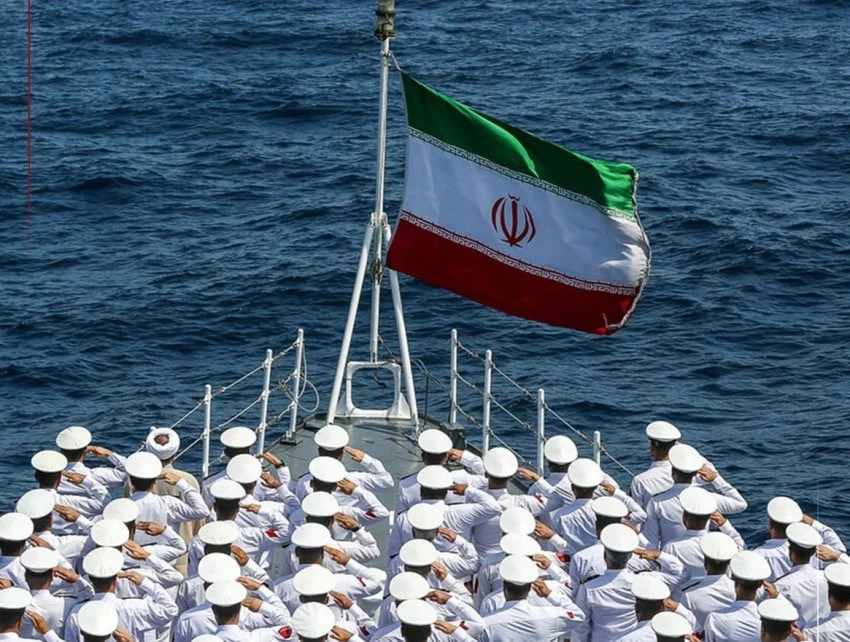
TEHRAN — In a significant pivot that has alarmed regional and international security analysts, Iran’s military doctrine appears to be undergoing a profound transformation. According to prominent defense experts, recent directives issued by influential figures within the Iranian leadership—specifically linked to Mojtaba Khamenei—mandate a direct, unconstrained response to external threats, effectively abandoning Tehran’s historical reliance on restrained and proportional retaliation. This strategic recalibration shifts the Islamic Republic toward a far more aggressive, offensive posture designed to impose crippling costs on its adversaries while dismantling traditional frameworks of conflict escalation control.
The development comes at a time of heightened volatility across the Middle East, where decades of shadow warfare, proxy engagements, and economic sanctions have increasingly given way to direct state-on-state friction. By declaring that future threats will be met without geographic limitations and that Tehran alone will dictate the terms of engagement and termination, the Iranian leadership is signaling a departure from strategic patience. Security analysts argue that this rhetorical and operational hardening is not merely posturing, but a calculated effort to alter the calculus of deterrence for Washington and its regional allies.
The Anatomy of a Strategic Shift
The core of this evolving doctrine centers on a rejection of predictable containment. Hamidreza Azizi, an Iran military analyst at the Crisis Group, highlighted the gravity of these recent pronouncements in a comprehensive series of public analyses. Azizi pointed to directives emphasizing immediate, direct retaliation without geographic boundaries as the most critical development in Iran’s security posture in recent history.
For decades, Iran’s military strategy has relied heavily on asymmetrical warfare, forward defense through the "Axis of Resistance," and calculated, proportional responses designed to avoid a full-scale conventional war. However, Azizi notes that Tehran has been progressively moving away from this traditional framework. The latest orders take this evolution a step further by aiming to inflict maximum tangible costs on opponents rather than merely signaling political resolve.
Central to this new offensive philosophy is a direct challenge to Western assumptions regarding limited military engagements. Historically, Washington and its allies have operated under the belief that targeted strikes or limited operations could be executed without triggering a broader regional conflagration, relying on deterrence and escalation dominance to manage Tehran’s response. The new directives from Tehran explicitly seek to shatter this assumption.
The messaging conveyed by Iranian leadership is unequivocal: even a relatively confined strike will no longer be met with a localized or measured reaction. Instead, it risks catalyzing an expansive confrontation spanning multiple geographies and encompassing a vastly broadened array of targets. The strategic objective from the Iranian perspective is clear: make the prospect of any future military action against Iran so unpredictable, costly, and escalatory that foreign adversaries are forced to reconsider the option entirely.
Contextualizing the Escalation: Background and Chronological Context
To understand the weight of this strategic pivot, one must examine the broader historical and geopolitical trajectory of Iran’s defense doctrine since the 1979 Islamic Revolution. Formulated in the crucible of the Iran-Iraq War (1980–1988), Tehran’s initial military philosophy was rooted in survival, self-sufficiency, and asymmetric deterrence. Facing a technologically superior adversary backed by global superpowers, Iran developed a reliance on ballistic missiles, naval guerrilla tactics in the Persian Gulf, and a vast network of regional non-state allies.
Over the subsequent decades, this doctrine matured into the concept of "forward defense." By projecting power beyond its borders through allied militias in Lebanon, Iraq, Syria, Yemen, and the Palestinian territories, Iran successfully created strategic depth. This allowed Tehran to fight its wars on foreign soil, keeping the Iranian mainland largely insulated from direct conventional destruction.
However, the landscape began to shift dramatically in the late 2010s and early 2020s. The unilateral U.S. withdrawal from the Joint Comprehensive Plan of Action (JCPOA) in 2018, the subsequent "maximum pressure" campaign of economic sanctions, and high-profile kinetic incidents—such as the targeted assassination of Islamic Revolutionary Guard Corps (IRGC) General Qasem Soleimani in January 2020—eroded the boundaries of the traditional shadow war.
The timeline accelerated sharply through 2024 and into 2025. Direct missile and drone exchanges between Iran and Israel shattered long-standing taboos, moving the conflict from the shadows into the open. These unprecedented direct exchanges forced Iranian military planners to reassess the viability of purely proportional deterrence. The realization that deterrence had failed to prevent direct attacks on Iranian soil or high-ranking military personnel catalyzed internal debates within the Iranian establishment regarding the need for a more proactive, unconstrained offensive posture.
Dual-Track Approach: Coordinated Rhetoric and Diplomatic Signaling
The articulation of this new offensive doctrine is not occurring in a vacuum; it is part of a synchronized messaging campaign involving key political and military actors within the Iranian establishment. Alongside the hardline directives attributed to Mojtaba Khamenei, public statements from high-ranking figures such as Expediency Discernment Council member Mohsen Rezaei and Foreign Minister Abbas Araghchi reveal a nuanced dual-track approach.
While the military and security apparatus signals a readiness for unbridled escalation and offensive retaliation, the diplomatic wing continues to keep channels of communication open. This combination of coercive military signaling and diplomatic engagement is designed to achieve maximum leverage. Iran is effectively communicating to the international community that while it remains willing to discuss diplomatic off-ramps, the price of diplomatic failure—or military aggression—will be catastrophically high.
Foreign Minister Araghchi’s recent diplomatic engagements reflect Tehran’s ongoing efforts to rally regional and international support against unilateral Western policies, while simultaneously demonstrating that Iran is not isolated. Meanwhile, figures like Rezaei reinforce the uncompromising military stance, ensuring that potential adversaries understand that domestic political calculations or economic pressures will not deter the Islamic Republic from executing its newly defined defensive-turned-offensive mandate.
This dual-track strategy aims to exploit perceived hesitations among Western policymakers. By raising the ceiling of potential conflict, Tehran hopes to compel Washington and its allies to prioritize diplomatic containment over military adventurism, knowing that the collateral damage of an expanded regional war would reverberate globally through energy markets, maritime trade, and international security architectures.
Strategic Implications and Global Ramifications
The adoption of an unconstrained, offensively oriented military strategy by a regional power like Iran carries profound implications for global security, economic stability, and international diplomacy.
1. Heightened Risk of Miscalculation
The most immediate implication is the exponential increase in the risk of accidental escalation. When military doctrines shift from predictable, proportional responses to ambiguous, geographically limitless retaliation, the margin for error narrows dangerously. A localized incident, a misjudged tactical maneuver, or a preemptive strike intended to send a warning could inadvertently trigger a cascading series of events that neither side intended nor is capable of controlling.
2. Economic and Energy Market Vulnerabilities
Global markets remain acutely sensitive to developments in the Middle East, particularly concerning the security of critical shipping lanes such as the Strait of Hormuz, through which a significant portion of the world’s petroleum passes. An Iranian military doctrine that explicitly embraces unconstrained responses to threats raises the specter of asymmetric warfare spilling over into international commercial shipping, energy infrastructure, and regional trade hubs. Investors and energy analysts must now price in a permanently elevated risk premium across the region.
3. Re-evaluating Western and Regional Deterrence Postures
For the United States, Israel, and their regional partners, Tehran’s rhetorical and doctrinal shift necessitates a fundamental overhaul of defense planning. Traditional deterrence models—which assume rational actors operating within mutually understood thresholds of escalation—may no longer suffice. Policymakers in Washington and allied capitals are forced to weigh whether limited kinetic options against Iranian proxies or assets remain viable, or if such actions will inevitably trigger the systemic, multi-front retaliation that Tehran has promised.
4. The Future of Regional Diplomacy
Paradoxically, the hardening of Iran’s military stance may paradoxically inject a renewed sense of urgency into diplomatic efforts. Recognizing that the alternative to negotiation is an unpredictable and potentially ruinous regional conflagration, international mediators may redouble their efforts to establish de-escalation mechanisms, maritime safety agreements, and renewed diplomatic dialogues. However, these efforts will proceed under the shadow of a much more volatile and unforgiving strategic environment.
Conclusion
The evolution of Iran’s military strategy, as reflected in the recent directives emphasizing direct, unconstrained responses and an offensive posture, marks a watershed moment in contemporary Middle Eastern geopolitics. By signaling a definitive break from proportional retaliation and traditional containment frameworks, Tehran is attempting to fundamentally rewrite the rules of engagement. Whether this high-stakes strategy succeeds in deterring foreign intervention or instead precipitates the very regional catastrophe it seeks to prevent remains one of the most critical questions facing international security analysts today. As diplomatic channels strain under the weight of heightened military posturing, the global community watches closely to see whether restraint or escalation will ultimately define the future of the region.
