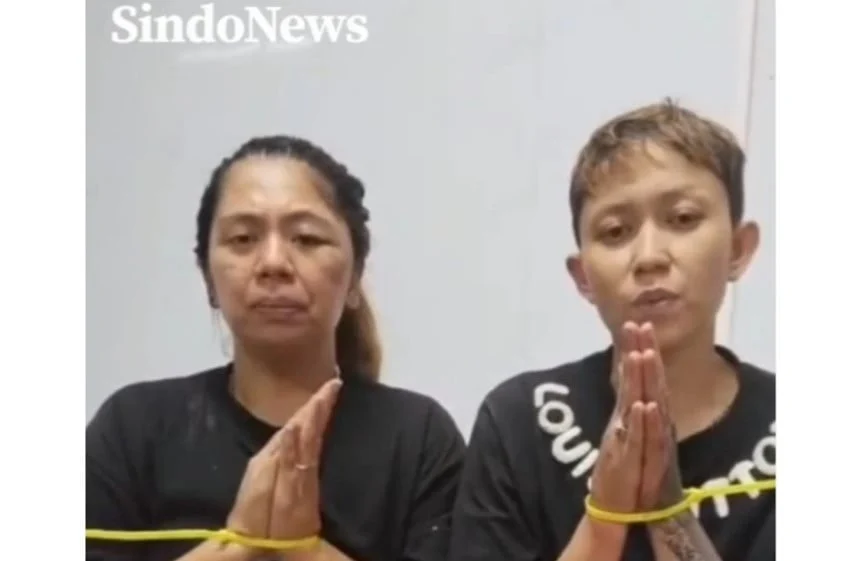
The Indonesian government has launched a high-level diplomatic and security coordination effort following the viral circulation of a distressing video showing two Indonesian women (WNI) allegedly held captive and handcuffed in Myanmar. The victims, who are believed to be caught in the grip of a sophisticated human trafficking and online scamming syndicate, have reportedly been subjected to physical torture and psychological abuse. In a desperate plea for help captured in the footage, the women revealed that their captors are demanding a ransom of Rp220 million (approximately USD 14,000) from their families in Indonesia in exchange for their release. This incident highlights the growing peril faced by migrant workers in Southeast Asia’s "scam centers," particularly those located in lawless border regions where central government authority is virtually non-existent.
In response to the escalating situation, Brigadier General Dr. Untung Widyatmoko, Secretary of the NCB-Interpol Indonesia, confirmed that the National Police have been monitoring the case closely. Speaking on Sunday, July 19, 2026, General Widyatmoko stated that the Indonesian authorities have initiated formal communications with security counterparts in Myanmar to ascertain the exact location of the victims and explore avenues for their safe extraction. However, the mission is fraught with geopolitical complexities, as the victims are reportedly held in the Myawaddy region, a notorious hotspot for armed conflict and transnational crime that remains outside the effective control of the Myanmar military junta.
The Myawaddy Crisis: A Lawless Frontier for Transnational Crime
The Myawaddy region, situated along the Moei River bordering Thailand, has evolved into a fortress for international scamming operations and human trafficking rings (TPPO). Unlike other parts of Myanmar, Myawaddy is largely controlled by ethnic armed organizations (EAOs), most notably the Karen National Union (KNU) and various splinter groups or Border Guard Forces (BGF) that operate with a high degree of autonomy. Because the Myanmar central government and its military (the Tatmadaw) do not exercise administrative or military control over these specific zones, traditional diplomatic channels often hit a stalemate.
According to security analysts, these "scam compounds" function as extraterritorial enclaves. They are often heavily fortified, guarded by armed personnel, and equipped with high-speed internet and luxury amenities for the "handlers," while the "workers"—who are actually trafficking victims—live in prison-like conditions. The two Indonesian women identified in the viral video are believed to be victims of "job fraud," a common tactic where recruiters promise high-paying administrative roles in Thailand or Malaysia, only to kidnap the recruits and transport them illegally across the border into Myanmar’s conflict zones.
Chronology of the Captivity and Ransom Demands
The ordeal for the two Indonesian citizens reportedly began several months ago when they were lured by social media advertisements promising lucrative salaries in the digital marketing sector. Upon arriving at a regional hub, likely in a neighboring country, they were stripped of their passports and moved through unofficial border crossings into the Myawaddy district. Once inside the compound, they were forced to participate in "pig butchering" scams—a fraudulent scheme where operators build long-term emotional trust with victims online before tricking them into fake investment platforms.
The situation turned violent when the women reportedly failed to meet the strict "scamming quotas" set by their captors. The viral video, which has sparked outrage across Indonesian social media platforms, shows the victims in a state of visible distress, with their hands bound by metal handcuffs. They claimed that the syndicate had shifted its strategy from labor exploitation to direct extortion. The demand for Rp220 million is a common tactic used by these syndicates when they deem a victim "unproductive" or when the risk of maintaining the victim outweighs the potential profit from their scamming activities.
The families of the victims in Indonesia have reportedly received threatening messages and images of the torture. Despite the families’ efforts to seek help from local police, the transnational nature of the crime and the location of the captors in a war zone have made direct intervention nearly impossible without international cooperation.
Official Responses and Diplomatic Challenges
Brigadier General Untung Widyatmoko emphasized that while the Indonesian National Police (Polri) and Interpol are prioritizing the case, the operational reality on the ground is incredibly difficult. "We have established communication with the authorities in Myanmar, but we must acknowledge that the location—Myawaddy—is a zone of armed conflict controlled by the KNU," Widyatmoko explained. This admission underscores the primary hurdle: the Indonesian government cannot simply send a tactical team into a foreign sovereign territory, especially one where the recognized government has no presence.
The Indonesian Ministry of Foreign Affairs (Kemlu) has also been engaged, working through the Indonesian Embassy (KBRI) in Yangon. Historically, the KBRI has had to rely on a network of local intermediaries, non-governmental organizations, and sometimes even negotiations with ethnic armed groups to facilitate the release of Indonesian citizens. In 2023 and 2024, hundreds of Indonesians were successfully repatriated from similar compounds in Myanmar and Cambodia, but the process often takes months and requires delicate back-channel diplomacy.
Furthermore, the Indonesian government is working closely with the Thai authorities. Since Myawaddy is located directly across from the Thai district of Mae Sot, many victims are smuggled through Thailand. Cooperation with the Royal Thai Police is essential for cutting off the supply lines of these syndicates and potentially providing a corridor for victims who manage to escape or are released through negotiation.
Supporting Data: The Rising Tide of Cyber-Slavery in Southeast Asia
The plight of these two women is not an isolated incident but part of a catastrophic regional trend that the United Nations has labeled "cyber-slavery." According to a report by the United Nations Office on Drugs and Crime (UNODC), hundreds of thousands of people from across Asia and beyond have been trafficked into these scam centers.
Data from the Indonesian Ministry of Foreign Affairs indicates a sharp increase in the number of WNI falling victim to online scam syndicates. In 2022, the ministry handled over 400 cases; by the end of 2023, that number had surged to over 1,000. Most victims are young, tech-savvy individuals who are lured by the prospect of escaping domestic economic hardships. The "scam-mill" industry in Southeast Asia is estimated to generate billions of dollars annually, fueling the purchase of advanced weaponry for local militias and entrenching corruption in border regions.
Analysis of Implications and the Path Forward
The persistence of these scam centers in Myanmar poses a significant threat to regional security and the integrity of ASEAN’s human rights commitments. As long as Myawaddy remains a "grey zone" where international law does not apply, syndicates will continue to operate with impunity.
-
The Need for ASEAN Collective Action: The Indonesian government, as a leading member of ASEAN, has consistently pushed for a regional framework to combat human trafficking. However, the "non-interference" principle of ASEAN often hampers direct action against the interests that protect these compounds in Myanmar. This case may serve as further impetus for Indonesia to demand more robust cross-border policing mechanisms.
-
Public Awareness and Prevention: The "demand" side of this crisis is fueled by a lack of information. Many Indonesians still believe that overseas job offers that bypass official migrant worker channels (PMI) are legitimate. Enhanced public education campaigns are necessary to warn potential victims about the specific red flags associated with "Myawaddy jobs."
-
Technological Countermeasures: Since these syndicates rely on global financial systems and social media platforms to find victims and launder ransom money, international pressure on tech companies and banks is crucial. Tracking the Rp220 million ransom demand’s destination could provide lead intelligence for Interpol to freeze the syndicate’s assets.
Conclusion
The situation involving the two Indonesian women in Myanmar is a grim reminder of the human cost of transnational organized crime. As the Indonesian National Police and the Ministry of Foreign Affairs navigate the treacherous political landscape of Myanmar, the safety of the victims remains the paramount concern. The international community, particularly ASEAN partners, must recognize that the crisis in Myawaddy is not merely a domestic Myanmar issue but a regional humanitarian emergency that requires a coordinated, forceful, and immediate response.
For now, the families of the victims wait in agony, hoping that the diplomatic machinery can move fast enough to bring their loved ones home before the syndicate carries out its further threats. The resolution of this case will be a significant test of Indonesia’s ability to protect its citizens abroad in an era of increasingly complex and violent global crime networks.