
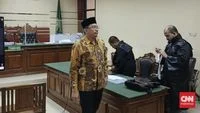
Former Sidoarjo Regent Ahmad Muhdlor bin Agoes Ali Masyhur, widely known as Gus Muhdlor, has officially been released from custody following the grant of parole by the Class I Correctional Facility in Porong, Sidoarjo, East Java. The former regional leader, who was convicted of corruption involving the unlawful deduction of civil servant incentive funds, walked free after completing a fraction of his judicial sentence under the supervision of the Ministry of Immigration and Corrections. His transition from an inmate to a correctional client marks the conclusion of a high-profile legal saga that originated with an exhaustive investigation by the Corruption Eradication Commission (KPK).
According to official administrative records provided by the correctional institution, Muhdlor’s detention history commenced on May 7, 2024, when he was formally detained at the KPK detention center in Jakarta. Following the progression of his judicial proceedings and subsequent conviction by the Surabaya Corruption Court, he was transferred to the Class I Correctional Facility in Surabaya on January 22, 2025, to serve the remainder of his custodial sentence. His formal release was authorized under Ministerial Decree Number PAS-1508.PK.05.03 of 2026, issued on August 17, 2026, which paved the way for his physical liberation on August 20, 2026.
Chronology of Legal Proceedings and Case Background
The legal troubles surrounding Gus Muhdlor stemmed from a major corruption scheme uncovered within the Regional Tax Service Agency (BPPD) of Sidoarjo Regency. Investigators from the KPK initiated a comprehensive inquiry into allegations that regional officials systematically intercepted and deducted incentive funds belonging to civil state apparatuses within the regency. These funds, intended to reward administrative performance, were allegedly siphoned off for purposes outside their legal mandates, prompting an aggressive anti-corruption probe that ultimately targeted the highest levels of the Sidoarjo regency administration.
As the investigation intensified, the KPK gathered substantial evidence implicating Muhdlor in the administrative irregularities. Following his detention in May 2024, the case moved swiftly through the prosecution phase and into the judicial system. The panel of judges at the Surabaya Corruption Court ultimately found him guilty of orchestrating and benefiting from the systemic cuts to employee incentives.
In the subsequent sentencing ruling, the court handed down a primary prison term of four years and six months. In addition to the custodial sentence, the judiciary imposed a financial penalty consisting of a Rp300 million fine, backed by an alternative subsidiary sentence of three months imprisonment in the event of non-payment. Furthermore, the court mandated a restitution payment in the form replacement money totaling Rp1.4 billion, supported by an alternative subsidiary sentence of one year and six months.
Statutory Basis and Parole Requirements
Despite the initial four-and-a-half-year prison sentence, Muhdlor secured his freedom significantly earlier than the full term would have dictated. In total, his actual period of confinement from the initial KPK detention on May 7, 2024, until his parole on August 20, 2026, spanned approximately two years, three months, and thirteen days. This duration satisfied the strict legal thresholds required for conditional release under Indonesian correctional statutes.
The administration of the Class I Surabaya Correctional Facility verified that Muhdlor’s parole was processed in strict accordance with Law Number 22 of 2022 concerning Corrections. Specifically, Article 10 of the legislation outlines that convicted individuals retain the right to conditional release provided they fulfill several rigorous substantive and administrative benchmarks. These criteria mandate that an inmate must demonstrate consistent good behavior, actively participate in institutional rehabilitation programs, and show a measurable reduction in behavioral and security risk levels.
Furthermore, correctional officials confirmed that Muhdlor successfully attained the statutory threshold of serving at least two-thirds of his total judicial sentence. This milestone, combined with accumulated remissions—standardized reductions in sentence length granted during national holidays and for cooperative conduct—rendered him legally eligible for the parole decree issued in August 2026.
Rehabilitation and Conduct Inside the Facility
During his incarceration at the Porong facility, Muhdlor reportedly adapted to the structured environment by engaging in various communal and religious programs. Facility authorities noted that his participation extended beyond mere compliance, as he frequently took on leadership roles in spiritual guidance initiatives aimed at fellow inmates.
Administrators highlighted that the former regent utilized his background to lead religious study sessions and psychological rehabilitation seminars held within the facility’s mosque. This active cooperation played a significant role in his positive behavioral evaluation, which was subsequently submitted to the central authorities as supporting justification for his early release. Correctional leadership emphasized that all privileges granted to Muhdlor followed the same standard operating procedures applied to the general inmate population, ensuring institutional equity.
Ongoing Supervision and Post-Release Status
Although Muhdlor has physical liberty, his interaction with the justice system remains active under a probationary framework. Upon walking out of the gates of the Porong correctional facility, his legal status immediately converted from a state inmate to a supervised client of the Class I Community Correctional Agency (Bapas) in Surabaya.
Under the terms of his conditional release, Muhdlor is subject to continuous monitoring by Bapas officers. Every movement, travel plan, and scheduled activity must comply with the strict conditions of his parole. This probationary oversight will remain in full effect until the formal expiration of his original sentence timeline. Any violation of the mandated regulations or involvement in unlawful activities could result in the immediate revocation of his parole status, forcing him to return to a secure facility to serve the remaining balance of his original sentence.
Broader Implications for Regional Governance and Anti-Corruption Efforts
The early release of a former regional leader convicted of public sector corruption highlights ongoing discussions surrounding the execution of sentences and correctional policies in Indonesia. While statutory provisions such as Law Number 22 of 2022 emphasize rehabilitation, reintegration, and the systematic reduction of prison overcrowding through parole mechanisms, high-profile white-collar crime cases continue to attract intense public scrutiny.
Civil society organizations and legal watchdogs frequently monitor the application of remissions and conditional releases for corruption convicts, advocating for transparency to ensure that punitive measures maintain their deterrent value against public fund mismanagement. The case of Gus Muhdlor serves as a notable case study in how administrative compliance, sentence accumulation, and statutory rights intersect within the national legal architecture, leaving a lasting impression on governance accountability within East Java and the broader regional administrative landscape.
