
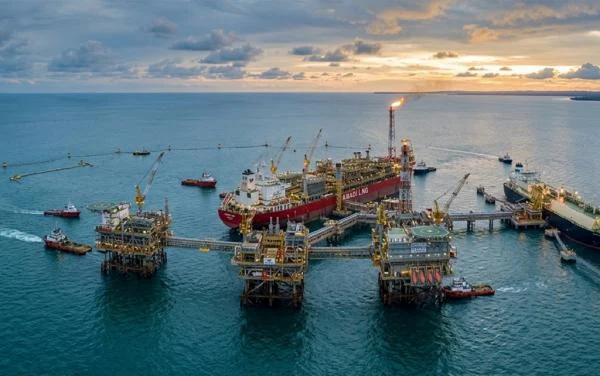
The Special Task Force for Upstream Oil and Gas Business Activities (SKK Migas) has officially set a strategic timeline for the Abadi Masela LNG project, aiming for the facility to commence production by 2029. This massive undertaking, which commands an estimated investment of 22 billion U.S. dollars, represents a cornerstone of Indonesia’s national energy strategy. Designed to significantly bolster the nation’s gas output, the project is engineered to produce 9.5 million tonnes of Liquefied Natural Gas (LNG) per annum, positioning Indonesia as a vital player in the global energy supply chain.
Djoko Siswanto, Head of SKK Migas, confirmed that the government is aggressively fast-tracking the transition into the execution phase following the successful completion of the Front-End Engineering Design (FEED) stage in October 2026. This milestone is particularly significant, as the engineering documentation was finalized three months ahead of the original schedule, demonstrating a renewed momentum in the project’s development cycle.
A Landmark Achievement in Engineering and Logistics
The completion of the FEED phase serves as the technical blueprint for the entire facility. It provides the necessary specifications for construction, procurement, and installation of the complex offshore and onshore infrastructure required to tap into the deep-water reserves of the Masela Block. By finalizing these documents earlier than anticipated, stakeholders have effectively shortened the project’s lead time, moving closer to the Final Investment Decision (FID) and the subsequent construction phase.
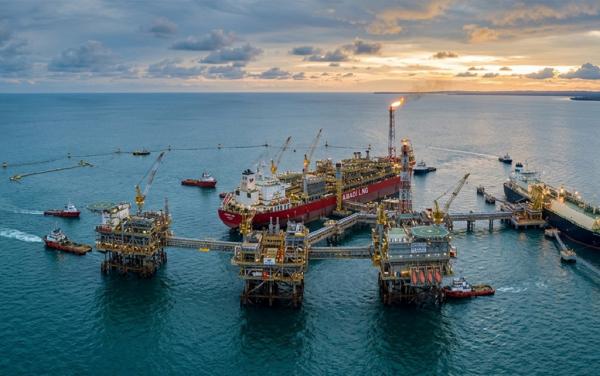
"Our objective is to see gas production from the Abadi field come online as swiftly as possible," said Djoko Siswanto during a press briefing in Jakarta on Tuesday, October 27, 2026. "If we can achieve production by 2029, that would be ideal. Failing that, we are aiming for 2030, but we are committed to ensuring it does not extend beyond the end of that year."
The logistical challenge of the Abadi Masela project is immense. Located in the Arafura Sea, the field holds substantial reserves that have been the subject of long-term planning and debate. The shift from an initial floating LNG concept to an onshore facility—a decision made to maximize regional economic impact—has necessitated a robust development plan that involves complex pipeline networks and high-capacity processing plants.
Project Scope and Production Capacity
The Abadi Masela field is designed to operate with a production capacity of 1,380 million standard cubic feet per day (MMSCFD) of natural gas. This raw output is the feedstock for the primary LNG production units, which will convert the gas into liquid form for international export. With a targeted output of 9.5 million tonnes per annum (MTPA), the facility will be one of the largest of its kind in Southeast Asia.
Beyond LNG, the project is expected to yield significant volumes of pipeline gas for domestic industrial use, as well as condensate. This multi-product approach is intended to satisfy both the government’s mandate for domestic energy security and the commercial requirements of the project’s investors, which include global energy giants operating under production sharing contracts with the Indonesian state.

Chronology of the Masela Block Development
The path to the current 2029 target has been marked by decades of geological assessment, negotiations, and shifts in government policy:
- 1998: The Masela Block is awarded to Inpex Corporation.
- 2000s: Initial exploration confirms the existence of the "Abadi" field, one of the largest gas discoveries in Indonesia.
- 2015-2016: A period of intense policy debate occurs regarding whether to develop the field using a Floating LNG (FLNG) unit or an Onshore LNG facility.
- 2016: President Joko Widodo decides in favor of an onshore facility to ensure maximum benefit for the local economy and the development of the Maluku region.
- 2019: The revised Plan of Development (POD) is approved, formalizing the onshore development strategy.
- 2023-2024: Negotiations regarding the divestment of shares and the entry of new partners, such as Pertamina and Petronas, occur to ensure financial viability.
- October 2026: Front-End Engineering Design (FEED) is officially completed, three months ahead of schedule.
Economic and Social Implications
The socio-economic impact of the Abadi Masela project is profound, particularly for the eastern part of Indonesia. The government has prioritized local participation to ensure that the wealth generated from the project is shared with the local population. Recent directives from the Ministry of Energy and Mineral Resources (ESDM) have mandated that 30 percent of the total workforce employed by the project must consist of local residents from Maluku.
This human capital initiative is expected to absorb up to 12,000 workers during the peak construction phase. Vocational training programs are currently being aligned with the requirements of the oil and gas industry to ensure that local workers can occupy both skilled and semi-skilled positions. By integrating local labor, the government aims to prevent the "enclave economy" phenomenon, where large-scale resource projects fail to stimulate growth in their surrounding regions.
Strategic Importance to Indonesia’s Energy Mix
As Indonesia transitions toward its long-term Net Zero Emission goals, natural gas is increasingly viewed as a "bridge fuel." While the country is ramping up renewable energy capacity, gas remains a stable, reliable source of energy that is cleaner than coal. The Abadi Masela project aligns with the national strategy to increase gas production to 12 billion standard cubic feet per day (BSCFD) by 2030, a goal designed to meet rising domestic demand and ensure energy independence.
Furthermore, the scale of the 22-billion-dollar investment provides a significant boost to Indonesia’s Foreign Direct Investment (FDI) figures. It signals to international markets that Indonesia remains a stable and attractive destination for long-term energy infrastructure investment, despite the global volatility in energy pricing.
Potential Challenges and Risk Management
Despite the optimistic outlook, the project faces several inherent challenges. The technical complexity of deep-water drilling in a remote location requires world-class technology and precise execution. Supply chain disruptions, as seen in the global energy sector over the past few years, remain a concern. Furthermore, the global price of LNG is subject to cyclical fluctuations, which can affect the long-term profitability of such capital-intensive projects.
SKK Migas has indicated that it is working closely with the project operators to mitigate these risks through strict adherence to the project management office (PMO) guidelines. Regular oversight ensures that procurement processes remain transparent and that technical milestones are met without compromising safety or environmental standards.
Conclusion
The Abadi Masela project is more than just an engineering feat; it is a vital component of Indonesia’s future economic and energy landscape. With the FEED stage now behind it, the project enters a critical period of procurement and mobilization. By targeting a 2029 start date, the government and its partners are signaling a high level of confidence in the project’s viability. As the development progresses, the focus will inevitably shift toward the logistical execution of construction and the fulfillment of local content requirements, both of which will determine the project’s ultimate legacy for the people of Indonesia and the stability of its energy sector.
