
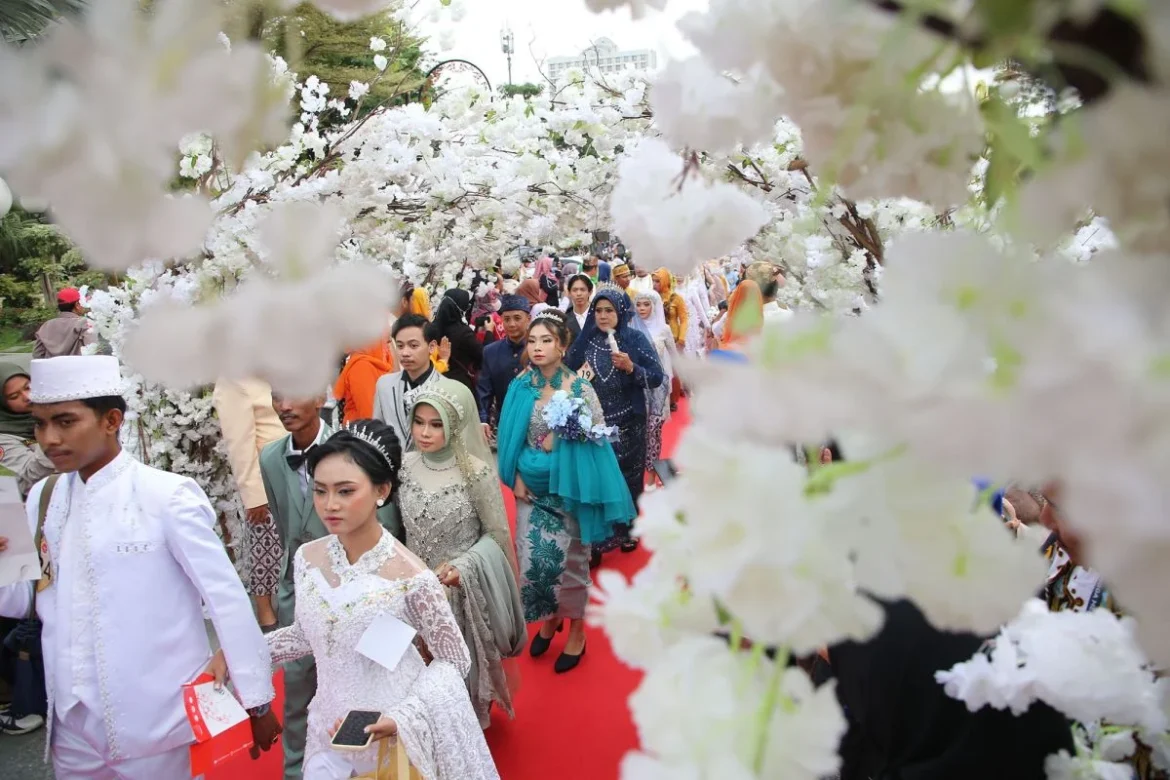
The act of offering prayers for the bride and groom is a recommended practice that involves the participation of the entire community, including family members, friends, and the officiating religious authorities. By reciting specific supplications, the congregation transitions from witnesses of a contract to intercessors for the couple’s future welfare. This tradition serves a dual purpose: it reaffirms the couple’s reliance on the Divine as they embark on a complex life journey and reinforces the social fabric by demonstrating communal support for the institution of the family.
The Theological Foundation of Post-Marriage Supplications
The most widely recognized prayer for a newlywed couple is derived from a Sahih (authentic) Hadith narrated by Abu Hurairah. When the Prophet Muhammad congratulated someone who had just married, he would say: "Barakallahu laka wa baraka ‘alaika wa jama’a bainakuma fii khair." This translates to: "May Allah bestow blessings upon you, and send His blessings upon you, and unite the two of you in goodness." This specific phrasing is highly significant in Islamic theology and is recorded in the major compendiums of Hadith, including Abu Dawud (No. 2130), At-Tirmidzi (No. 1091), and Ibnu Majah (No. 1905). Imam At-Tirmidzi categorized this narration as Hasan Sahih, confirming its reliability as a foundational text for marital etiquette.
Theological scholars, including those within the Indonesian Ministry of Religious Affairs (Kemenag), emphasize that the concept of Barakah (blessing) mentioned in the prayer is multifaceted. It refers to an "increase in goodness" that is permanent and divine in origin. Unlike material wealth or temporary happiness, Barakah represents a spiritual quality that allows a small amount of resources to suffice for a large need and enables a couple to find contentment even amidst the inevitable trials of domestic life. The prayer specifically asks for blessings "upon" the couple (‘alaika), which scholars interpret as a request for Allah’s grace to remain with them even during difficult times, ensuring that their challenges become a source of spiritual growth rather than a cause for separation.
The Husband’s First Act: A Covenant of Spiritual Leadership
Beyond the communal prayer, Islamic tradition outlines a specific ritual for the husband immediately following the akad nikah. It is recommended for the husband to place his hand gently upon his wife’s forehead (the forelock) and recite a personal supplication. The prayer is as follows: "Allahumma inni as’aluka min khairiha wa khairi ma jabaltaha ‘alaihi, wa a’udzu bika min syarriha wa syarri ma jabaltaha ‘alaihi." This translates to: "O Allah, I ask You for her goodness and the goodness of the nature upon which You have created her. And I seek refuge in You from her evil and the evil of the nature upon which You have created her."
This ritual, also sourced from the narrations of Abu Dawud, serves as a symbolic and spiritual initiation of the husband’s role as a qawwam (protector and maintainer). By invoking Allah’s name at the first moment of physical contact in the marriage, the husband acknowledges that his wife is a trust (amanah) from God. The prayer is an exercise in humility, recognizing that both partners possess inherent strengths and weaknesses. It seeks to amplify the virtues within the relationship while mitigating the potential for conflict arising from human fallibility.
The Chronology of an Islamic Wedding Ceremony in Indonesia
To understand the context of these prayers, it is essential to view them within the broader timeline of an Islamic wedding, particularly as practiced in Indonesia, the world’s most populous Muslim-majority nation. The process typically follows a structured chronology:
- The Proposal (Khutbah Nikah/Lamar): The formal request for marriage where the families meet and agree on the terms.
- Administrative Registration: Under the regulations of the Ministry of Religious Affairs, couples must register their intent at the Office of Religious Affairs (KUA). This includes attending mandatory pre-marriage counseling sessions (Bimbingan Perkawinan or Suscatin) designed to bolster family resilience.
- The Akad Nikah: The legal core of the event, involving the Ijab (offer) from the bride’s guardian (wali) and the Qabul (acceptance) from the groom, witnessed by at least two adult males.
- The Signing of the Marriage Contract: The formalization of the legal documents and the delivery of the mahar (dowry).
- The Post-Akad Supplications: Immediately following the legal signing, the officiating Penghulu (marriage registrar) or a respected elder leads the congregation in the Barakallahu laka prayer.
- The Private Prayer: The husband performs the sunnah of praying for his wife, often in a more private setting or immediately after the contract is sealed.
- The Walimah: The wedding feast, which serves the purpose of publicizing the marriage to prevent slander and to share the joy with the community.
Supporting Data: Marriage Trends and Family Resilience
The emphasis on spiritual foundations and prayer comes at a time when marital stability is a significant concern for social policymakers. According to data from the Indonesian Central Bureau of Statistics (BPS), while marriage rates remain high, the country has seen a fluctuating but notable trend in divorce rates over the last decade. In 2023, BPS recorded hundreds of thousands of divorce cases, with "constant disputes and arguments" cited as the leading cause.
In response to these statistics, the Ministry of Religious Affairs has intensified its efforts to move the Penghulu and KUA offices beyond mere administrative roles. Recent initiatives by Kemenag aim to transform KUA offices into hubs for "Family Resilience." Officials argue that the spiritual rituals—specifically the prayers and the understanding of their meanings—are psychological anchors that can help reduce divorce rates. By internalizing the prayer "unite the two of you in goodness," couples are encouraged to view their marriage as a collaborative effort toward a higher moral purpose rather than a mere contractual arrangement.
Sociological Analysis: Replacing Pre-Islamic Traditions
Historians and Islamic scholars note that the prayers taught by the Prophet Muhammad were intentionally designed to replace the "Jahiliyyah" (pre-Islamic) greetings of the time. In the pre-Islamic era, it was common for people to congratulate newlyweds by saying "May you live in harmony and have many sons." While seemingly positive, the Prophet redirected the focus toward Barakah and "Goodness" (Khair).
This shift was significant because it moved the definition of a successful marriage away from purely material or patriarchal outcomes (such as the birth of sons) and toward a holistic state of spiritual well-being. By praying for "goodness," the community asks for a marriage that is beneficial to the couple’s faith, their character, and their contribution to society. This analysis suggests that the prayers serve as a form of "cultural engineering," embedding values of patience, gratitude, and divine consciousness into the very foundation of the family unit.
Broader Implications and Official Responses
The Indonesian government, through various statements from the Ministry of Religious Affairs, has reiterated that the Penghulu must play an active role in educating the public about the depth of these rituals. A spokesperson for the Ministry recently stated that the goal is to ensure that "the akad nikah is not just a legal formality but a spiritual transformation." The ministry has also been training marriage officials to provide more than just the paperwork; they are now tasked with ensuring the couple understands the rights and obligations that the post-contract prayers symbolize.
Furthermore, the inclusion of these prayers in the wedding ceremony has a profound psychological impact. Psychologists specializing in family dynamics suggest that the public recitation of a prayer for "goodness" and "unity" acts as a form of social reinforcement. When a couple hears their entire community asking for God to unite them in goodness, it creates a sense of accountability and communal belonging. It reminds the couple that their marriage does not exist in a vacuum but is a vital cell in the body of the community.
In conclusion, the prayers offered after the akad nikah are much more than traditional recitations. They are theological statements, legal safeguards, and psychological tools designed to foster a resilient and virtuous household. As modern society faces increasing pressures that threaten the stability of the family, these ancient supplications provide a timeless framework for couples to navigate the complexities of life together. By seeking Barakah over mere happiness, and "goodness" over mere prosperity, the Islamic tradition offers a roadmap for a marriage that is not only legally valid but spiritually profound and socially enduring. Through the continued efforts of religious institutions like the KUA and the preservation of Prophetic traditions, these prayers remain a cornerstone of family life in the contemporary Muslim world.
