
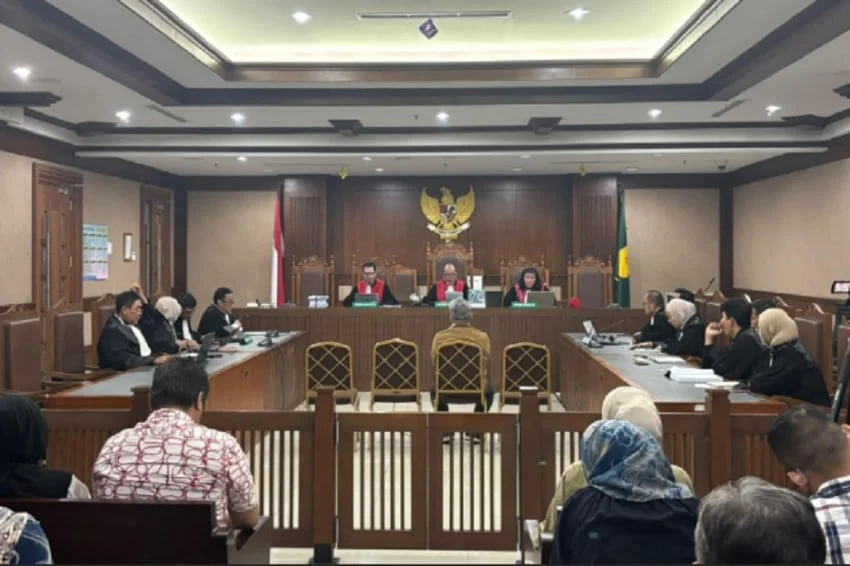
The Jakarta Corruption Court (Tipikor) delivered a significant verdict on Monday, September 21, 2026, sentencing four former executives of the Indonesian Export Financing Agency (LPEI) to six years in prison each. The court found Andi Maulana Adjie, Intan Apriadi, Gamaginta, and Komaruzzaman guilty of involvement in a corruption scheme concerning national export financing between 2015 and 2020. In addition to the custodial sentence, each defendant was ordered to pay a fine of Rp200 million, marking a major milestone in the ongoing efforts to sanitize Indonesia’s state-owned financial institutions.
Presiding Judge Brelly Yuniar Dien Wardi Haskori, in delivering the verdict, stated that the prosecution had successfully proven the defendants’ roles in facilitating fraudulent financing practices that resulted in significant state losses. The ruling solidifies the legal determination that the actions of these former officials were not merely administrative lapses but deliberate acts of corruption that violated the public trust and undermined the integrity of national export mechanisms.
Profiles of the Convicted Officials
The individuals involved held pivotal roles within the Sharia Financing Division of LPEI during the period in question. Their positions granted them substantial authority over the approval and oversight of credit facilities intended to bolster Indonesian exporters. The convicted individuals include:
- Andi Maulana Adjie: Served as the Head of the Sharia Financing Division Department from 2011 to 2017.
- Intan Apriadi: Served as the Head of the Sharia Financing Division from 2007 to 2016.
- Gamaginta: Served as the Head of Sharia Department I from 2017 to 2018.
- Komaruzzaman: Served as the Head of Sharia Financing Department II from 2011 to 2016.
The court noted that the overlapping tenures and shared responsibilities within the Sharia Financing Division created an environment where internal checks and balances were circumvented. Prosecutors argued that the defendants collectively facilitated disbursements of funds to various debtors without adhering to the mandatory prudential principles required for state-backed financial institutions.
Chronology of the Case
The investigation into the LPEI corruption scandal gained momentum following audits that identified "irregularities" in the financing of several corporate clients. The case, which spanned a five-year window (2015–2020), became a focal point for the Attorney General’s Office (Kejagung) and the High Prosecutor’s Office of Jakarta.
- 2015–2020: The period during which the fraudulent financing activities occurred. During this time, LPEI, as a Special Mission Vehicle (SMV) under the Ministry of Finance, was mandated to provide support for Indonesian exports through financing, guarantees, and insurance.
- 2021–2022: Initial internal audits and reports began to surface, suggesting that several debtors were unable to fulfill their repayment obligations, triggering a wider investigation into the disbursement processes.
- 2023: Legal proceedings against various suspects began as investigators uncovered evidence of collusion between LPEI officials and private sector actors to bypass credit risk assessments.
- September 21, 2026: The Jakarta Corruption Court delivers the final verdict for these four former officials, concluding one of the major chapters in the LPEI scandal litigation.
The Nature of the Fraudulent Financing
The core of the corruption centered on the abuse of the Sharia Financing facility. According to evidence presented in court, the defendants approved credit disbursements to companies that did not meet the necessary criteria, often ignoring red flags regarding the financial viability of the recipient entities.
The mechanism typically involved "debt restructuring" schemes that allowed non-performing loans to be masked as healthy, preventing them from being classified as non-performing assets. This practice effectively drained the agency’s capital reserves and deprived the state of potential revenue, while also hindering the ability of legitimate, creditworthy exporters to access necessary funds. By circumventing standard operating procedures, the defendants facilitated billions of rupiah in credit that subsequently turned into bad debt.
Official Responses and Legal Perspectives
The Attorney General’s Office has expressed satisfaction with the court’s decision, emphasizing that the sentence reflects the severity of the crime, particularly given the role of LPEI as a strategic agency responsible for national economic growth.
"This verdict serves as a warning to all officials in state-owned enterprises that the misuse of public funds, especially those intended for national development and economic stimulation, will be met with the full force of the law," said a spokesperson from the Prosecutor’s Office.
Legal observers note that this case is part of a broader crackdown on corruption within the Indonesian financial sector. By targeting the "gatekeepers"—the middle-to-high-level managers responsible for credit approval—the judicial system aims to dismantle the systemic corruption that often persists in state-owned financing bodies.
Conversely, the defense teams for the four defendants maintained throughout the trial that their clients were acting within the scope of their professional mandates and that the financial losses were the result of market volatility and economic conditions affecting the debtors, rather than intentional criminal conduct. However, the court found the evidence of "willful neglect" and "collusion" to be insurmountable.
Broader Impact and Implications for LPEI
The conviction of these four officials sends a clear message about the necessity of institutional reform at LPEI. The agency has been under immense pressure to improve its governance, risk management, and compliance frameworks to regain the confidence of the Indonesian government and international investors.
- Risk Management Overhaul: The case has prompted LPEI to implement stricter credit assessment protocols, including more rigorous verification of financial statements and collateral provided by applicants.
- Institutional Reputation: The scandal has forced a leadership transition and a top-down review of personnel. The reputational damage to LPEI, a vital institution for international trade, has necessitated significant efforts in transparency reporting.
- Deterrence: By securing a 6-year sentence, the judiciary is setting a precedent that white-collar crime in the banking sector, particularly in state-mandated agencies, will not be treated lightly. This is expected to curb "crony capitalism" where credit is often extended based on personal connections rather than objective risk analysis.
Financial Context: Why LPEI Matters
LPEI was established to overcome the limitations of private banks in providing credit to exporters, especially in emerging or high-risk markets. Its role is essential for Indonesia’s ambition to increase its share of global trade. When corruption permeates such an institution, the impact is two-fold: it causes direct state loss through bad debt, and it causes indirect loss by preventing the expansion of national exports.
The total value of the suspected corruption at LPEI remains a subject of ongoing scrutiny, with various investigative bodies suggesting the total potential loss to the state could be significantly higher than the amount cited in this specific case. As such, the legal battle is far from over; the High Prosecutor’s Office has indicated that they are continuing to investigate other potential suspects, including private sector parties who were the recipients of the fraudulent loans.
Future Legal Outlook
While the four former officials have been sentenced, the judicial process continues to evolve. The defendants have a limited window to file an appeal if they believe the sentencing was disproportionate or if they identify procedural errors in the trial. Legal experts suggest that given the complexity of the case and the volume of documentation involved, the appeal process could take several months.
Furthermore, the verdict is expected to encourage the recovery of state assets. In corruption cases of this magnitude, the focus often shifts from imprisonment to the asset recovery phase, where the government attempts to seize the assets of the convicted individuals and the companies involved in the fraud to compensate for the state’s financial losses.
In conclusion, the sentencing of these four former LPEI officials by the Jakarta Corruption Court marks a decisive moment in the battle against corruption in Indonesia’s financial sector. It highlights the critical importance of accountability in state-owned institutions and the government’s commitment to holding high-ranking officials accountable for their actions. As Indonesia continues to navigate the complexities of economic growth, the integrity of its financial institutions remains the bedrock upon which national progress is built. The judiciary’s firm stance in this case serves as a vital step toward ensuring that resources intended for the growth of the nation are used ethically and efficiently.
