
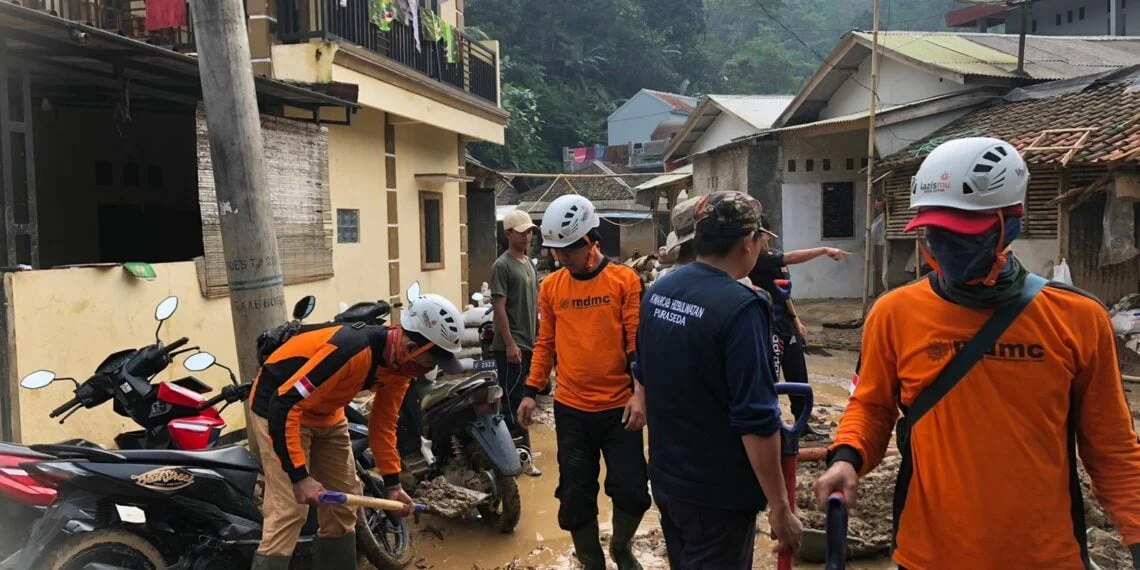
Disasters remain an inescapable reality of the human condition, requiring a delicate synthesis of spiritual understanding and practical preparation. Within the framework of Islamic teachings, calamities are rarely viewed through a single lens; instead, they are interpreted as divine tests, profound trials, or direct consequences of human-induced environmental degradation.
This perspective was articulated by Imron Baehaqi, a member of the Community Dakwah Board (LDK) of the Central Board of Muhammadiyah, during a televised discourse broadcast on TVMu. Speaking on disaster jurisprudence—known in Islamic scholarship as fiqh al-bi’ah or disaster fiqh—Baehaqi elaborated on the ethical and behavioral framework a Muslim should adopt when confronting natural and humanitarian crises. His address underscored the dynamic nature of Islamic jurisprudence, which has continuously evolved to address emerging contemporary challenges faced by global societies.
The Evolution of Islamic Jurisprudence and Disaster Mitigation
Islamic jurisprudence, or fiqh, is rooted in the literal Arabic meaning of understanding and comprehension. Historically, early Islamic scholarship predominantly focused on legalities concerning acts of worship, ritual purity, and direct interpersonal transactions. However, as human civilization progressed and societies encountered complex modern dilemmas, the scope of fiqh expanded significantly.
In contemporary times, Islamic scholars have formulated specialized branches of jurisprudence to address specific socioeconomic and environmental realities. These include fiqh of economics (muamalah), charity (zakat), gender relations, water management, and increasingly, disaster management. Within the Muhammadiyah movement, this intellectual expansion is largely spearheaded by the Council for Tarjih and Tajdid, which routinely issues guiding frameworks to help believers navigate contemporary crises.
Baehaqi emphasized that the primary function of disaster jurisprudence is not merely academic; it is designed to provide actionable wisdom, psychological resilience, and ethical guidance. By institutionalizing a comprehensive understanding of catastrophes, religious communities can transition from passive fatalism to active disaster preparedness, risk reduction, and post-crisis rehabilitation.
Quranic Terminology and the Historical Context of Calamities
The Quran employs a diverse lexicon to describe crises, hardships, and catastrophic events, reflecting the multifaceted nature of human suffering. Key terms include musibah (affliction or calamity), bala’ (test or trial), fitnah (tribulation), and fasad (corruption or ecological imbalance). Each term captures a specific dimension of hardship, whether it originates from cosmic phenomena or human malfeasance.
Scriptural narratives reveal that catastrophes are not modern anomalies; they have accompanied human civilization since prophetic eras. The Quran preserves historical accounts of devastating earthquakes, catastrophic floods, violent windstorms, showers of stones, and protracted droughts that befell ancient communities. These references establish that natural hazards are an enduring element of sunnatullah—the immutable laws governing the natural universe.
From a scientific and geographical standpoint, countries like Indonesia experience high frequencies of tectonic and hydro-meteorological hazards due to their location along the Pacific Ring of Fire and equatorial convergence zones. Baehaqi noted that viewing disasters through both scientific and theological lenses provides a complete picture: physical vulnerabilities are governed by natural laws (sunnah kauniyah), while the exacerbation of these risks often intersects with human behavior.
This dual perspective finds direct support in Islamic scripture. Surah al-Rum, verse 41, explicitly links the emergence of corruption on land and at sea to the deeds performed by human hands, serving as a foundational scriptural warning regarding environmental ethics and anthropogenic climate change. Furthermore, Surah al-Baqarah, verse 155, reminds humanity that life inherently involves testing through fear, hunger, loss of wealth, loss of life, and diminished agricultural yields.
Psychological Resilience and the Rejection of Despair
Reflecting on the verses of Surah al-Hadid, Baehaqi highlighted that all worldly afflictions—whether striking individuals or the global environment—are preordained within divine decree. Understanding this concept serves a critical psychological purpose: it prevents individuals from descending into debilitating despair when confronting sudden losses.
"Do not despair; meaning we must remain optimistic in this life," Baehaqi stated during the broadcast, stressing the importance of mental fortitude.
This philosophical framework redefines human attachment to wealth, status, and political power. Because material possessions and worldly authority are transient, believers are encouraged to cultivate inner resilience rather than anchoring their existential happiness to temporal status. Consequently, ethical governance and stewardship take precedence over endless resource accumulation and unchecked political domination.
However, theological fatalism must never be used to excuse negligence. Baehaqi cautioned that while disasters are part of cosmic decrees, human accountability remains paramount. Unregulated logging, illegal deforestation, excessive industrial exploitation, and reckless land development directly contribute to environmental fasad. These anthropogenic activities severely amplify the destructive potential of natural hazards, transforming routine weather patterns into catastrophic humanitarian emergencies.
Historical Lessons and the Imperative of Introspection
To foster a proactive culture of safety, Baehaqi urged communities to study the historical downfalls of past civilizations, such as the communities of Prophets Saleh, Lot, and Shu’ayb. These narratives are preserved in religious texts not merely as historical anecdotes, but as profound moral lessons encouraging deep introspection (muhasabah).
When societies experience recurring disasters, the Islamic tradition demands a rigorous evaluation of both individual morality and collective systemic practices. Environmental degradation, social injustice, and systemic corruption often converge to worsen the impact of natural disasters on vulnerable populations. By integrating modern disaster risk reduction (DRR) strategies with the ethical imperatives of disaster fiqh, communities can better identify systemic vulnerabilities and implement effective mitigation measures.
Ultimately, the discourse presented by Muhammadiyah bridges the gap between spiritual reflection and modern disaster management. By combining scientific preparedness with ethical stewardship, religious communities can foster sustainable resilience, protecting both human lives and the fragile ecosystems upon which civilization depends.
