
The financial landscape in Indonesia is currently grappling with a significant investment scandal involving PT Nellava Refinery and Bullion, a firm operating under the name "New Emas Now." Hundreds of individuals have emerged to report substantial financial losses linked to a pre-order (PO) gold investment scheme that promised high returns and discounted prices. As the investigation deepens, the scope of the alleged fraud has expanded, with total losses now estimated to reach tens of billions of rupiah, affecting victims across multiple provinces.
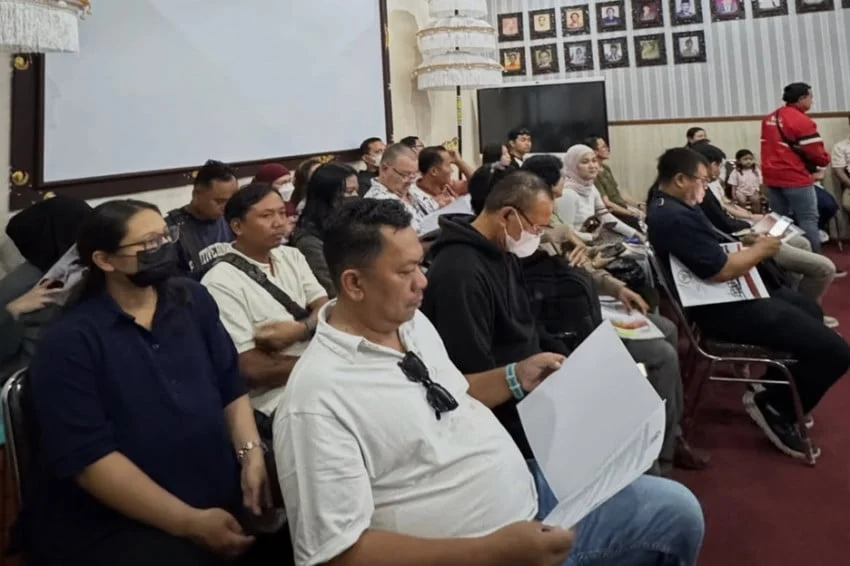
The crisis reached a public breaking point on Saturday, September 19, 2026, when a large assembly of victims gathered in Denpasar, Bali. They sought intervention from DPD RI member Arya Wedakarna at the TVRI Bali meeting room, hoping to elevate their grievances to the national stage. This gathering served as a collective cry for justice, as many victims find themselves in dire financial straits after investing their life savings into a venture they believed was legitimate.
The Genesis of the Allegations
The legal battle commenced on September 11, 2026, when a victim identified as "L" officially filed a report with the Bali Regional Police (Polda Bali). The report, registered under number LP/B/782/IX/2026/SPKT/POLDA BALI, initially detailed the grievances of 23 individuals who suffered a combined loss of IDR 6.8 billion. However, as news of the report spread, the number of complainants surged, indicating that the scale of the operation was far larger than initially suspected.
The modus operandi of PT Nellava Refinery and Bullion followed a classic "too good to be true" trajectory. The company leveraged digital marketing strategies, including the use of high-profile public figures and influencers to promote their gold products. This endorsement played a pivotal role in establishing a facade of credibility, leading prospective investors to trust the firm with significant capital.
Victim Testimony and Modus Operandi
One victim, identified as "AS," provided a detailed account of how the scheme functioned. Seeking to become a regional distributor for the company in West Java, AS was enticed by the professional presentation of the brand. "When I saw the advertisements featuring celebrities promoting the Nellava Bullion gold products, I reached out via chat. I was assisted by a customer service representative named Debora Jeffier Tedjosoewignjo, also known as Kiky," AS explained.
The process appeared highly professional to the unsuspecting investor. AS was directed to the company’s office in Surabaya, where a formal face-to-face meeting was conducted with Ahmad Alif Fauzan, the individual identified as the Director of Marketing for Nellava. During this meeting, a formal agreement was signed, and AS proceeded to transfer IDR 550 million directly into the official corporate bank account of PT Nellava Refinery and Bullion.
Under the terms of the pre-order agreement, investors were promised the delivery of gold within a maximum period of eight weeks. The contractual deadline for the fulfillment of these orders was set for September 10, 2026. However, as that date passed, the promised bullion failed to materialize, and the company ceased providing meaningful updates to its investors.
Chronology of the Failure
The collapse of the trust between the investors and PT Nellava began well before the formal police report. While the company maintained an aura of legitimacy throughout early 2026, internal delays in distribution began to surface during the summer months.

- Initial Engagement: Investors, attracted by social media campaigns, contact company representatives and are funneled into a distribution network.
- Contractual Formalization: Agreements are signed, and capital is transferred to official corporate accounts, lending a sense of legal security to the transactions.
- The "Pre-Order" Window: Investors are told to wait up to eight weeks for gold delivery, a period often used in such schemes to cycle funds and recruit new investors to pay off earlier ones.
- The September Deadline: As September 10 arrived, the company failed to meet its contractual obligations. Communication lines became strained or non-existent.
- Legal Action: By September 11, the first formal police report was filed in Bali, triggering a wave of secondary reports as other victims realized they had been defrauded.
Broader Financial Implications and Regulatory Context
This case highlights the persistent vulnerability of the Indonesian public to illicit investment schemes that mimic legitimate business models. The use of "pre-order" mechanics for commodities like gold—a staple asset in Indonesian investment culture—is particularly effective at bypassing the natural skepticism of investors. Because gold is a tangible, universally recognized asset, victims often fail to conduct the necessary due diligence on the entities selling it.
Financial analysts warn that the "Nellava" case reflects a recurring pattern in the shadow investment sector: the exploitation of social trust. By utilizing public figures for marketing, the firm successfully bridged the gap between a suspicious digital platform and a household name.
The involvement of high-profile figures in the promotion of such firms is now a subject of intense scrutiny. While these figures may argue they were unaware of the underlying fraud, the incident raises ethical questions regarding the responsibility of influencers to verify the business practices of the products they endorse.
Legal and Economic Consequences
The loss of tens of billions of rupiah is not merely a personal tragedy for the victims but also a concern for the stability of regional retail investment. As the Polda Bali investigation proceeds, authorities are expected to trace the flow of funds from the corporate bank accounts to the principals of the company, including Ahmad Alif Fauzan and other key personnel.
Legal experts suggest that if PT Nellava is found to have operated without proper authorization from the Commodity Futures Trading Regulatory Agency (Bappebti) or the Financial Services Authority (OJK), the perpetrators could face charges under the Indonesian Criminal Code (KUHP) related to fraud and embezzlement, as well as potential violations of the Information and Electronic Transactions (ITE) Law.
Furthermore, the recovery of funds in such cases is historically difficult. Once the money has been moved through multiple layers or offshored, the possibility of full restitution for victims becomes increasingly slim. The focus of the investigation will likely shift to asset freezing and the liquidation of any remaining corporate properties to compensate the affected parties.
Protecting Future Investors
This incident serves as a stark reminder for investors to verify the registration of any company offering high-yield or discounted commodity investments. In Indonesia, the "Check 2L" (Legal and Logical) principle remains the best defense against fraud.
- Legal: Investors must check if the company is licensed by the appropriate government body (OJK or Bappebti).
- Logical: Investors must evaluate the profit margins. If a gold business promises prices significantly below the global market rate or returns that are disproportionately high, it is highly likely to be a scheme.
As the authorities continue to gather evidence, the victims of PT Nellava are calling for a thorough investigation that leaves no stone unturned. For many, the road to financial recovery will be long, but their public appeal to government representatives like Arya Wedakarna indicates a growing demand for stricter oversight of the precious metals trading sector in Indonesia.
The case of PT Nellava Refinery and Bullion remains an active investigation. Law enforcement agencies are urging any other individuals who may have been impacted by this scheme to come forward and file their reports at the nearest police station to ensure a comprehensive understanding of the total financial damage. As the investigation progresses, the Indonesian public awaits further updates on whether the perpetrators will be held accountable and what measures will be implemented to prevent similar catastrophes in the future. The sheer scale of this incident, spanning multiple regions and involving hundreds of victims, underscores the urgent need for a more robust regulatory framework in the digital asset and commodity trading space.
