
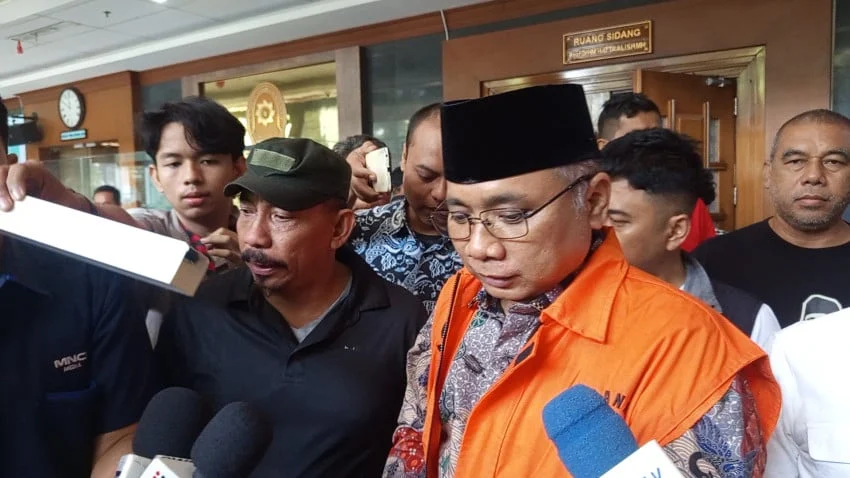
The courtroom of the Corruption Court in Jakarta played host to a dramatic legal confrontation on Tuesday, September 15, 2026, as former Minister of Religious Affairs, Yaqut Cholil Qoumas, confronted a former high-ranking ministry official during a high-profile corruption trial regarding the management of Indonesia’s Hajj pilgrimage quotas.
The proceedings escalated into a tense exchange when Yaqut, addressing the court and directly questioning the witness—Nur Arifin, the former Director of Hajj and Umrah Bina at the Ministry of Religious Affairs—invoked a powerful moral and philosophical caution, reminding the witness that "fitnah" (calumny or false accusation) is more cruel than murder. This tense dialogue underscores the deepening legal battles surrounding irregularities in the distribution of special Hajj quotas, an issue that has drawn intense national scrutiny and triggered a widespread institutional reckoning within the Ministry of Religious Affairs.
Background Context of the Hajj Quota Controversy
The roots of this legal proceeding stretch back to controversies surrounding the allocation of special Hajj quotas (Penyelenggara Ibadah Haji Khusus, or PIHK) during recent pilgrimage cycles. Under Indonesian law and international agreements with the Kingdom of Saudi Arabia, national Hajj quotas are divided into regular and special categories. While regular pilgrims wait years—often decades—in long queues, special quotas managed by private travel agencies under PIHK supervision are designed for expedited travel, commanding significantly higher service fees.
Allegations emerged that systemic discrepancies, favoritism, and unauthorized reallocations plagued the distribution of these lucrative quotas. Investigators from law enforcement agencies began examining whether ministerial policies bypassed established legal mechanisms, favoring specific entities or individuals connected to high-ranking officials within the ministry. The political and social weight of these allegations cannot be overstated, as the management of the Hajj pilgrimage is a deeply sensitive religious and administrative duty in the world’s largest Muslim-majority nation.
Chronology of the Courtroom Confrontation
The focal point of Tuesday’s hearing centered on the reading and analysis of a specific dossier from the investigation phase: a Bureau of Investigation Report (Berita Acara Pemeriksaan, or BAP) dating back to September 2025.
During the court session, Yaqut Cholil Qoumas addressed the contents of Nur Arifin’s BAP. In the September 2025 document, Nur Arifin had stated under oath during the investigative process that he failed to perform standard verification procedures on the lists of prospective pilgrims submitted by PIHK organizers.
Reading directly from the BAP, Yaqut quoted the witness’s previous statement: "I did not carry out a check on the names proposed by the PIHK in accordance with the queue order because I already knew that the policy originated from Brother Isfah Abidal Aziz, alias Gus Alex, and Brother Yaqut Cholil Qoumas, alias Gus Yaqut or Gus Men."

Pushing back against this assertion, Yaqut pressed the former director during cross-examination to explain why such crucial oversight checks were reportedly bypassed and whether the witness was attempting to shift administrative accountability onto political leadership. In response to the questioning, Nur Arifin maintained that despite the overarching policy pressures, he had maintained a structured approach to supervision by delegating specific verification tasks to his subordinate staff members within the directorate.
Legal Implications and the Defense’s Position
The defense team representing former Minister Yaqut has consistently argued that accountability within the Ministry of Religious Affairs is fragmented and that systemic flaws in the bureaucracy are being unfairly pinned on political leadership. In previous statements submitted to the court and media, representatives for the former minister highlighted that various individuals and administrative units actively involved in the day-to-day processing of the contentious quotas continue to hold positions within the ministry, raising questions about selective prosecution and institutional scapegoating.
Legal analysts observing the trial note that the clash between the former minister and his erstwhile subordinate highlights the fragile nature of bureaucratic testimony in complex corruption trials. Witnesses often find themselves navigating a treacherous path between defending administrative decisions made under political directives and protecting themselves from direct criminal liability. The invocation of moral warnings—such as Yaqut’s reference to the cruelty of false accusations—demonstrates the high emotional and reputational stakes involved for figures whose political legacies are intertwined with major state institutions.
Broader Institutional Impact on the Ministry of Religious Affairs
The ongoing Hajj quota corruption trial has forced the Ministry of Religious Affairs to undergo rigorous internal soul-searching. Lawmakers in the House of Representatives (DPR), civil society organizations, and anti-corruption watchdogs have continuously monitored the judicial process, demanding systemic reforms to ensure transparency in how pilgrimage opportunities are distributed to Indonesian citizens.
The fallout from the investigation has also accelerated calls for digitization and open data protocols regarding Hajj queues and quota management. Historically, the opacity surrounding special Hajj quotas has left room for discretionary decision-making, which critics argue creates fertile ground for rent-seeking behavior and administrative abuse. By bringing these systemic vulnerabilities into the open courtroom, the judiciary is shedding light on how bureaucratic discretion was exercised—or abused—at the highest levels of religious governance.
Expert Perspectives and Future Outlook
Legal experts emphasize that the outcome of this trial will set a crucial precedent regarding the legal liability of ministerial decisions versus bureaucratic execution. Under Indonesian administrative law, policy directives issued by ministers must align with statutory regulations. Prosecutors face the intricate task of proving whether the policies enacted by Yaqut Cholil Qoumas and his associates constituted a deliberate abuse of power intended to enrich third parties or bypass statutory quotas unlawfully, or whether they fell within the realm of permissible ministerial discretion.
As the trial progresses through subsequent hearings, the court is expected to summon additional witnesses, including other mid-level bureaucrats, technical experts in pilgrimage management, and representatives from private travel associations. The testimony of Nur Arifin, scrutinized heavily during this session, will likely remain a cornerstone of the prosecution’s narrative regarding the chain of command inside the ministry.
Ultimately, the proceedings serve as a stark reminder of the immense administrative responsibilities tied to state-managed religious services. For millions of devout Indonesians awaiting their turn to perform the pilgrimage, the ultimate hope remains that the judicial process will bring clarity, accountability, and long-lasting integrity to a system that forms a cornerstone of the nation’s religious life.
